VOLUME RESTORATION
VOLUME RESTORATION
Restoration of volume in the dorsal hand can greatly reduce the appearance of skin laxity as well as the visibility of veins, tendons, and bones associated with the loss of dermis and subcutaneous fat. Both dermal fillers (Table 80-2) and autologous fat transfer have produced significant improvement in hand-specific grading scales and in the patient and investigator assessed Global Aesthetic Improvement Scale.
Certain scales are used to objectively assess the success of cosmetic procedures. In the hand, the most commonly used grading scale for volume loss is the Merz Hand Grading Scale (MHGS), which has been validated for both live and photographic assessment. It is a 5-point scale ranging from 0 (no loss of fatty tissue) to 4 (severe loss of fatty tissue and marked visibility of veins and tendons) (Fig. 80-4).13-15 Another scale, the Busso Hand Volume Severity Scale (BHVSS) is a validated 5-point visual scale based on the visibility of three central tendons.16 This scale was used in the first clinical trial of calcium hydroxyapatite for hand volume restoration in a 2008 German study.17
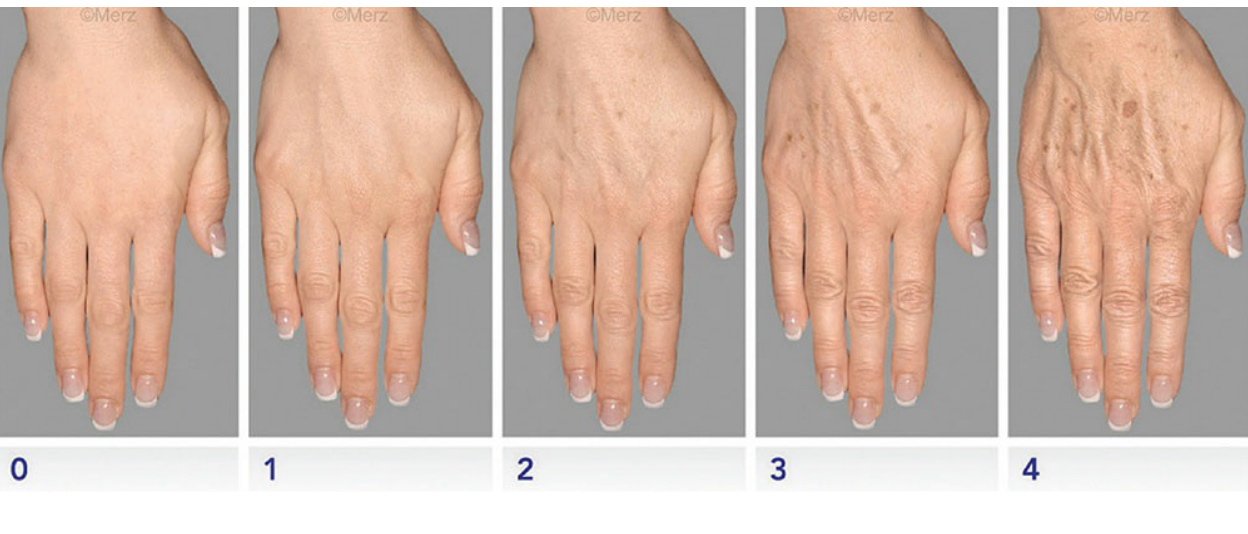
Figure 80-4. Merz Hand Grading Scale. 0 = No loss of fatty tissue, 1 = Mild loss of fatty tissue; slight visibility of veins, 2 = Moderate loss of fatty tissue; mild visibility of veins, 3 = Severe loss of fatty tissue; moderate visibility of veins, and 4 = Very severe loss of fatty tissue; marked visibility of veins bands.
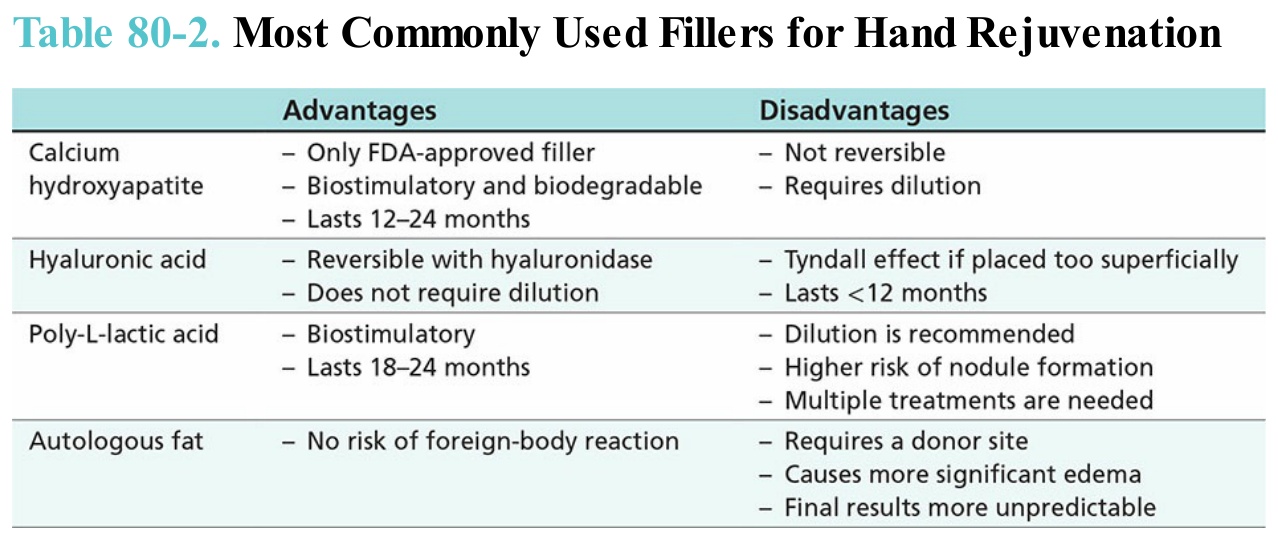
Table 80-2. Most Commonly Used Fillers for Hand Rejuvenation