Discussion
Discussion
Telangiectasias For the treatment of telangiectasias of the face, including the nose, the most commonly used lasers are PDL and KTP, as these are specific for targeting intravascular oxyhemoglobin. The pulse duration should reflect the size of the vessel; the smaller the
diameter of the telangiectasia, the shorter the pulse duration. The Vbeam Perfecta (Syneron Candela, Irvine, CA), a PDL, has a spot size of 3 × 10 mm which is useful for treating the linear shape of telangiectasias, though a 10- or 7-mm spot size can be used as well, particularly when treating telangiectatic matting. Cooling is achieved by a patented dynamic cryogen spray cooling just before the laser pulse. The pulse durations, longer than with the original PDL, can extend from 10 to 40 ms, which allows treatment of facial vessels with less purpura. Treatment results can be enhanced by partial overlapping of pulses and pulse stacking, as appropriate.
The KTP 532-nm laser is also very effective.2 A comparative study of 532-nm versus 595-nm laser for treatment of telangiectasias and erythema demonstrated that the KTP is slightly more effective than PDL, though it is also associated with more swelling and redness.3 After one treatment, the KTP achieved 62% clearing versus 49% with the PDL. In the study, the settings for the PDL (Candela) were 10 mm, 7.5 J/cm2, and 10 ms and for the KTP, from (Laserscope, now Cutera), were 5 to 10 mm, 9 to 10 J/cm2, and 10 to 23 ms.
With regard to energy settings, it is best to start at the lower range of recommended energy settings that are programmed into the lasers and increase as needed, as the preset parameters were established by company-sponsored clinical evaluations. The endpoint is constriction of the vessel or a brief purplish to grayish color of the vessel. Settings with the Excel V (Cutera) range from 5 to 7 mm, 8.6 to 9 J/cm2, and 8 to 10 ms, with contact cooling.
The alexandrite and diode are infrequently used for treatment of telangiectasias. At 755 nm, the alexandrite laser demonstrated strong absorption by melanin, explaining its infrequent use; while it is beneficial for the treatment of larger and deeply placed telangiectasias, it can only be used in those with lower Fitzpatrick skin types. Ross et al. published a study using a 755-nm laser for treatment of facial telangiectasias in 19 patients with Fitzpatrick skin types I and II; a 6-mm spot size was used with a mean fluence of 88 J/cm2 and pulse durations ranging from 20 to 80 ms.4 After one treatment, there was 48% clearance of vessels; of note, one patient developed a scar, demonstrating that this risk exists with these lasers. The diode laser has a similar risk for epidermal damage. Tierney et al. compared the 532- to a 940-nm diode for treatment of facial telangiectasias.5 They found similar efficacy in resolution of small telangiectasias, but the diode was better for larger diameter telangiectasias.
IPL can be used for treating telangiectasias, and is often the treatment of choice when larger areas need to be treated on the face, neck, or chest due to larger available spot sizes. Equivalent efficacy to the PDL has been demonstrated.6 Purpura is uncommon, and when it does occur, it typically fades quickly. A similar endpoint of vessel constriction and mild to moderate erythema should be achieved; there should not be a gray “footprint” of the IPL crystal, as that indicates epidermal injury. IPL device choice
is based in part on the spot size; some devices, such as the StarLux Icon Max G or Y (Cynosure, Westford, MA), have large spots sizes (4.5 × 1 cm and 1.5 × 1 cm, respectively), which work well for treating larger areas. The Lumenis M22 (Lumenis Aesthetics, Yokneam, Israel), also has both large and small spot sizes (3.5 × 1.5 cm and 1.5 × 0.8 cm) available. Smaller spot sizes are useful on the nose or forehead, where avoiding the eyebrows is needed. Both devices use a sapphire crystal cooling system.
For telangiectasias that have a diameter of 1 mm or larger, a longer wavelength, such as the 755- or 1,064-nm laser, may be used; start with a lower fluence and spot size and increase as needed.4,7 The Excel V and CoolTouch Varia (Syneron Candela, Roseville, CA) are often used for 1,064-nm treatments. With Excel V a spot size of 5 mm, 110 J/cm2, and 30 ms may be used; the cooling on this device is contact cooling via a sapphire crystal, and ultrasound gel may be used as well. For the CoolTouch Varia, a spot size of 3.5 mm with energies of 160 to 175 J/cm2, and 30 ms may be used; cooling is via cryogen spray. With blue 2- to 3-mm veins, greater fluences may be necessary.
Telangiectasias of the nose can be very treatment resistant; recurrence rates are quite high, necessitating maintenance treatments. IPL has a good success rate with minimal side effects when using adequate gel and contact cooling with skin. The VBeam Perfecta with longer pulse durations and the 3 × 10-mm spot size are also very effective.8 Although the Nd:YAG is sometimes utilized for nasal vessels, particularly purple telangiectasias, caution should be exercised as excessive heat buildup may occur leaving pockmarks and linear depressions on the nasal ala. At least 2 seconds should elapse between each 1,064-nm laser pulse, and skin cooling needs to be effective to reduce the risk of overheating and subsequent collagen overcontraction. Stacked pulsing should never be used. This can lead to undissipated heat from excess nonspecific heating of the water in the dermis and result in necrosis. For this reason, Nd:YAG is rarely used on the nose. In many patients, it can be difficult to permanently eliminate alar telangiectasias altogether; caution patients from the outset that maintenance treatments are often necessary.
Diffuse erythema For the treatment of erythema of varying etiologies on the face, neck, and chest, the PDL, KTP, and IPL are most commonly utilized. All have demonstrated reproducible efficacy.9 A study comparing IPL to PDL for treatment of erythematotelangiectatic rosacea demonstrated similar efficacy after three treatments spaced 1 month apart (Figs. 77-6 and 77-7). For the PDL, the settings were 10 mm, 7 J/cm2, and 6 ms and for the IPL a 560-nm filter, a pulse train of 2.4 and 6.0 ms in duration separated by a 15-ms delay, and a starting fluence of 25 J/cm2 were used.10 Again, for practical purposes, the IPL is typically utilized for the chest and neck, though any device may be used. Longer pulse
durations for the KTP and PDL may be used to avoid purpura. With the Excel V 532 nm, energies of 7 to 9 J/cm2, pulse durations of 8 to 20 ms, and a 10-mm spot size may be used.
Poikiloderma of Civatte Poikiloderma of Civatte is a combination of epidermal and dermal atrophy, increased pigmentation, and enhanced vascularity. Its occurrence is strongly associated with a history of excessive sun exposure. Patients typically present in the third to fifth decades and are usually of lower Fitzpatrick skin types. Invariably, poikiloderma of Civatte is located on the lateral and anterior neck and upper chest with sparing of sun-protected sites, such as the submentum. Because this is a combination of hyperpigmentation and increased vascularity, treatment with the noncoherent, multiple wavelength IPL is very effective. Weiss et al. published data on 135 patients with poikiloderma of the neck and chest treated with IPL, with over 75% of patients achieving clearance11; there were
minimal side effects. These results have been reproduced in other studies.12 In addition, both patients and treating physicians have noted an improvement in skin texture and fine lines when using IPL. This initially was an incidental finding in early studies, but given the concomitant atrophy typically seen with poikiloderma, it is a significant additional benefit. Lastly, IPL confers the added advantage of having larger spot sizes, increasing treatment efficiency. Therefore, IPL is generally the first choice for poikiloderma treatment.
KTP and PDL can be utilized as well, but care must be taken to use larger spot sizes and reduced energies. PDL is best reserved for poikiloderma that is primarily composed of dilated blood vessels without hyperpigmentation. Some of the “brown” hyperpigmentation perceived with the naked eye may actually be deoxygenated hemoglobin.13 PDL is generally more painful for patients. Another factor for the physician to consider when treating large areas is the wear and tear to the laser itself— larger areas consume more of the dye kit and cryogen.
Regardless of the device chosen, a slight amount of overlap of pulses is necessary to achieve uniform improvement of the treated area. Skip areas can lead to visible “footprinting,” which may be in the shape of the device treatment head. This can be reduced by performing more than one pass in different directions, or by changing the orientation of a rectangular crystal at subsequent treatment sessions. This improves with repeated treatments, but patients should be warned ahead of time of the risk of “footprinting” or blotchy improvement. Poikiloderma requires a series of treatments, typically between 3 and 5, and strict sun protection should be advised.
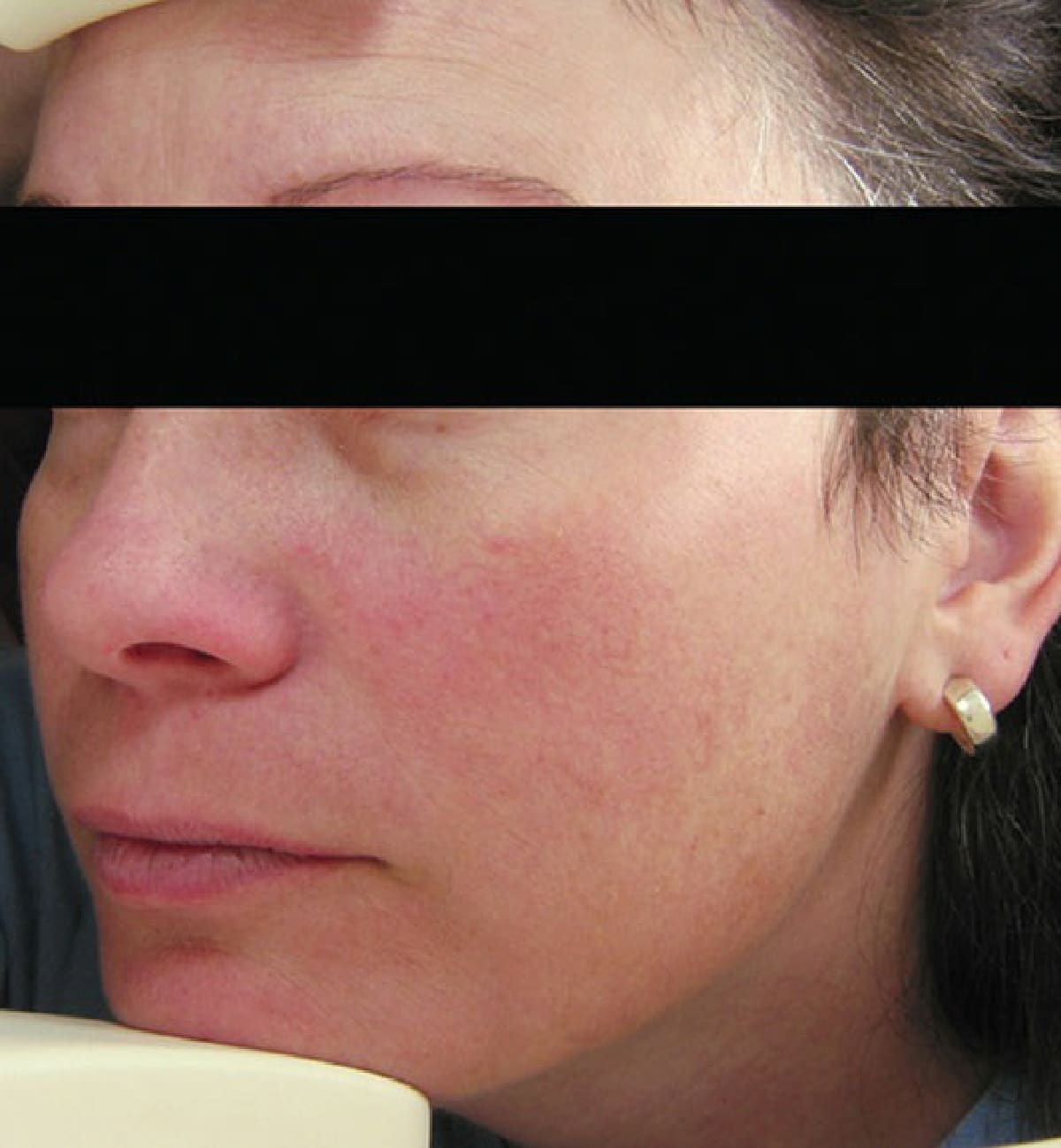
Figure 77-6. A 38-year-old woman with erythematotelangiectatic rosacea at baseline.
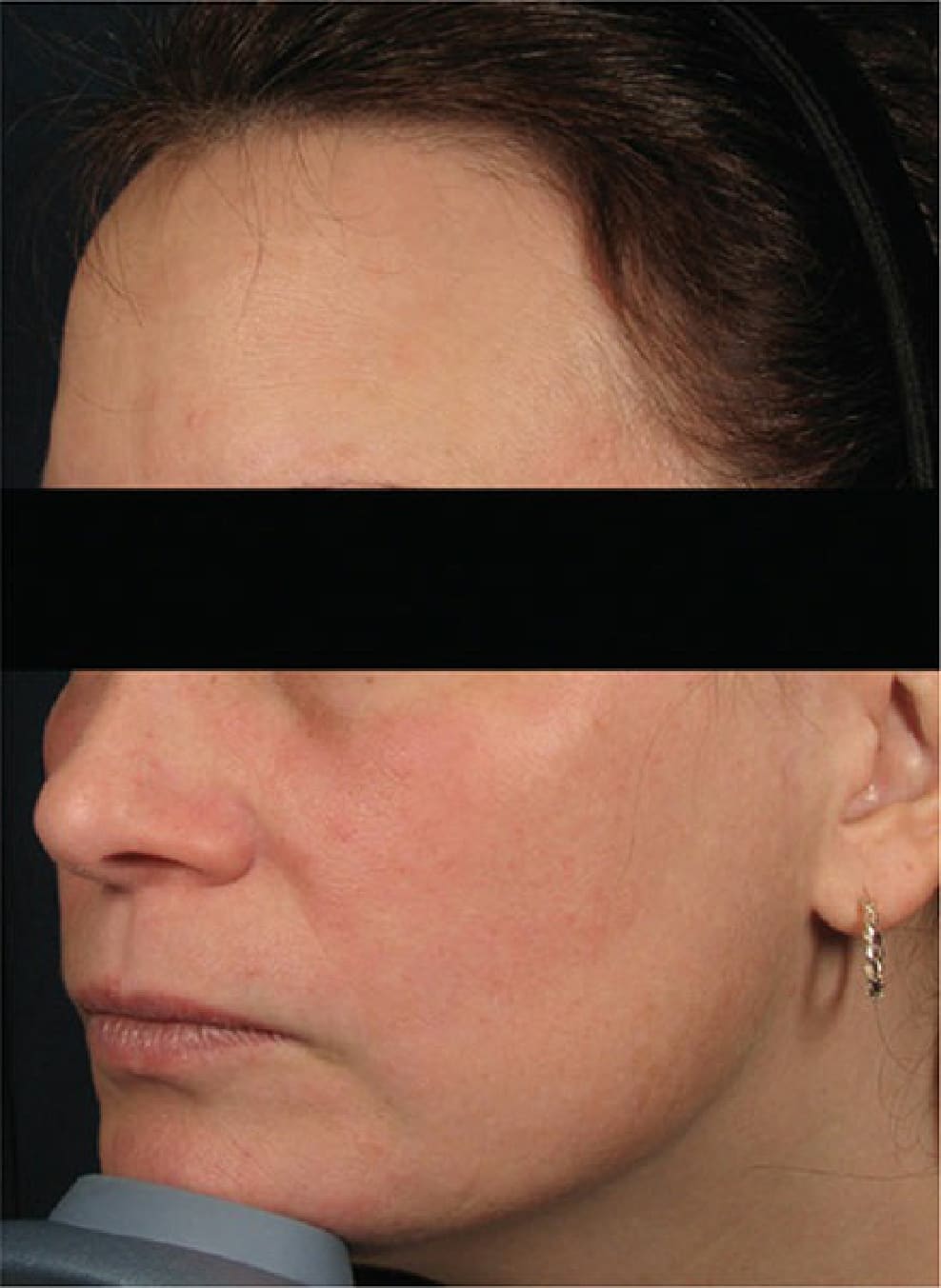
Figure 77-7. The same patient 2 years later after undergoing IPL treatments every 6 to 12 months to control her signs and symptoms.