Step eight: Postprocedure protocol
Step eight: Postprocedure protocol
At the end of the procedure the hair is washed with hydrogen peroxide and sterile saline and combed out to free tangles and debris. Many surgeons use suction drains, such as a Jackson–Pratt drain, although the author prefers to simply place 14-gauge IV catheters in the midportion of the subcutaneous plane in the lower confines of the neck flap bilaterally and leave them in place for 24 hours (Fig. 74-16).
Most surgeons use a full head wrap postsurgical dressing. I have abandoned this and do not routinely use any dressings, as many of my facelift patients undergo simultaneous laser resurfacing. Although I have described multiple steps that I omit, it is best for novice surgeons to follow common protocol until their experience increases. A common facelift dressing can be placed by putting antibiotic ointment on gauze over the incisions, and placing gauze fluffs over all undermined flaps (or a pad across the submental region). An elastic Velcro head wrap or elastic stretch tape (Coban) can then be used to lightly compress (never heavy compression) the underlying gauze and surgical sites (Fig. 74-17). If a dressing is used, it is preferable to use the Velcro type as it can easily be removed for inspection and replaced.
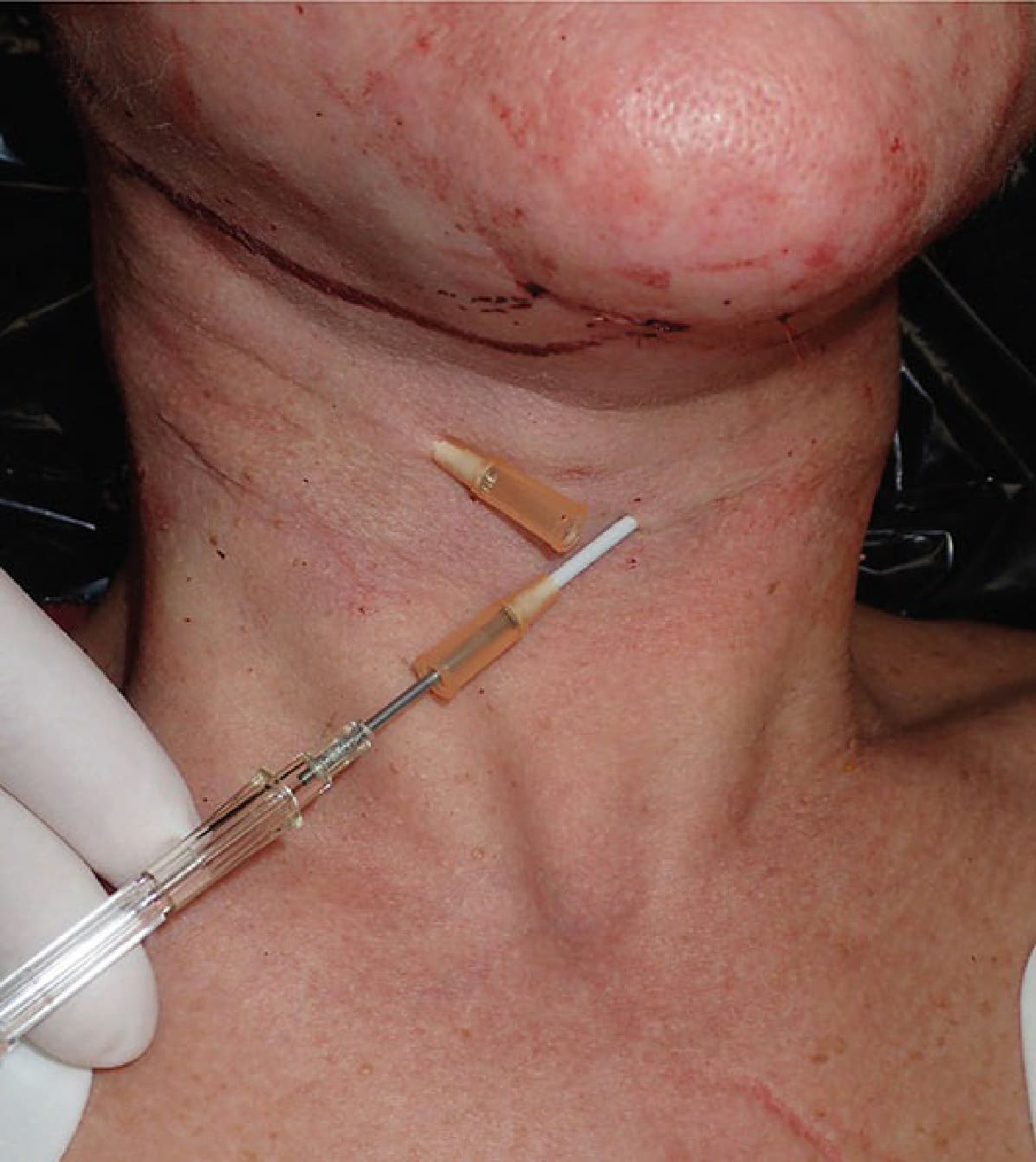
Figure 74-16. A 14-gauge IV catheter on each side of the submandibular region may be placed for 24 hours to allow passive drainage.
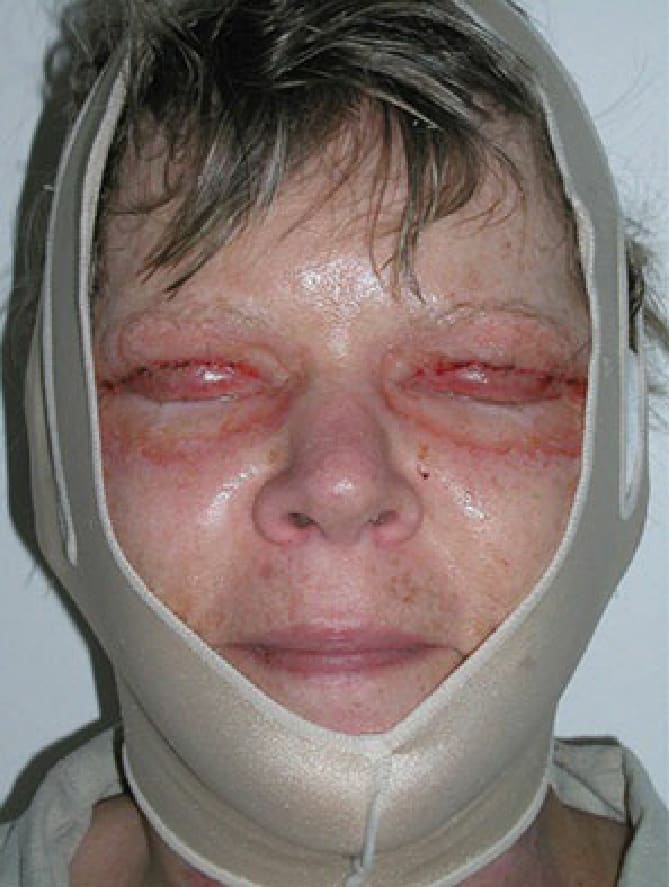
Figure 74-17. A typical post-facelift dressing consists of gauze pads over all incisions and flaps covered with an elastic compression dressing. Only minor compression is required, and excessive compression can damage the delicate flaps.