Step two: Pre- and postauricular incisions
Step two: Pre- and postauricular incisions
The preauricular incision is begun at the sideburn region. All hairline incisions are made with the scalpel at an extreme bevel of approximately 20 degrees. This transfollicular (or trichophytic) type of incision purposely transects several rows of distal hair follicles, leaving intact bulbs that will regrow through the scar (Fig. 74-3).
The incision now navigates the helical attachment, and these non-hair-bearing skin incisions are made in a conventional manner without beveling the incision. The incision follows the helical attachment and then proceeds in a pre- or posttragal fashion depending upon operator preference. Pretragal incisions may be curvilinear, and posttragal incisions follow the tragal anatomy (Fig. 74-4). The incision then continues at the junction of the lobe and cheek, around the back of the lobe, and into the postauricular sulcus. The sulcular incision is continued to the greatest width of the ear (to hide the incision behind the pinna), and then tapers along the occipital hairline. This hairline incision is made just into the hair follicles as previously described for the sideburn (Fig. 74-5).
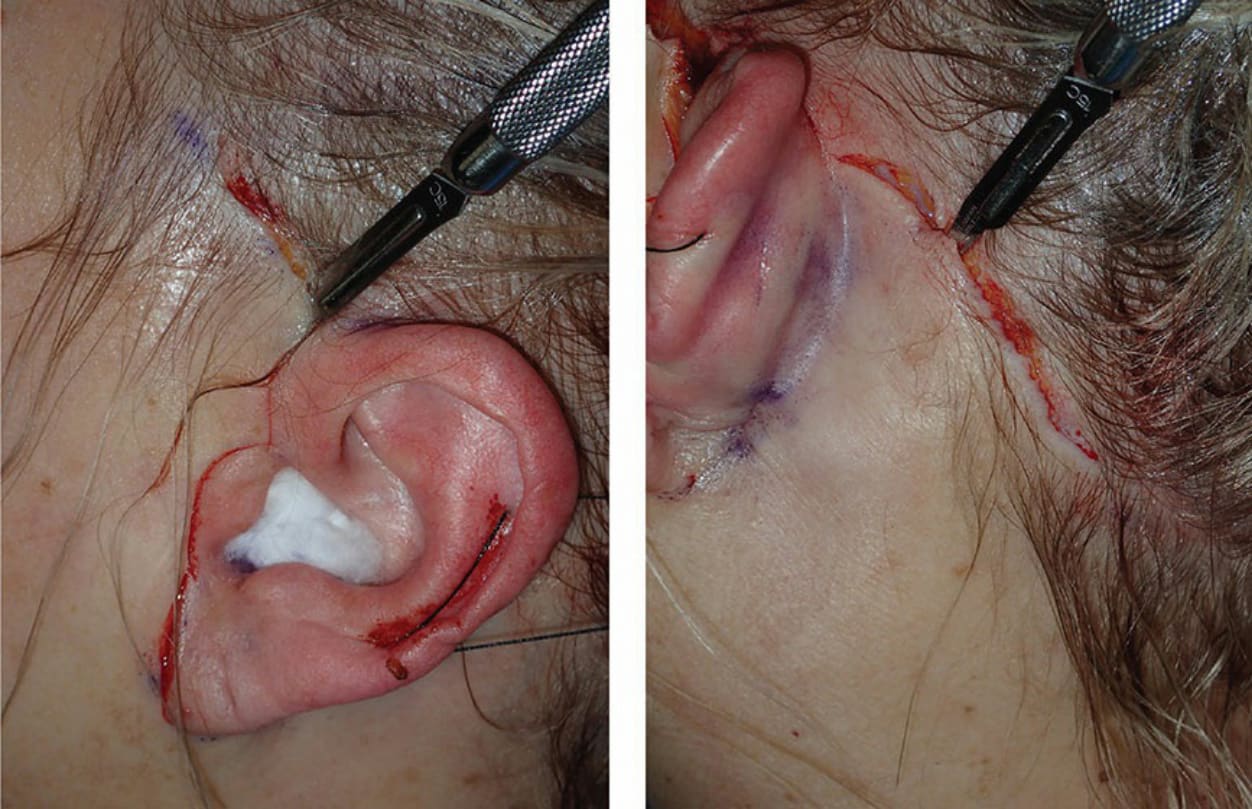
Figure 74-3. Demonstration of the hyperbeveled transfollicular incision in the hair-bearing regions.
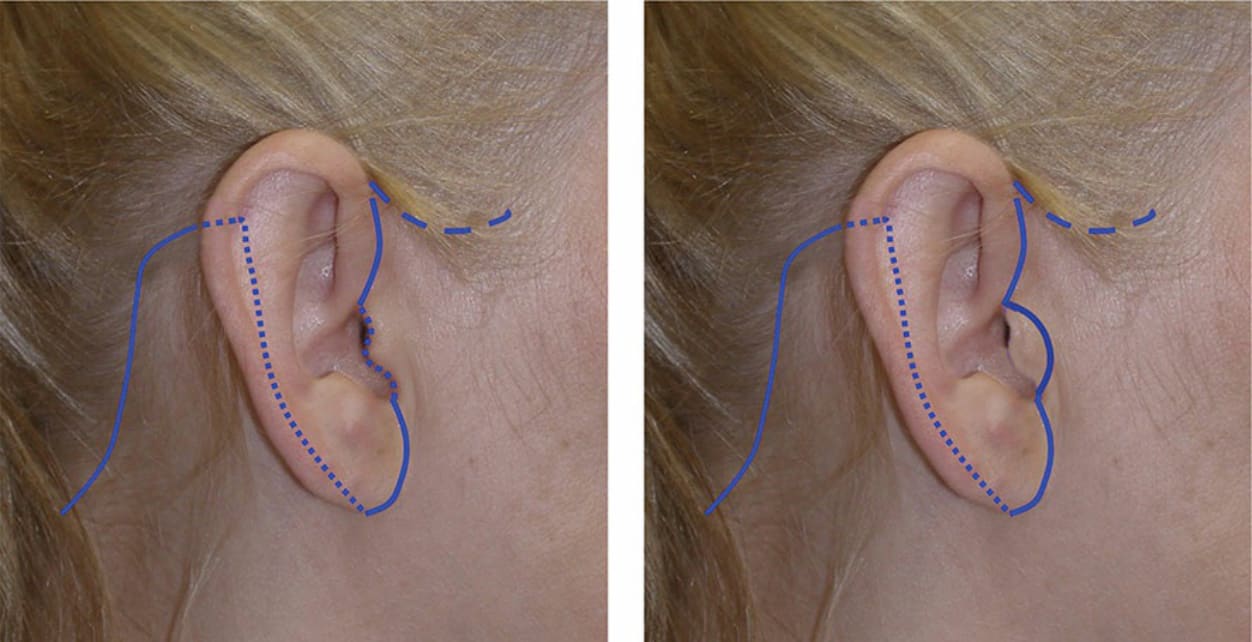
Figure 74-4. This image shows the typical incisions used by the author in facelift surgery. The left picture is retrotragal and the right picture is pretragal.
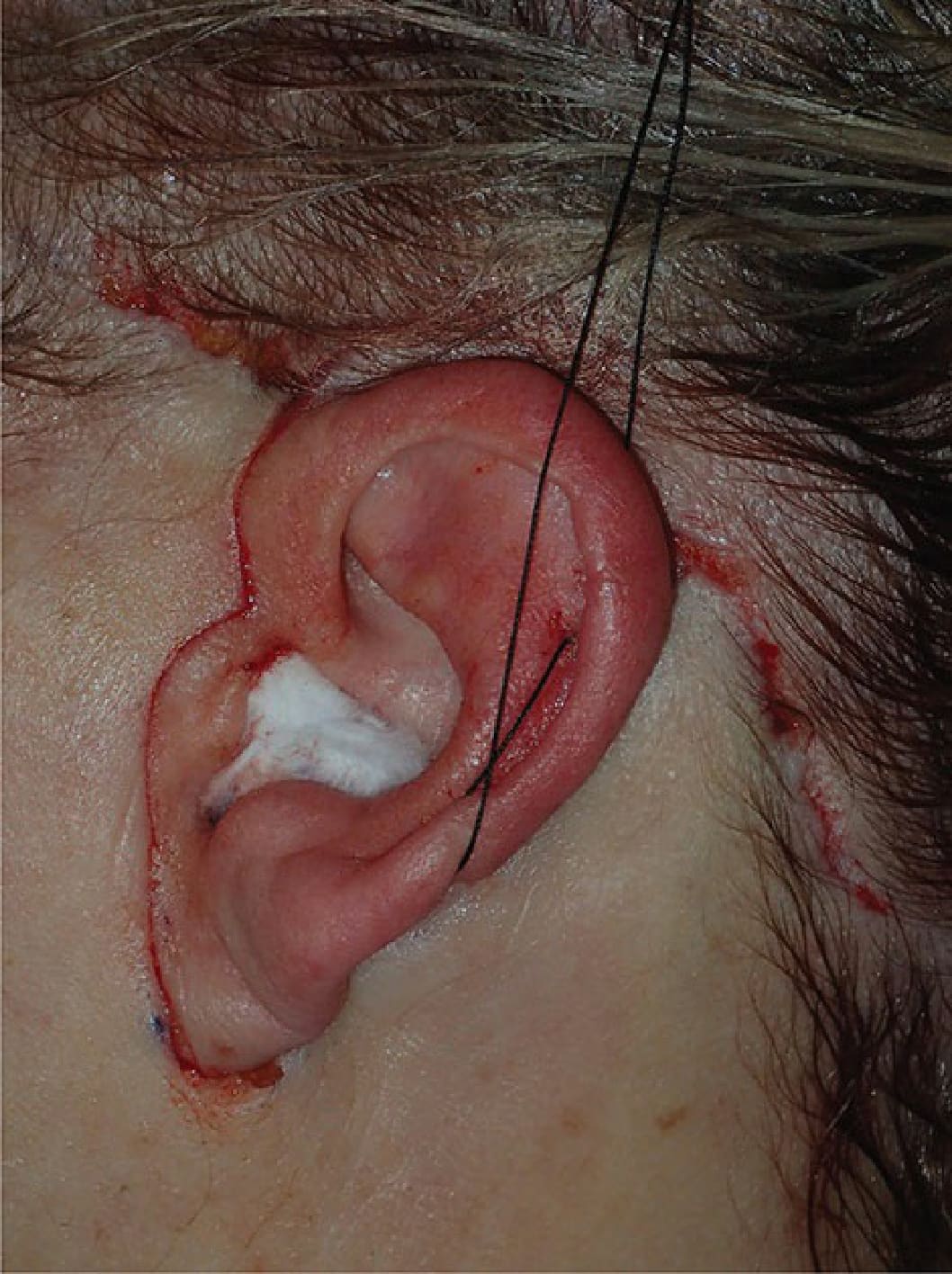
Figure 74-5. Typical facelift incisions are shown.