Step one: Midline platysmaplasty
Step one: Midline platysmaplasty
Table 74-1 summarizes the surgical steps in the standard facelift procedure. After waiting sufficient time for the tumescent anesthesia to take full effect, the procedure is begun with the submental incision, assuming platysmaplasty is planned. Liposuction is performed before or after the skin incision and dissection depending on surgeon preference.
It is important to keep the incision at or slightly below the submental crease and horizontally level. A skewed incision in this region is very noticeable. The incision extends to the subcutaneous plane and scissor dissection is begun (Fig. 74-2). It is important to leave several millimeters of subcutaneous fat on the underside of the dermal surface. The extent of the dissection is commensurate with the amount of aging and skin excess. The average undermining extends from the mandibular border to the thyroid cartilage, and laterally to the sternocleidomastoid muscle region bilaterally. Most patients have significant fat excess that necessitates liposuction, generally performed under direct visualization. Subplatysmal fat is not generally addressed unless extremely excessive.
The medial platysmal borders are then identified. If significant laxity exists, the medial borders can be trimmed laterally to eliminate muscle excess. Horizontal mattress sutures are then placed from the most inferior accessible region (usually between the thyroid cartilage and hyoid bone) and continued along in an equally distributed fashion to the mandibular border. In general, five to seven 2-0 Vicryl sutures are placed.
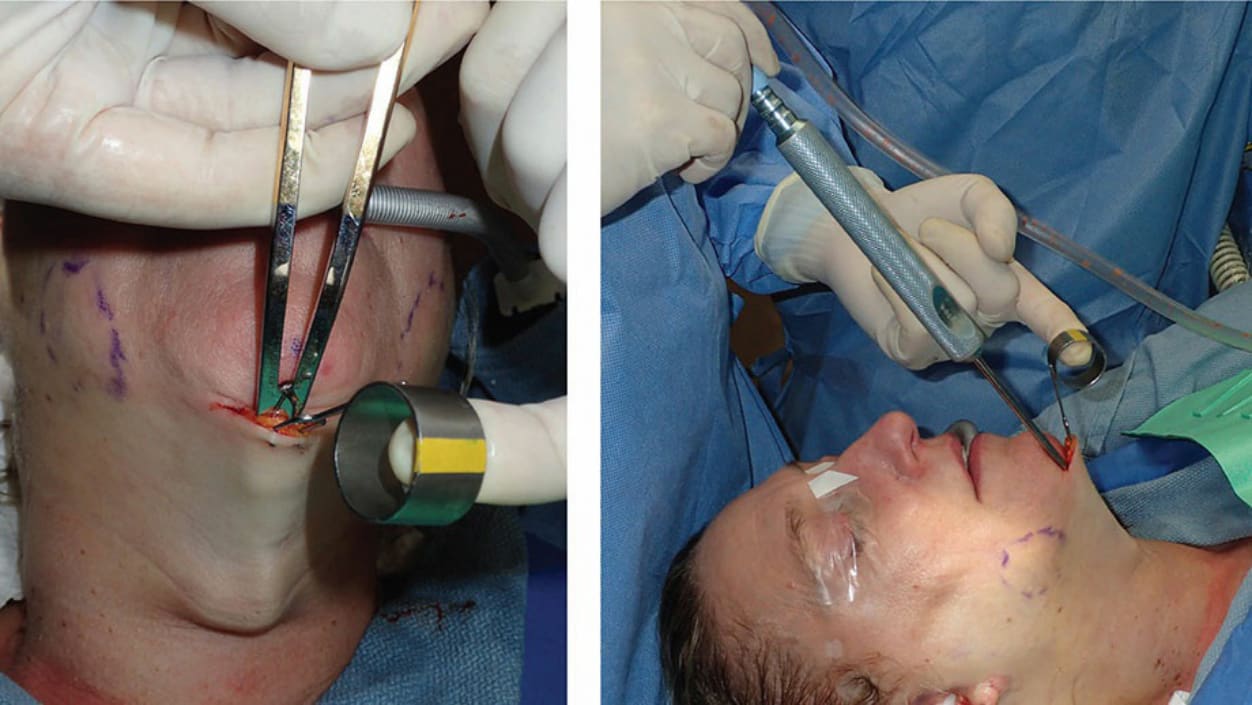
Figure 74-2. The left image shows the subcutaneous dissection through the submental crease and the right image shows open liposuction of the submental region.
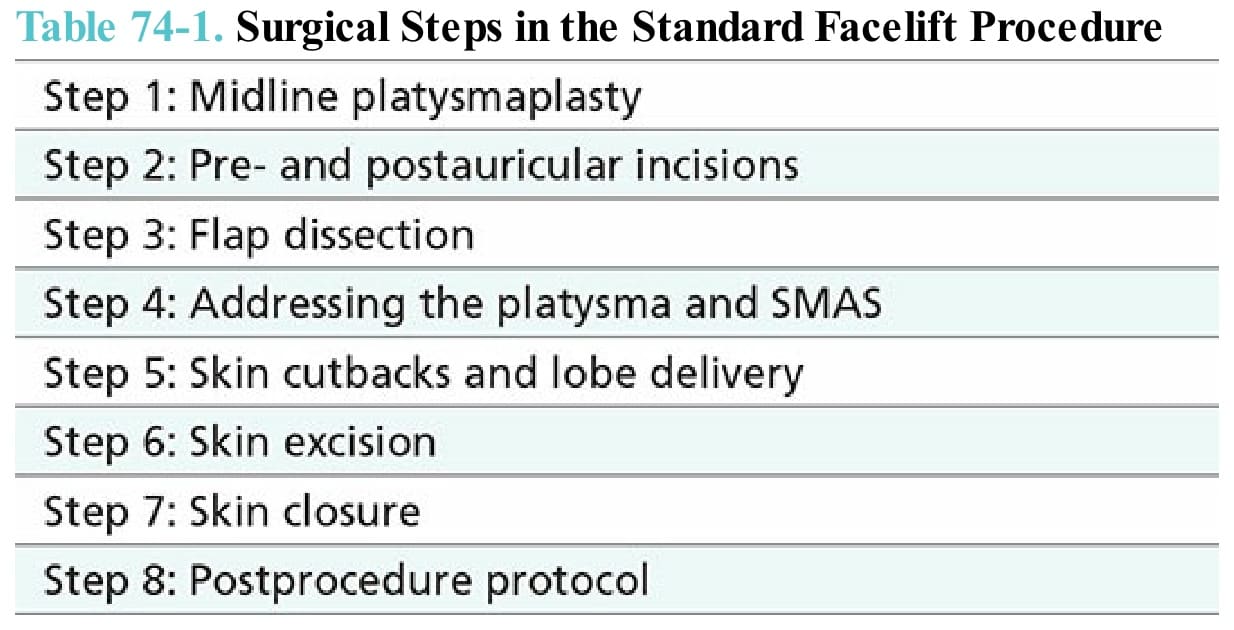
Table 74-1. Surgical Steps in the Standard Facelift Procedure