NONABLATIVE FRACTIONAL LASER
NONABLATIVE FRACTIONAL LASER
In 2005, nonablative fractional laser resurfacing (NAFR) entered the market.12 Unlike nonfractionated lasers, fractionated lasers produce MTZ one-tenth of the diameter of a hair follicle scattered throughout the treatment field. The MTZ depth may be set between 0 and 550 µm with diameter ranging from 50 to 150 µm. As a nonablative laser, the heat targets the dermis and does not vaporize the stratum corneum, leaving a natural bandage covering the coagulated tissue of the damaged epidermis and dermis. The creation of MTZ leaves surrounding keratinocytes uninjured and promotes faster healing than fullfield ablative lasers, while still stimulating dermal fibroblasts and collagen formation.
There is an increased desire for resurfacing technologies for patients of skin types V and VI.7 Those with darker skin types have increased epidermal melanin, larger melanosomes that are widely distributed within epidermal keratinocytes, and more reactive fibroblasts and melanocytic responses. These features increase the tendency to develop dyspigmentation after exposure to laser light.7 As with the nonablative nonfractionated devices, nonablative fractionated lasers (non-AFLs) are safer in Fitzpatrick skin types up to VI than ablative lasers, and allow patients a more rapid post-treatment recovery.6 Current devices on the market include 1,440-nm Nd:YAG (Cynosure Affirm, Palomar StarLux), 1,550-nm Erbium glass (Solta Fraxel re:store), 1,565-nm fiber (Lumenis ResurFx), and 1,927-nm thulium fiber (Solta Fraxel re:store Dual). Erbium-doped 1,550-nm nonablative lasers (Fraxel re:store Dual 1,550 nm) have been successful in resurfacing acne scars in Fitzpatrick skin types IV to VI,13 but with a significant incidence of self-limited postinflammatory hyperpigmentation among those with Fitzpatrick skin types IV to VI. Preoperative treatment with hydroquinone does not diminish this risk.13 Unlike nonfractionated lasers, only 10% of patients treated with NAFR will develop an acneiform eruption, and 19% will develop milia.10 In addition to rhytides, NAFR has been successfully used in the treatment of hypertrophic scars, including those resulting from surgical procedures, such as Mohs surgery.14 When treating scars with an erythematous component, it is recommended to initially treat with a vascular laser, such as a pulsed-dye laser (PDL), and then NAFR, to ensure that the PDL is treating the vascular component of the scar, not the erythema from the NAFR.15 For erythematous surgical scars, a protocol of PDL treatments every 4 weeks followed by NAFR has been suggested. Eilers et al.15 recommend settings of 30 to 50 mJ and 20% to 39% density for NAFR resurfacing of hypertrophic surgical scars (Figs. 67-3 to 67-6).15
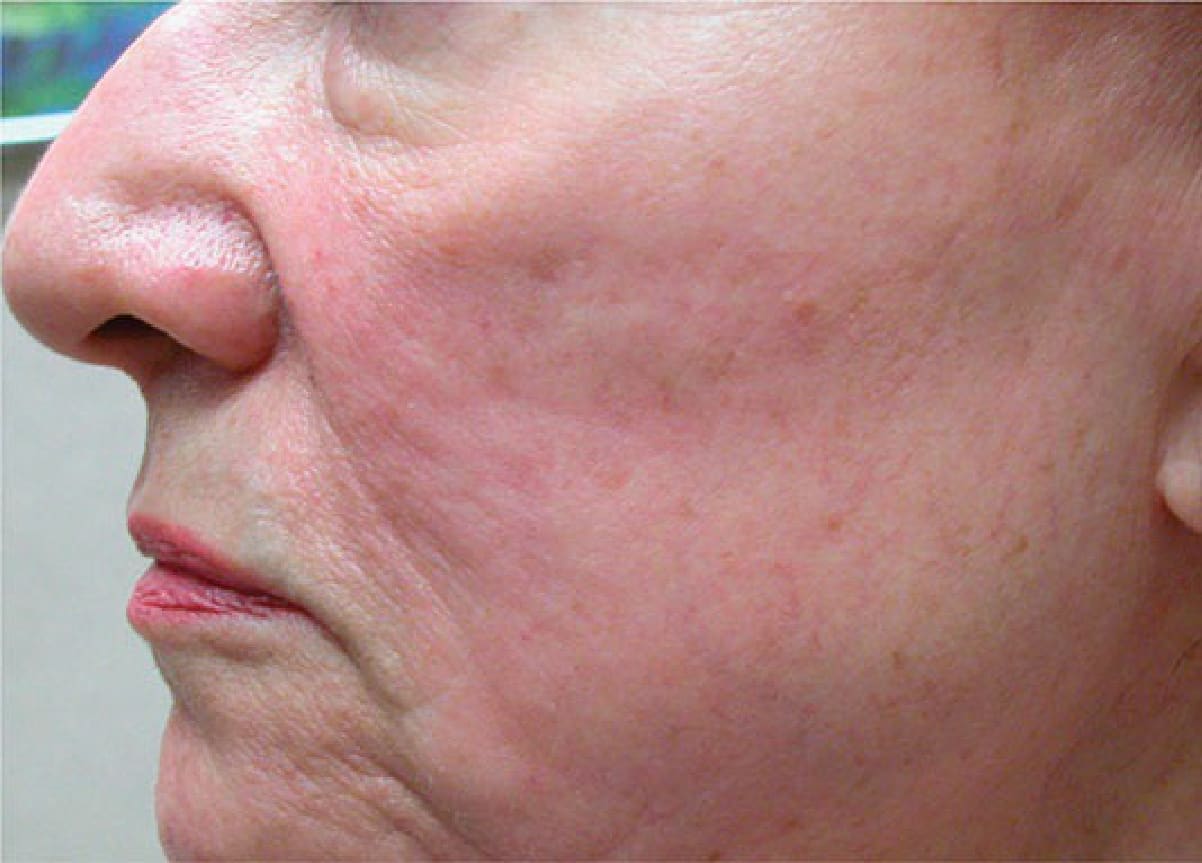
Figure 67-3. Before nonablative ablative fractional resurfacing.