Telangiectasias
Telangiectasias
Telangiectasias are approximately 0.1 to 1.0 mm in diameter and are primarily found on the face, particularly on the nose, cheeks, and chin. They can be associated with systemic diseases such as liver disease, mastocytosis, or estrogen-secreting tumors, but are most frequently found in patients with chronic photodamage or rosacea. A number of different lasers have been used for treatment of telangiectasias, including PDL (purpuric and nonpurpuric settings), argon, krypton, pulsed KTP, and Nd:Yag lasers.
Purpuric settings consist of a single pass with shorter pulse durations (0.45, 1.5 ms) and higher fluences. The purpura can persist for days to weeks, necessitating patient counseling for potential down time, though more aggressive settings are associated with higher clearance rates per treatment session. Nonpurpuric settings require multiple passes with longer pulse durations (6 ms) and lower fluences. Nonpurpuric settings often result in erythema and occasional urticaria. However, due to the lack of purpura, there is essentially no down time. Nonpurpuric settings demonstrate variable response rates, often requiring more treatments than needed when purpuric settings are utilized. Nonpurpuric settings may be better suited for patients with recurrent flushing and central facial erythema (Fig. 64-3).
Nd:Yag lasers may be used in darker skin types with darker and deeper facial vessels. Increased fluences are required due to decreased absorption at the 1,064 nm wavelength. One study showed that smaller, deep red vessels required higher energies and shorter pulse widths with Nd:Yag lasers, and saw moderate to significant improvement with two treatments with an endpoint of blanching.12
Rosacea and diffuse erythema have been successfully treated with PDL, IPL, and long-pulsed Nd:Yag (532-nm) laser. PDL lasers are typically set at longer pulse durations. Fluence and number of passes are dependent on the amount of chromophore and location. These settings are usually set at a lower starting point and then gradually increased with multiple treatments over 1- to 2-month intervals. PDL settings vary depending on the brand of machine used.
IPL’s broad spectral range results in nonselective targeting of numerous chromophores, including oxyhemoglobin, thus improving vascular lesions. Treatment parameters include three to five treatments with 3- to 4-week intervals between treatments. Due to nonselective treatment, IPL is often utilized for full face treatment of redness reduction, improved skin texture, and improvement of dyspigmentation. However, treatment results vary and patients may require numerous treatments to achieve meaningful clinical improvement.
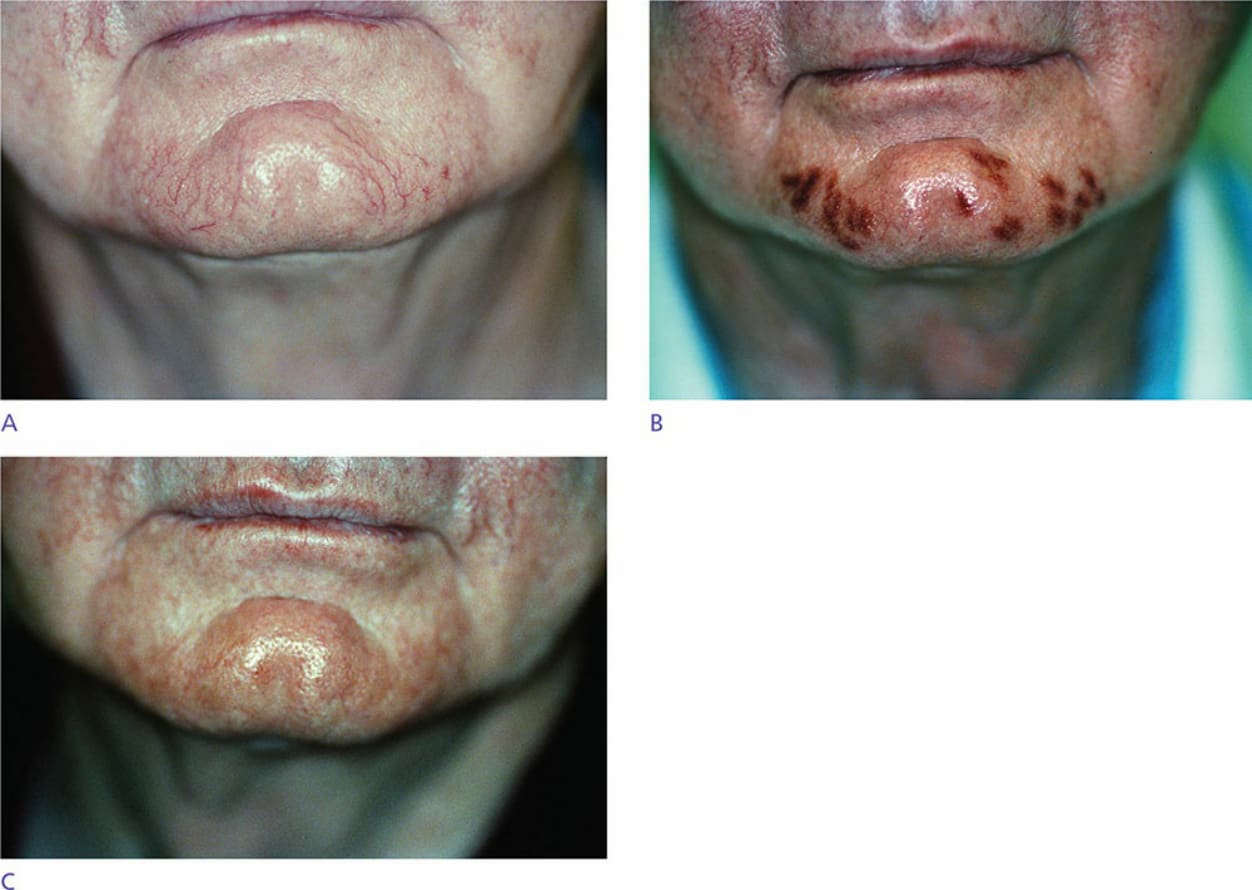
Figure 64-3. PDL treatment of telangiectasias with purpuric settings. Before treatment (A), purpura within a few days following treatment (B), and several weeks posttreatment (C).