Postoperative after care and follow-up
Postoperative after care and follow-up
For an HDBC procedure, follow-up care and postoperative healing are essential to prevent complications and to ensure permanent body shape changes (Table 60-2).14,15 High definition procedures are much more aggressive than traditional tumescent approaches due to the increased number of areas treated in a single procedure, a larger amount of total fat removal as compared to standard small volume cases, as well as the superficial nature of etching. This can lead to more significant dehydration requiring intravenous fluid replacement starting 12 to 24 hours after the procedure, the development of a postoperative anemia requiring hyperbaric oxygen therapy, a higher risk of infection due to the insertion of drainage tubes requiring antibiotics to cover both staph and strep species, an increased risk of seromas even with proper double compression and lymphatic massage, as well as the development of fibrotic banding that requires radiofrequency and/or ultrasound manipulation of tissue immediately after the procedure and long-term (3–6 months) fascial massage. It is essential that in the preoperative evaluation and consenting process there is complete discussion over the
postprocedural healing process with an HDBC procedure as this is extremely different (much longer and more difficult) than a traditional liposuction procedure and requires a significant number of steps after the procedure itself to ensure proper healing and an ultimate outcome that is permanent.
Lymphatic massage Stagnant lymphatic flow can cause increased swelling and chronic inflammation, as well as increased seromas and fibrotic tissue after aggressive surgery. Therapy should be started no more than 24 hours post procedure to facilitate tissue healing and a more rapid recovery.
Hyperbaric oxygen Hyperbaric oxygen therapy (HBO) allows a patient to breathe concentrated oxygen at pressures greater than normal atmospheric pressure, helping the concentrated blood cells to speed up the healing process. It has been documented that with surgical cutting procedures HBO can decrease the rate of complications such as seromas, hematomas, and scarring.16,17 Increasing the blood flow and oxygenation to tissue also helps to increase the functional mobility of the body, which in turn helps patients return to activities much more quickly after an extreme procedure. Daily treatments for 2 weeks are helpful for HDBC procedures, especially if implants are placed and/or skin removal surgery is performed.
Ultrasound and radiofrequency devices Similarly to lymphatic massage, manipulation of tissue through mechanical stimulation as well as heat increases ability for the skin to heal properly as well as decrease swelling. In one study, PAL combined with external ultrasound with or without postoperative deep tissue massage/suction (endermologie) was seen to decrease the overall complication rate, contour irregularity, and skin necrosis. There were no statistical differences regarding other complications.18 Radiofrequency skin manipulation (Exilis Ultra or Venus Legacy) may be used starting no more than 7 days after the procedure and continuing twice weekly for 3 months after superficial and/or
large volume HDBC liposuction procedures. External ultrasound can begin the day after the procedure in conjunction with lymphatic massage.
Surgical drainage tubes Placements of surgical drains are necessary in procedures that have large volume reduction and aggressive superficial skin manipulation. In traditional practice, port sites are left open to drain, but they often close too soon (estimated 24–72 hours in most instances) after the procedure, leaving fluid to build up and increasing the rate of seroma, chronic inflammation, and hematoma. This is a reason why port closure with sutures is also not recommended unless fat grafting has been performed in the area. When superficial liposuction is performed, drainage can occur for weeks, and tube placement ensures fluid movement out of the body during the initial 1 to 2 weeks, after which the tubes will be removed and sites sutured closed if needed (for cosmetic purposes). If progressive tension suturing is used for the abdominoplasty, drains may not be required when liposuction is concurrently performed.19–21
CONCLUSIONS
HDBC is as much a science as it is an art. The demand for a more sculpted and defined body has required surgeons to make advances in techniques and approaches to surgical body shaping that not only remove large volumes of fat in multiple locations but also use this fat for muscular defining and body shaping. Newer energy-based modalities have allowed these surgeons to address not only the deep subcutaneous layers to remove bulk but also work in the superficial layers for etching and muscular shaping that have long been avoided. For a full body transformation, more aggressive HDBC procedures can be combined with surgical implants and/or skin removal in a series of procedures to obtain an ultimate transformation.
Postoperative care and follow-up are essential to ensure long-term complications are minimal. Future studies may assess the importance of noninvasive devices in the postoperative healing phase as well as how to further improve contour, cellulite, and skin tightening results in conjunction with HDBC surgical techniques.
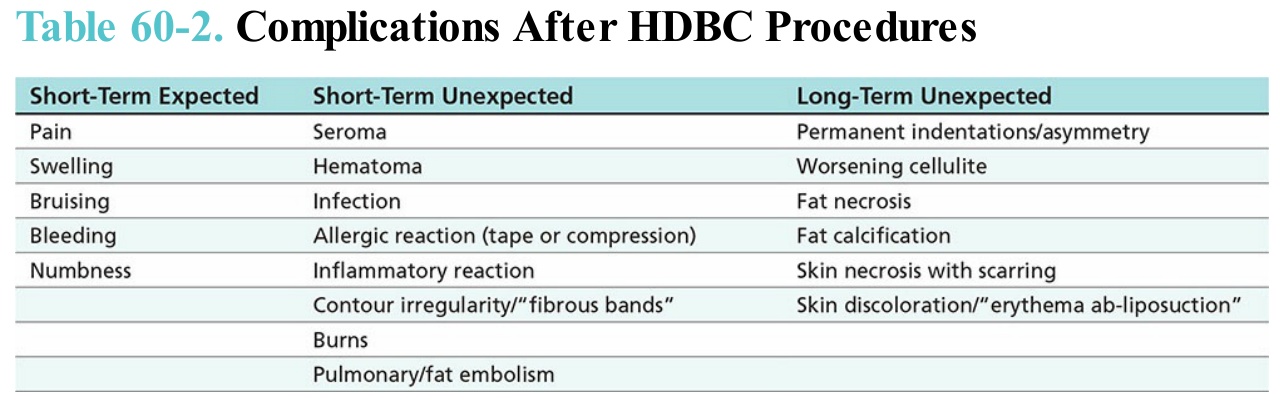
Table 60-2. Complications After HDBC Procedures