HISTORY
HISTORY
Over the past few decades, fat removal procedures have become increasingly popular, correlating with an increased desire for the perfectly smooth, contoured, lifted, and cellulite-free body. Increased social awareness of “healthy” and “organic” lifestyles and a renewed stress on health and beauty have popularized surgical and nonsurgical body contouring procedures. In 2017, liposuction was the second most common plastic
surgical procedure performed, and nonsurgical fat reduction had developed a household name due to increased advertising to consumers.1
A decade ago, liposuction was the only option for fat removal/reduction and the only option for any body contouring (e.g., shaping and tightening of the body) beyond having truly invasive skin removal surgery.2,3 Looking back, the results obtained with traditional surgical liposuction methods almost match that of our current nonsurgical options such as freezing of the fat (e.g., Coolsculpting) (Fig. 60-1A and B). At this moment, nonsurgical combination therapy (e.g., Coolsculpting) in combination with laser (e.g., Sculpsure), radiofrequency (e.g., Vanquish, Venus Legacy, Thermage, and/or Exilis Ultra), ultrasound (e.g., Ultrashape), and/or vibration/shock therapy (e.g., Cellutone and/or Z Wave) can together nearly approximate the results of traditional liposuction (Fig. 60-2).
Patient expectations are significantly higher than in the past, as outstanding results are now expected in the consumer-driven, competitive aesthetic environment. Patients not only request improvements in fat removal, but also expect body shaping/contouring, skin tightening and lifting, cellulite reduction, as well as improvements in the quality of the skin such as texture and tone (Fig. 60-3). They demand a visibly athletic toned body, one that is sculpted and contoured, over one that is just “soft” or “flatter.” These expectations require the body contouring aesthetic surgeon to not only be technically skillful and meticulous, but also artistic. This is not to say that traditional liposuction methods with a standard tumescent approach will not give “good” outcomes (see Fig. 60-1); it is just that the results obtained are standard and expected, and the techniques used are basic compared to the combination techniques currently used for HDBC.
Conventional liposuction can remove fat and mildly tighten skin and improve body shape, but cannot give the degree of improvement that an HDBC procedure can, in which multiple steps are used to remove fat, tighten skin, improve cellulite, and create definition and contour with etched lines. Instead, combining traditional liposuction techniques with modern technologies such as VASER ultrasound enables the surgeon to be a sculptor in which multiple steps are used to obtain a contoured and defined body that matches the underlying anatomical landmarks.4
Alfredo Hoyos was the pioneer surgeon who initially defined and perfected this technique in which both deep and superficial layers of the adipose tissue were treated. The technique has advanced into a process of debulking fat, creating definition, and enhancing natural body lines using harvested fat to reshape musculature. This procedure may be challenging, but is the only option for those patients desiring something astounding (Fig. 60-4A and B). Traditional liposuction approaches combined with noninvasive fat reduction and skin tightening technologies are unable to provide such dramatic body transformations (Fig. 60-5).
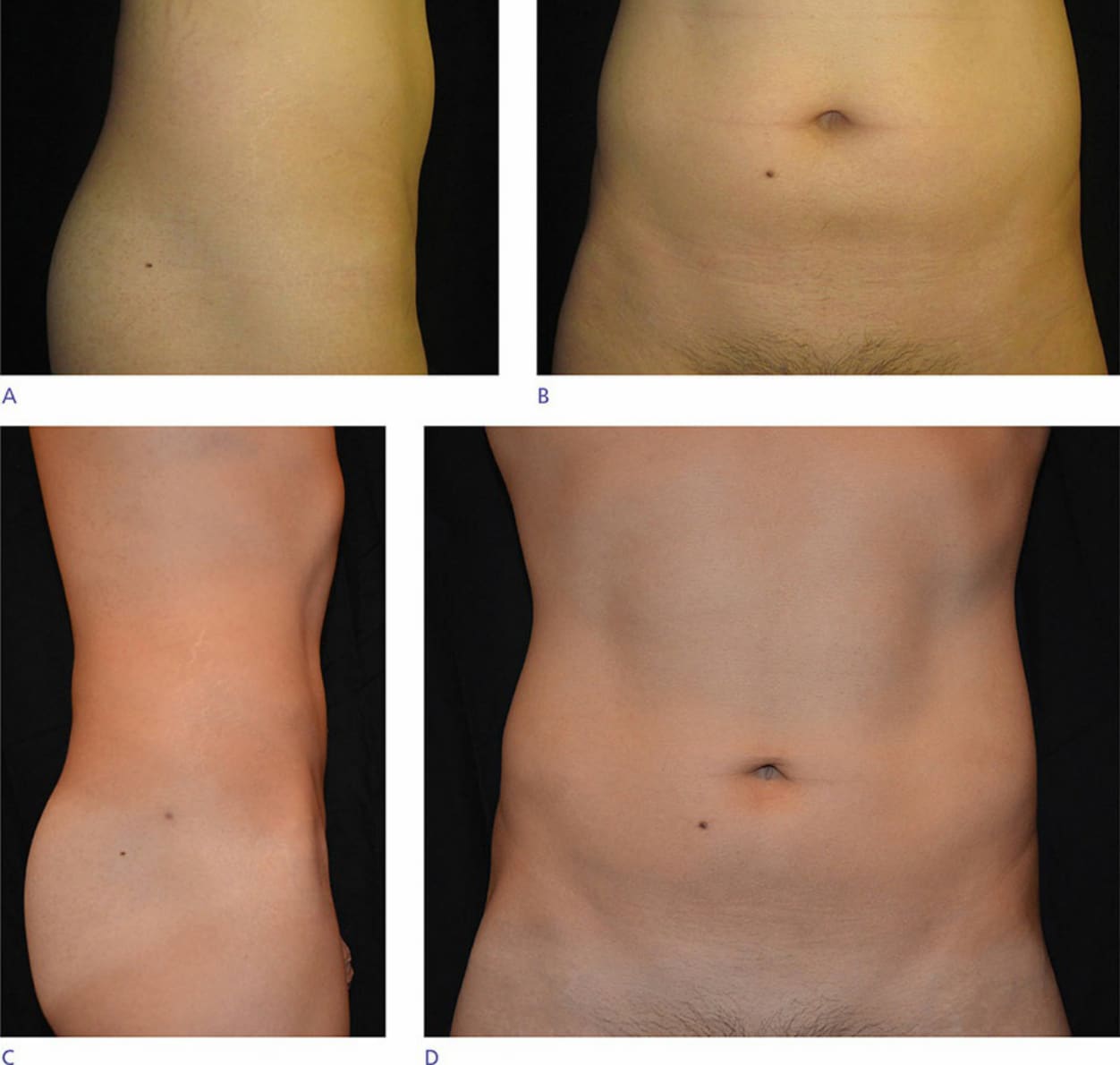
Figure 60-1. Traditional tumescent liposculpture (circa 2007). Standard approaches give some improvement in overall fat reduction and contouring, but results seen here are close to what can be obtained with nonsurgical body contouring methods. A, B: before; C, D after traditional liposuction.
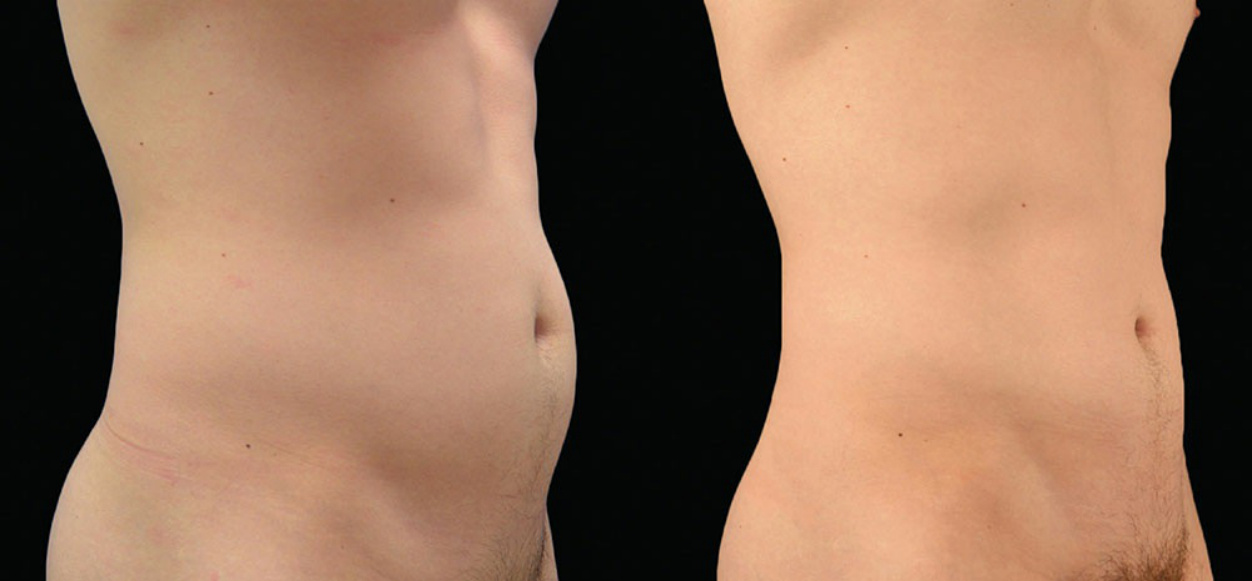
Figure 60-2. Nonsurgical body contouring. Before (left) and after (right). SculpSure of abdomen and flanks (single treatment) followed by 6 weekly Vanquish radiofrequency treatments to the front and back of abdomen.
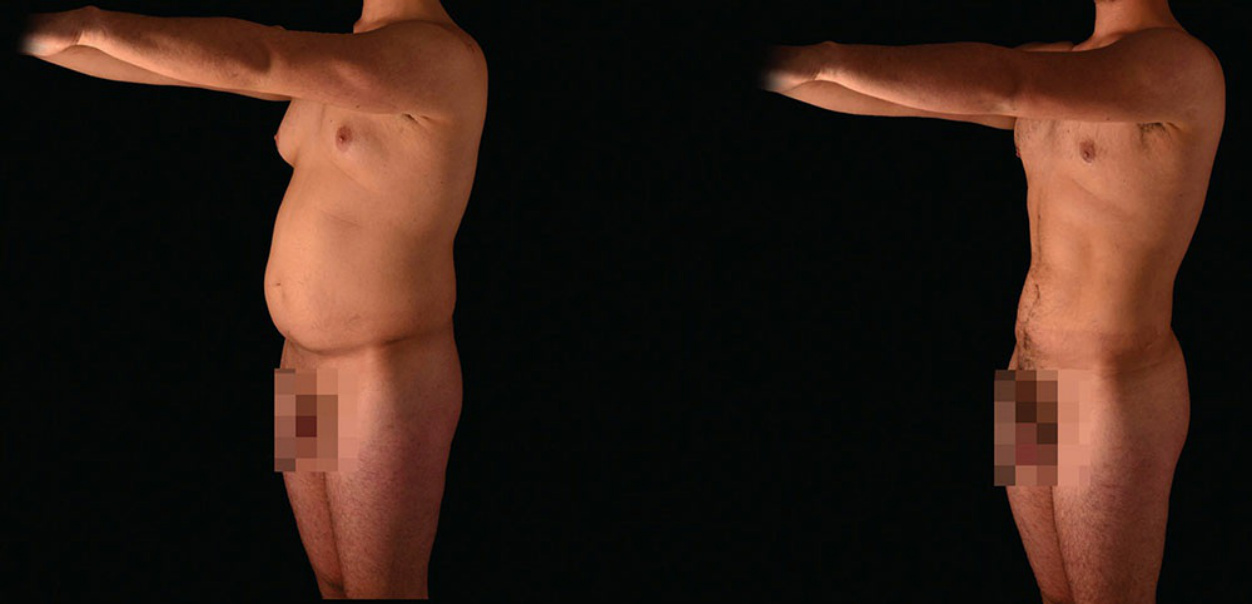
Figure 60-3. Male high definition body contouring. Before (left) and after (right) extreme body transformation including contouring of the circumferential torso, chest, and arms with fat grafting to the chest, shoulders, and buttock, as well as male breast gland surgical removal. At the consultation, this patient did not expect a traditional moderate improvement without contouring; he came in for a complete body change with definition and shape change.
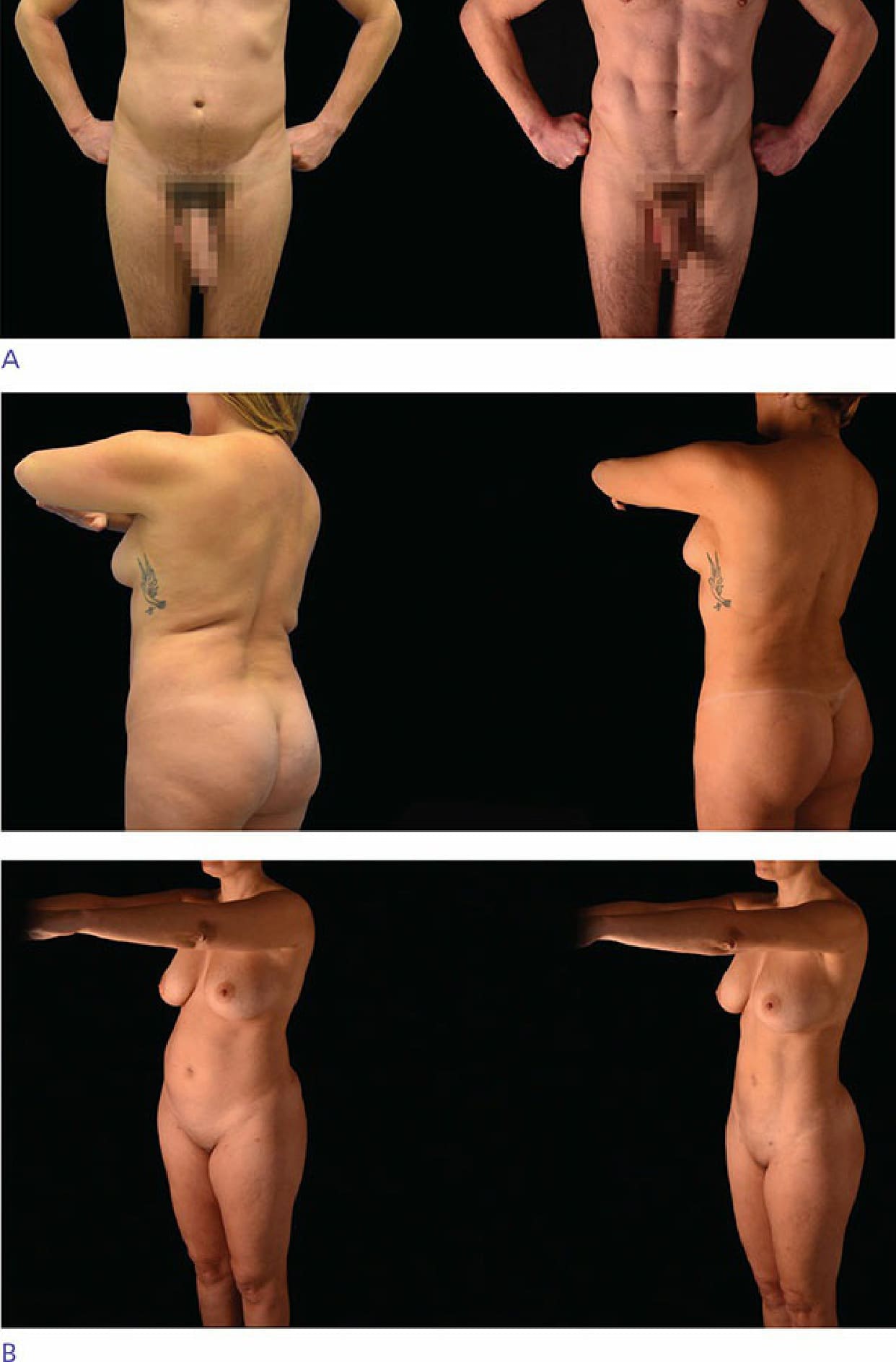
Figure 60-4. (A) Male high definition body contouring. Before (left) and after (right) high definition body contouring of the circumferential torso, chest, and arms, with fat grafting to the chest, shoulders, and buttocks. (B) Female high definition body contouring. Before (left) and after (right) high definition body contouring of the circumferential torso, arms, neck, and inner thighs, with fat grafting to the buttocks and breasts.
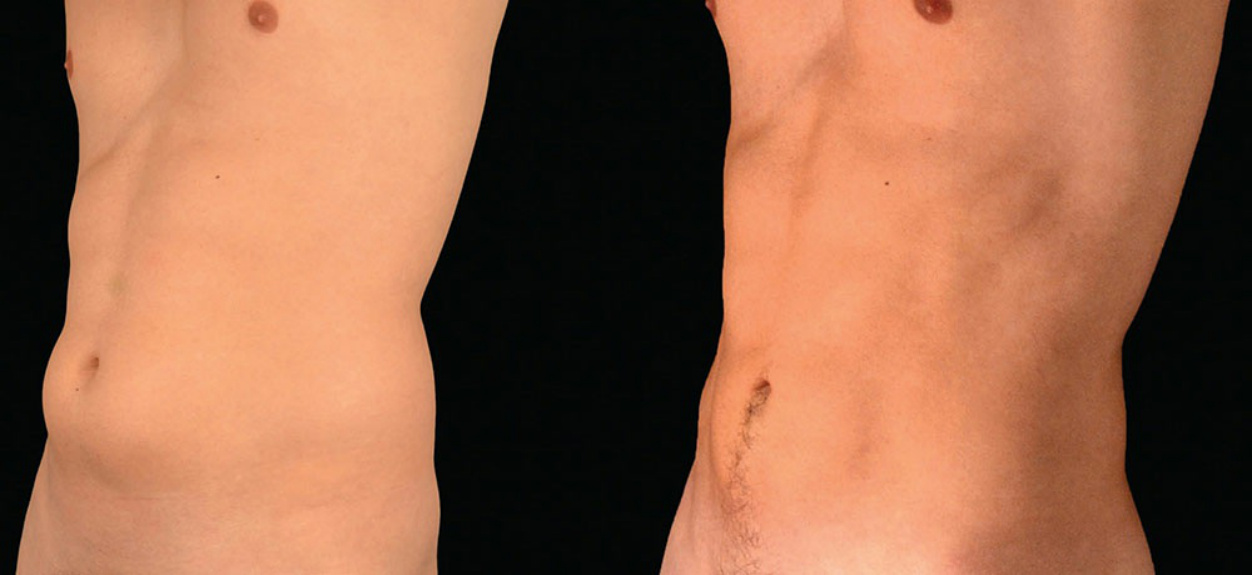
Figure 60-5. Traditional liposuction combined with nonsurgical body contouring. This patient had Coolsculptinginduced paradoxical hyperplasia of the lower abdomen (left) and had local tumescent traditional liposuction followed by 6 weekly treatments of Vanquish radiofrequency and Cellutone vibrational therapy. Results are seen at 3 months post procedure (right).