Hyaluronic acid derivatives
Hyaluronic acid derivatives
Since their first approval in 2003, HA derivatives have become the most common filler used for rejuvenation (87% of all soft-tissue filler procedures).11 HA, also called hyaluronan, is an endogenous glycosaminoglycan, contributing to the extracellular matrix and conserved among mammals and tissue types. It serves many biologic functions, regulating tissue remodeling and cell migration. HA’s anionic structure readily binds water to form a gel, which is particularly important for hydration, lubrication, and volumization of connective tissue. Because of its hygroscopic property, the amount of dermal HA dictates tissue viscoelasticity; therefore, as the concentration of HA decreases with age, so does the skin’s ability to retain water and maintain contour.12,13
HA is a linear mucopolysaccharide with long repeating disaccharide chains of Dglucuronic acid and N-acetylglucosamine. The longer the chain, the higher the molecular weight. Hyaluronidase cleaves high–molecular-weight hyaluronan into oligosaccharides, while β-N-glucuronidase and β-N-acetyl-hexosaminidase degrade these smaller cleaved sugars. This degradation occurs continually under normal circumstance, and unmodified HA persists in vivo for only 12 to 24 hours. Cross-linking the polysaccharide side chains increases tissue stability and ensures a more acceptable tissue residence time of manufactured products.12 HA in all the currently FDA-approved fillers is isolated from streptococcal bacteria and chemically cross-linked using 1,4- butanediol diglycidyl ether (BDDE).
Differences in formulation and manufacturing techniques help impart the unique characteristics of each filler. For the Restylane/Perlane family, sieving HA through a mesh produces identically shaped and sized particles that are suspended in phosphate-
buffered saline at a concentration of 20 mg/mL. 1 mL of Restylane contains 100,000 particles, whereas Perlane/Restylane Lyft particles are larger with only 10,000 per mL, making the latter more suitable for deeper folds. In contrast, Juvederm products use a proprietary manufacturing technology, termed HylacrossTM, to generate particles of variable shapes and sizes that bind together as a homogenous gel with a concentration of 24 mg of HA per mL. Juvederm Ultra (Juvederm 24HV) is less cross-linked than Ultra Plus (Juvederm 30 HV). Both the concentration of HA and degree of cross-linking impact product stiffness and longevity. Juvederm Voluma XC consists of 20 mg/mL HA produced via VycrossTM technology. While most fillers contain only higher–molecularweight particles, Voluma is a 9:1 mix of high- to low–molecular-weight HA. The short polysaccharide chains in the lower weight molecules allow for formation of more cross-links and provide a greater lifting capacity.14 The third family of Belotero products undergoes two sequential rounds of cross-linking to form a nonparticulate gel comprised of 22.5 mg/mL of HA with different density zones.15 All of the above agents, except for Belotero, are available prepackaged with lidocaine anesthesia.
Restylane, Juvederm, and Belotero all gained initial FDA approval for the treatment of moderate to severe facial wrinkles, such as at the nasolabial folds (Table 58-5), based on data from 6-month, multicenter, blinded, randomized controlled, split-faced, phase 3 trials comparing the HA agent in question to Zyplast bovine collagen.16–18 Each was found to correct facial folds better at 6 months than the Zyplast control and safe to use in all skin types (Fig. 58-2). It appears that subsequent treatments after 6 months require less volume to achieve optimal effect, with results lasting up to 1 to 2 years.18–20 Restylane and Juvederm family fillers treat facial folds (i.e., nasolabial folds) by injecting into the superficial subdermal plane. Deposition too superficially may produce an uneven contour and bluish tint because of irregular light scattering (Tyndall effect). Owing to its nonparticulate composition, Belotero integrates into the dermis better so that discoloration is less likely,21 a property making Belotero appropriate for treatment of etched lines such as those seen periorally (Fig. 58-3).
Restylane-L and Restylane Silk later received FDA approval for lip augmentation in patients aged 21 years and older; both showed improvement over no treatment at 8 weeks.22,23 Juvederm and Belotero are used off-label for this indication.24
Juvederm Voluma XC was the first product to seek FDA approval for deep injection at the midface to counteract age-related volume loss (Fig. 58-4). It should be placed at the deep subcutaneous and/or periosteal planes rather than in the lip, glabella, or intradermally. In the pivotal phase 3 randomized, controlled, single-blind trial, patients saw improvement in moderate to severe volume deficits of the cheeks at 6 months versus no treatment (Figs. 58-5 and 58-6). These results persisted at 24 months in nearly half of patients, a longer duration than that achieved with other HA fillers on the market.25,26
Adverse reactions to HA fillers are rare, occurring in less than 2% of patients.27 Unlike other materials, HA is “reversible,” so treatment-related complications can often be mitigated. Injection of commercially available hyaluronidase (Vitrase® or Hyalanex®) degrades the filler if it is misplaced (i.e., too superficially), overinjected, or if it produces inflammatory reactions or occludes vasculature.
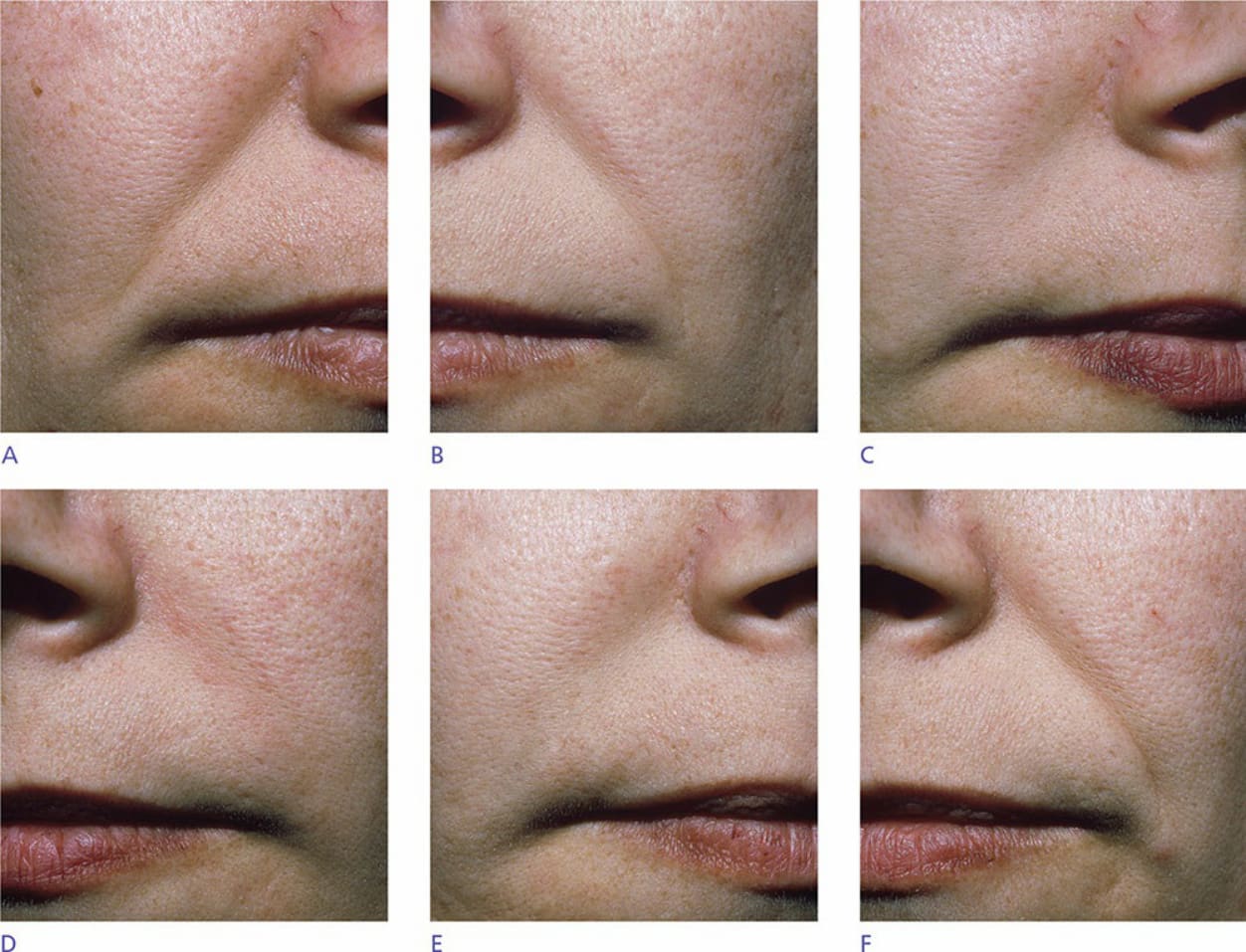
Figure 58-2. Treatment of nasolabial folds with Juvederm Ultra versus Zyplast at baseline (A and B), 2 weeks (C and D), and 24 weeks (E and F).
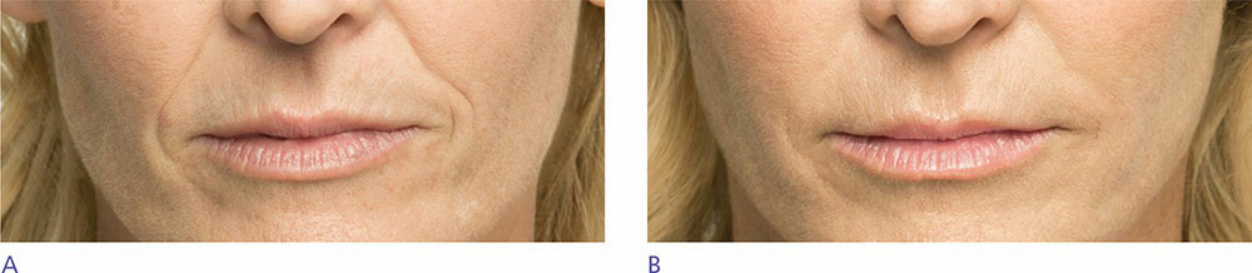
Figure 58-3. Belotero correction of perioral rhytides at baseline (A) and 2 weeks (B).
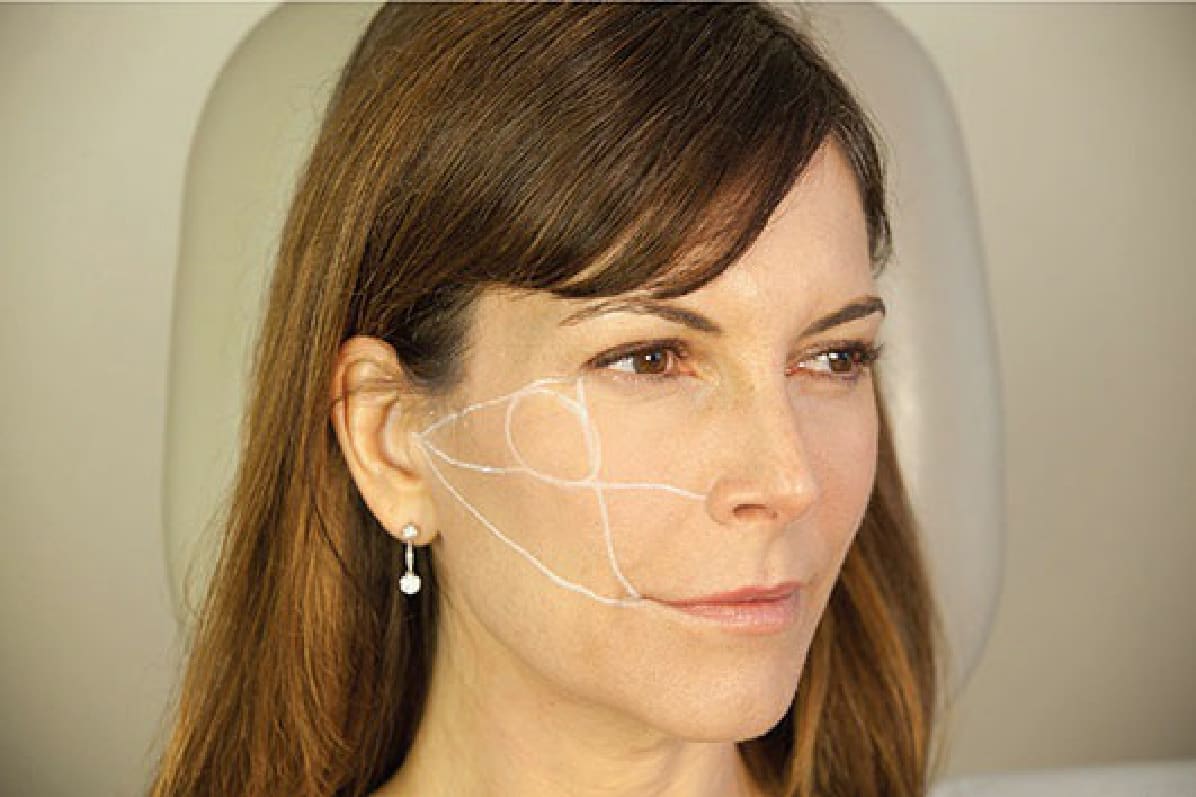
Figure 58-4. Analyzing the mid-face. Lines extend from the tragus to the lateral canthus, ala, and oral commissure and from the lateral canthus to oral commissure. In women, maximal light reflection falls in the uppermost quadrant of these intersecting lines.
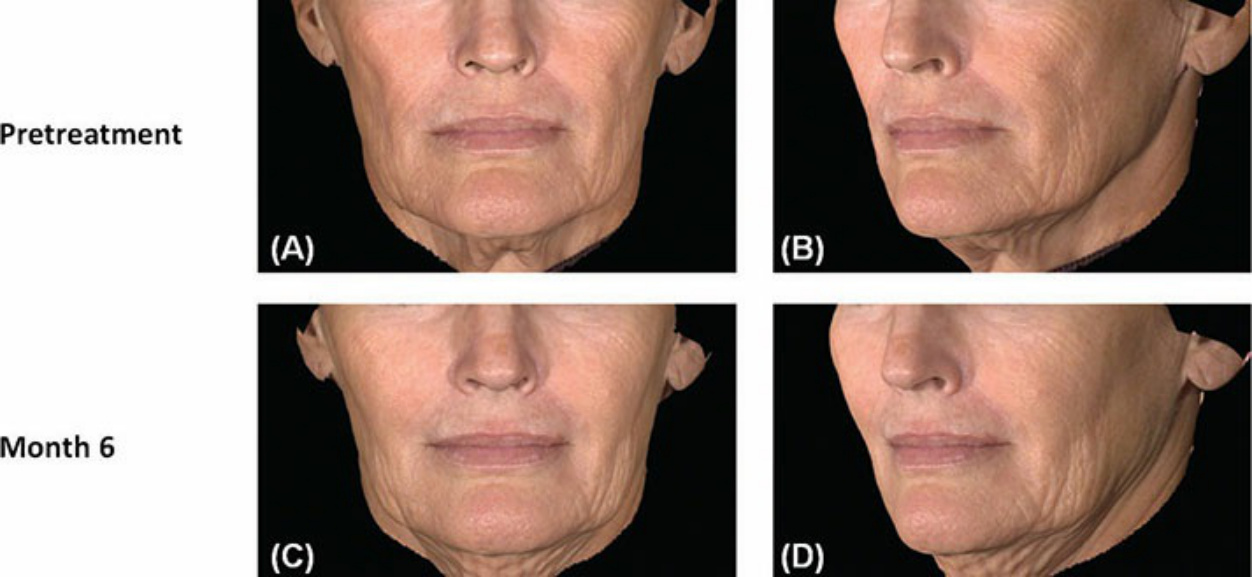
Figure 58-5. Three-dimensional midfacial volume restoration with Juvederm Voluma XC at baseline and 6 months.
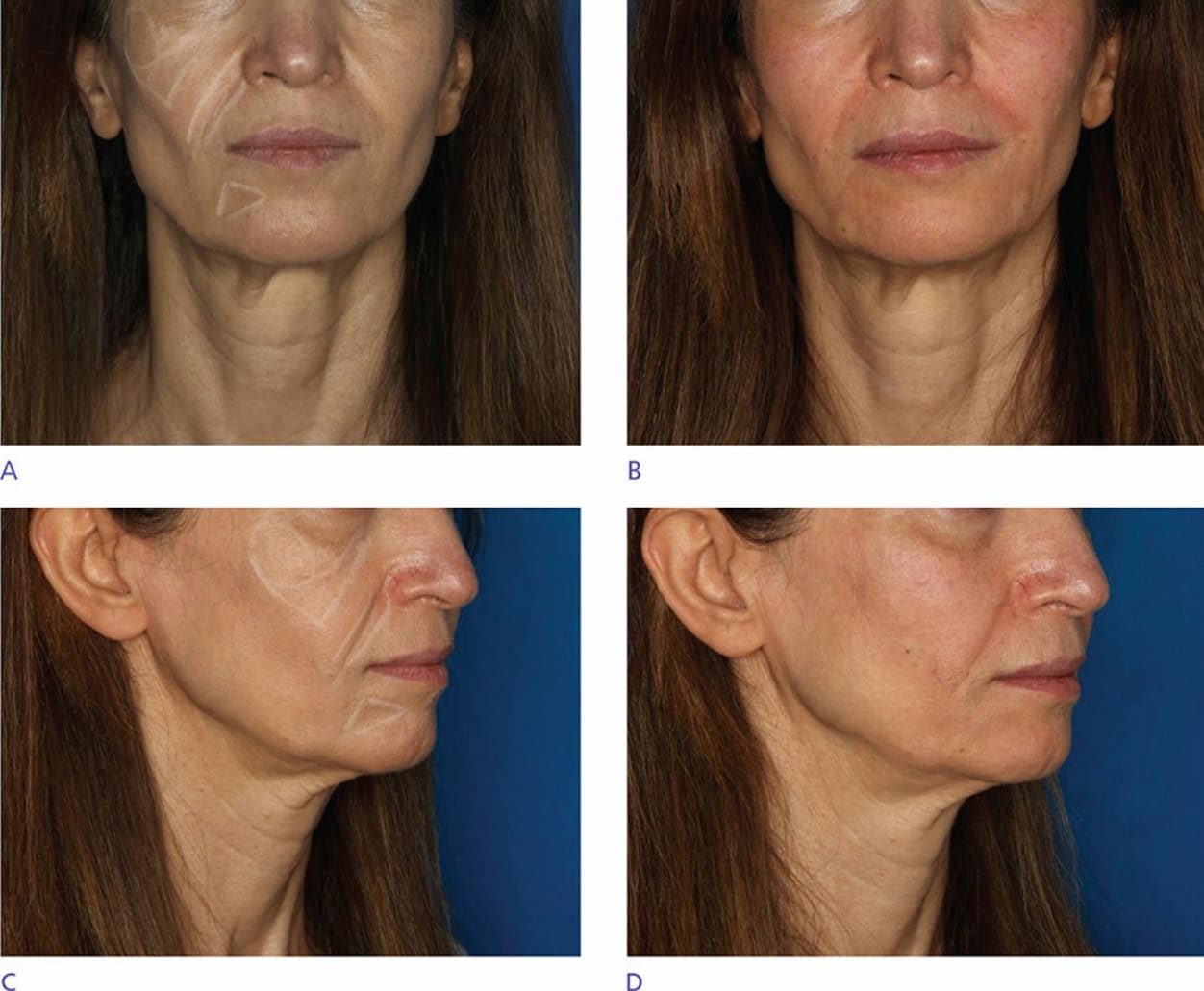
Figure 58-6. Mid-facial volume restoration with 2 cc of Juvederm Voluma XC and 1 cc of Juvederm Ultra Plus. Baseline (A and C) and after (B and D).
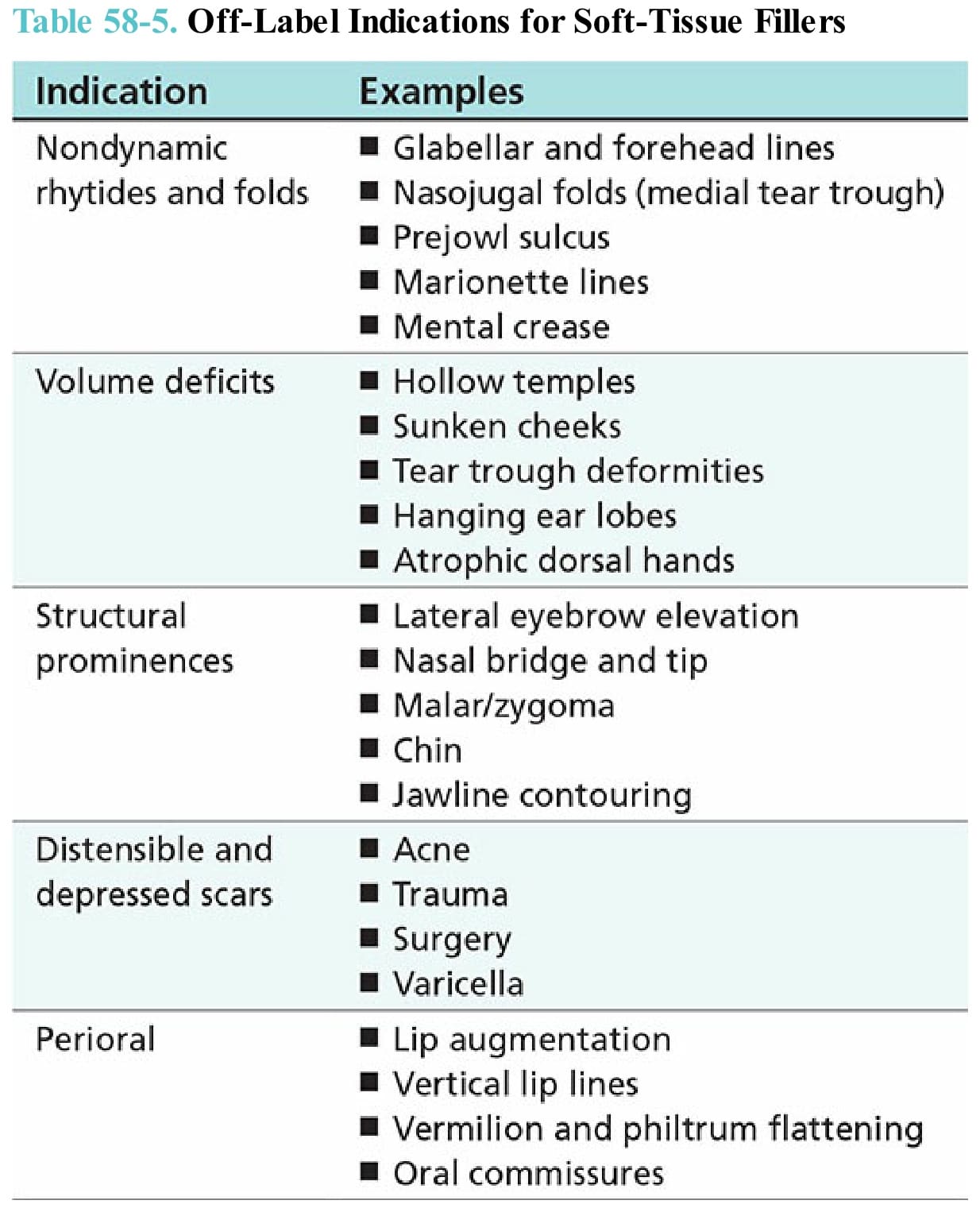
Table 58-5. Off-Label Indications for Soft-Tissue Fillers