Dermabrasion
Dermabrasion
Choice of an abrading end piece depends on the treatment area being resurfaced (Fig. 56-1). Cone-shaped fraises may be used in smaller areas that require increased precision such as around the eyes and mouth. In contrast, broader wheel-shaped diamond fraises or a wire brush may be used on larger areas such as the cheeks and forehead. The wire brush is generally the most abrasive end piece (Fig. 56-2). A splash guard can be added to protect from blood splatter (Fig. 56-3).
Hand engines are manufactured by multiple makers (Bell, Ellis, Osada, Schumann). These devices are capable of 18,000 to 35,000 rpm. The hand piece is attached to the hand engine via a wired connection for electrical units (Fig. 56-4). Some units are battery powered, which allows for greater mobility, often at the expense of lesser rpm (Fig. 56-5).
The body of the engine hand piece should be grasped with the forefingers while the thumb stabilizes its neck (Fig. 56-6). The hand piece should be pulled perpendicular to the direction of the end piece rotation in arciform strokes. The direction of rotation is important when using the wire brush; when the brush bristles rotate clockwise, the end piece will cut deeper. This requires the surface to be rigid and pretreated with refrigerant and adequate anesthesia. When using a wire brush in a counterclockwise direction, the strokes are easier to control, and the depth of abrasion is more superficial. When using a pear- or cone-shaped fraise, the hand piece should be held as if holding a pencil (Fig. 56-7).
Prior to dermabrading, some advocate painting the surface of the skin with gentian violet. In addition to its role as an antiseptic, the removal of gentian violet can be an effective aid to assessing depth of abrasion.33
An assistant should be available to assist with spraying cryogenic spray to provide a firm surface for dermabrasion. No more than 10 to 15 seconds of freezing time is recommended. This should be done only to areas immediately before abrasion; refreezing and reabrading an area should be avoided.34 In addition, an assistant should help keep the skin taut and blot as needed with cotton towels. Gauze should be avoided as it can be entangled in the dermabrasion end piece.
Dermabrasion should be carried on until punctate bleeding is visualized, representing the level of the papillary–reticular dermal junction (Fig. 56-8). A fine, shredded appearance in the texture of the wound indicates the superficial portion of the reticular dermis.33 More superficial resurfacing results in a more limited degree of improvement, while deeper dermabrasion risks increased scarring due to adnexal
structures being removed.
One should proceed from inferior to superior, as blood from a previously abraded area will flow in a gravitational direction away from the next area to be abraded.1 It can also be helpful to follow cosmetic subunits. After the treatment area is fully abraded, the periphery should be feathered to create a more natural appearing transition zone.
After dermabrasion is complete, compression with lidocaine and epinephrine-soaked gauze for 5 to 10 minutes can help obtain hemostasis and reduce stinging from the procedure. Appropriate postoperative wound care, including petrolatum ointment and a hydrogel semiocclusive dressing should be used to prevent crust formation until the epidermis is fully reepithelialized.35 Dilute vinegar soaks and gentle debridement of crust can be performed in between dressing changes.
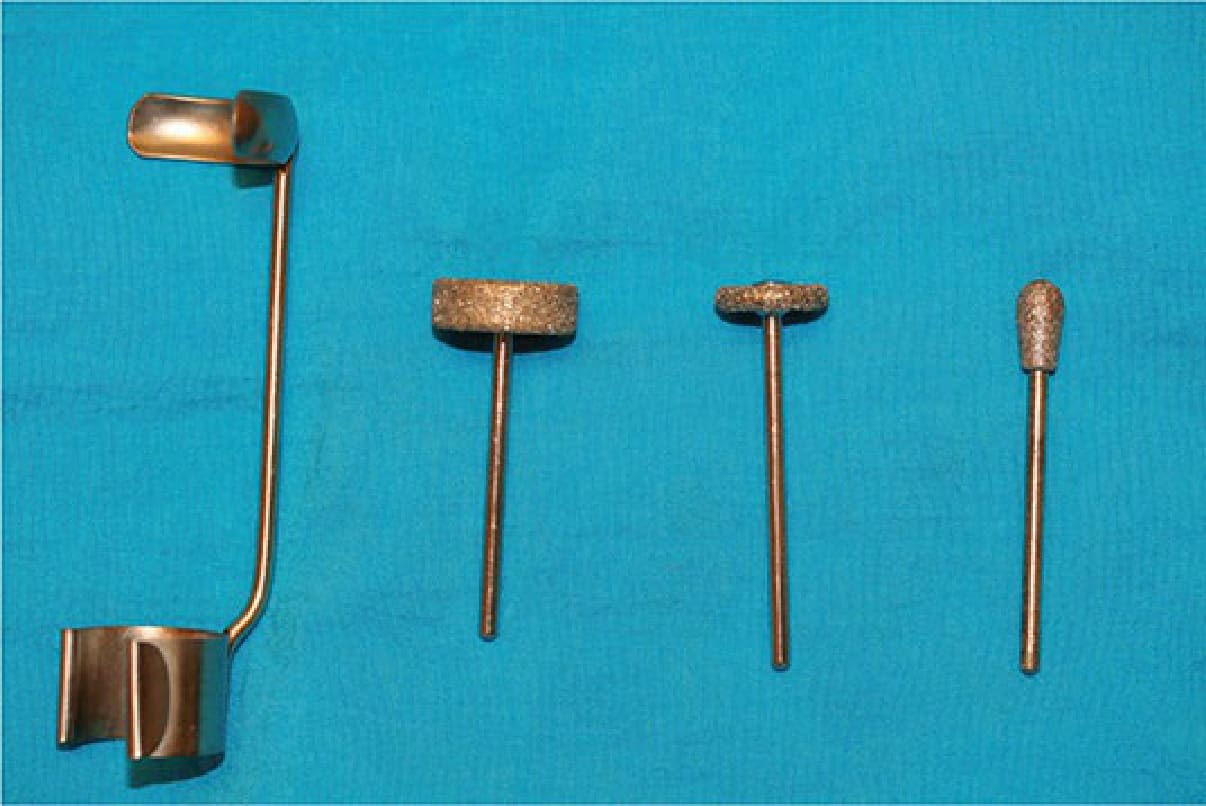
Figure 56-1. From left to right: Splash guard attachment, diamond fraises ×2, pear-shaped or cone fraise. (Used with permission from David Zloty, MD).
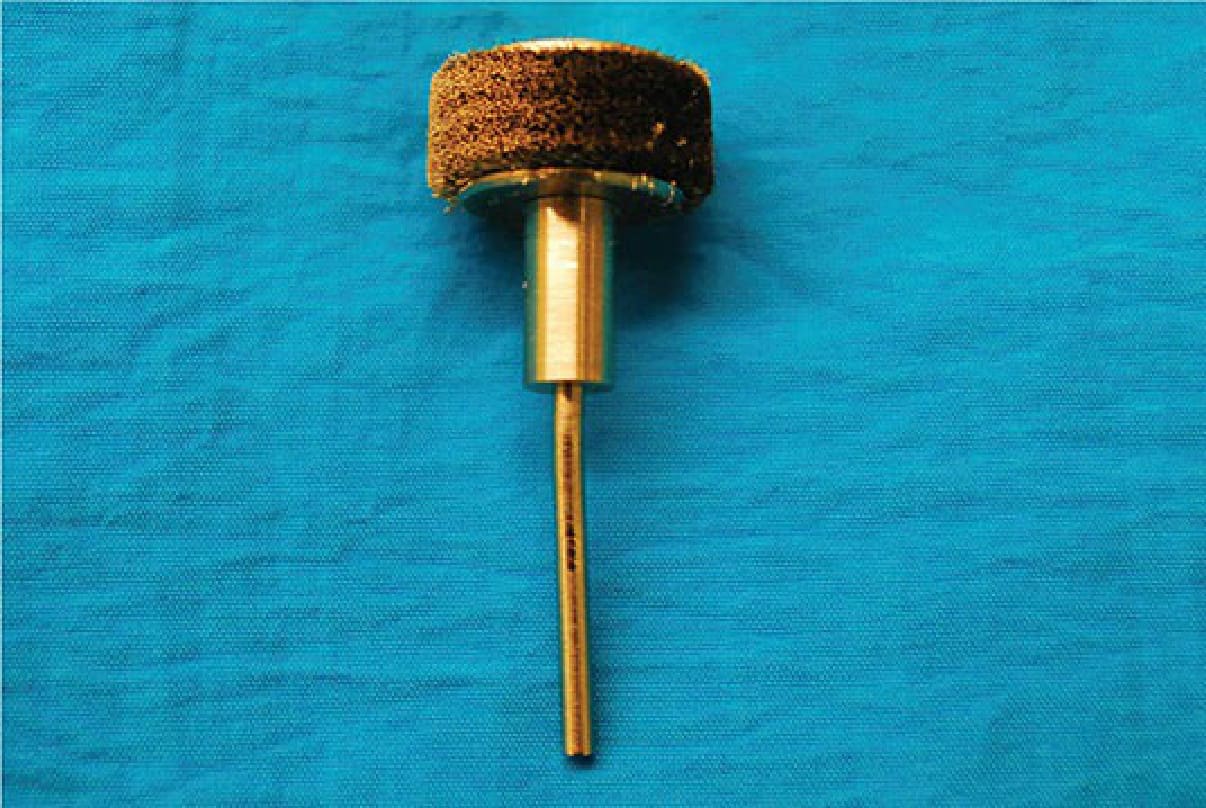
Figure 56-2. Wire brush head.
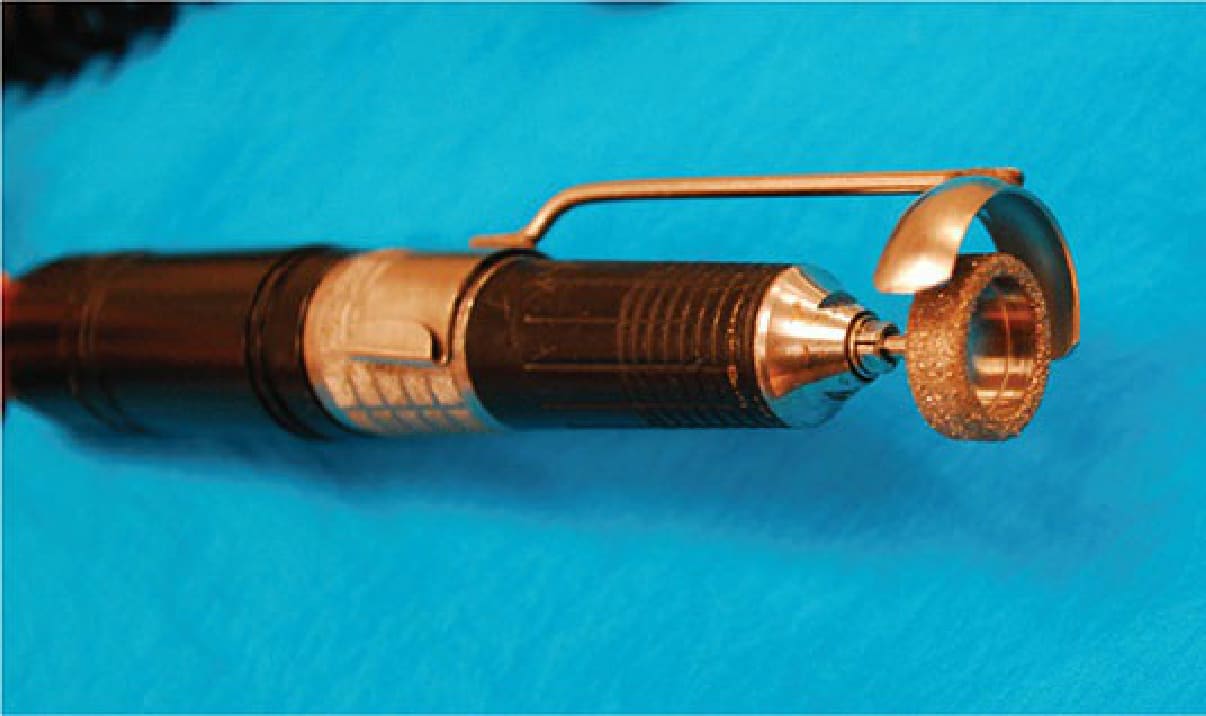
Figure 56-3. Hand engine hand piece with diamond fraise tip and splash guard in place.
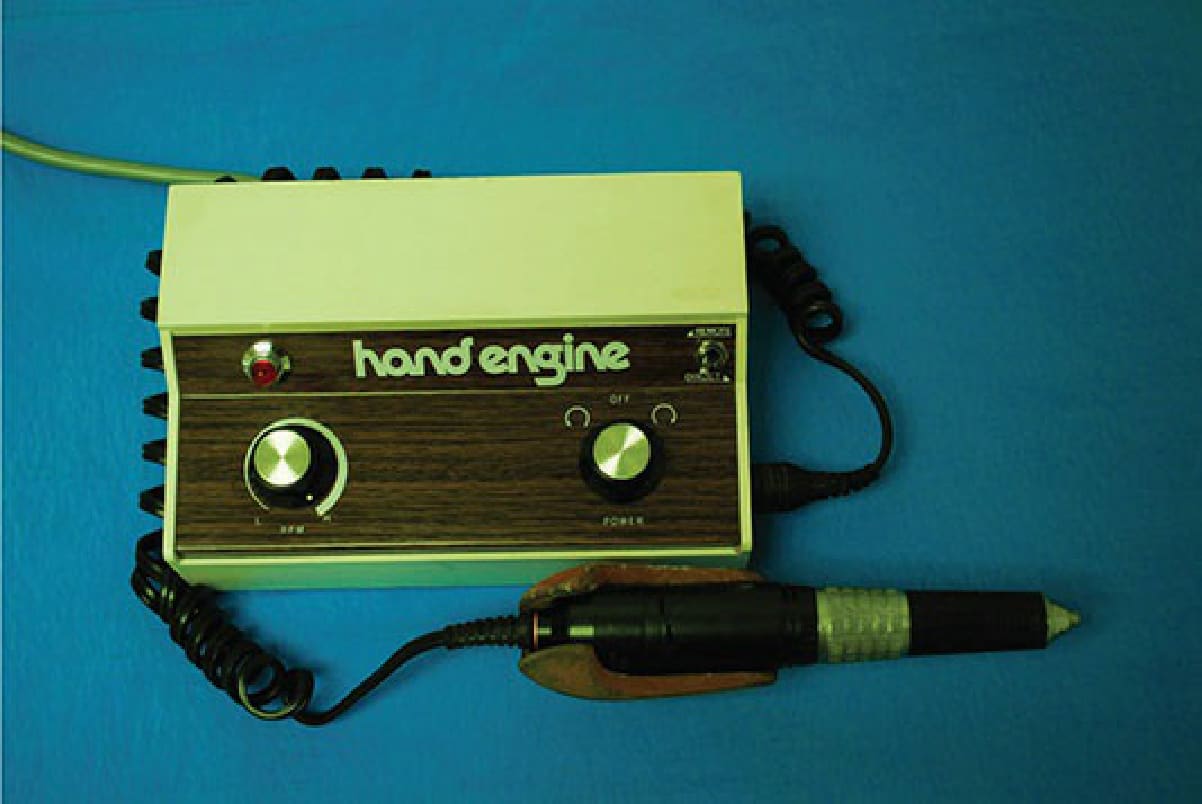
Figure 56-4. Bell hand engine unit with hand piece in holster.
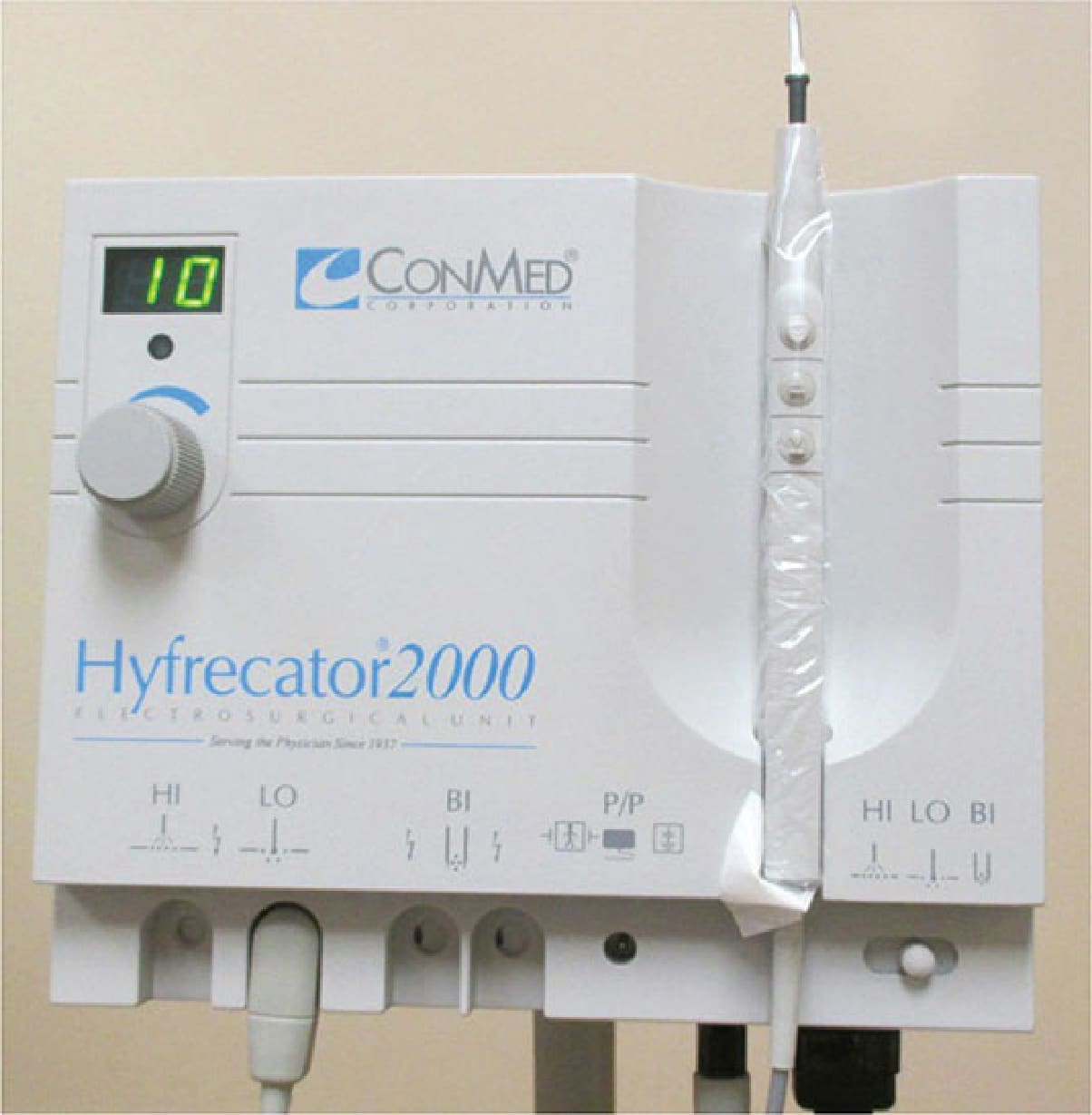
Figure 56-5. Electrosurgical skin resurfacing device (Hyfrecator 2000, ConMed Corp, Utica, NY). Low output terminal and power setting of 10 is used.
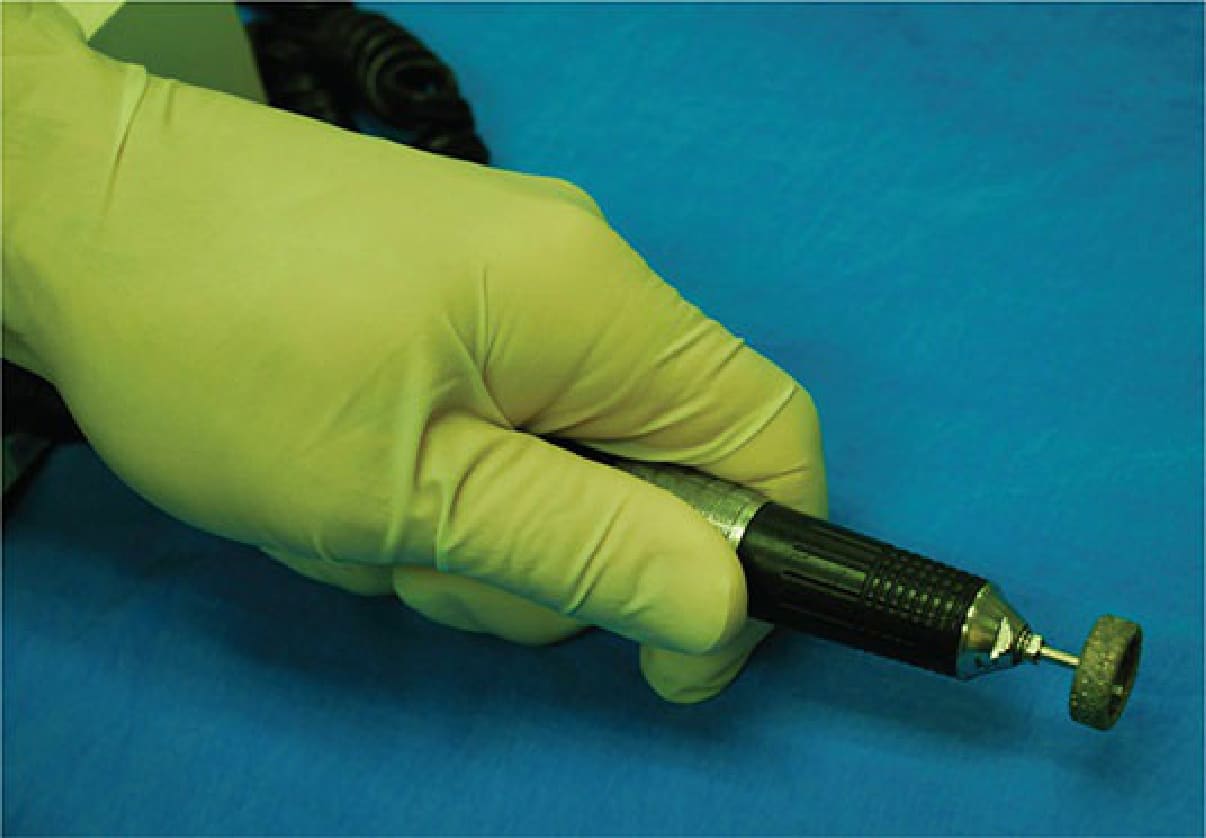
Figure 56-6. Technique for holding hand engine with diamond fraise tip. The body of the hand engine is grasped by the thumb and index finger while the rest of the fingers provide support. Strokes are made perpendicular to the rotation of the fraise tip.
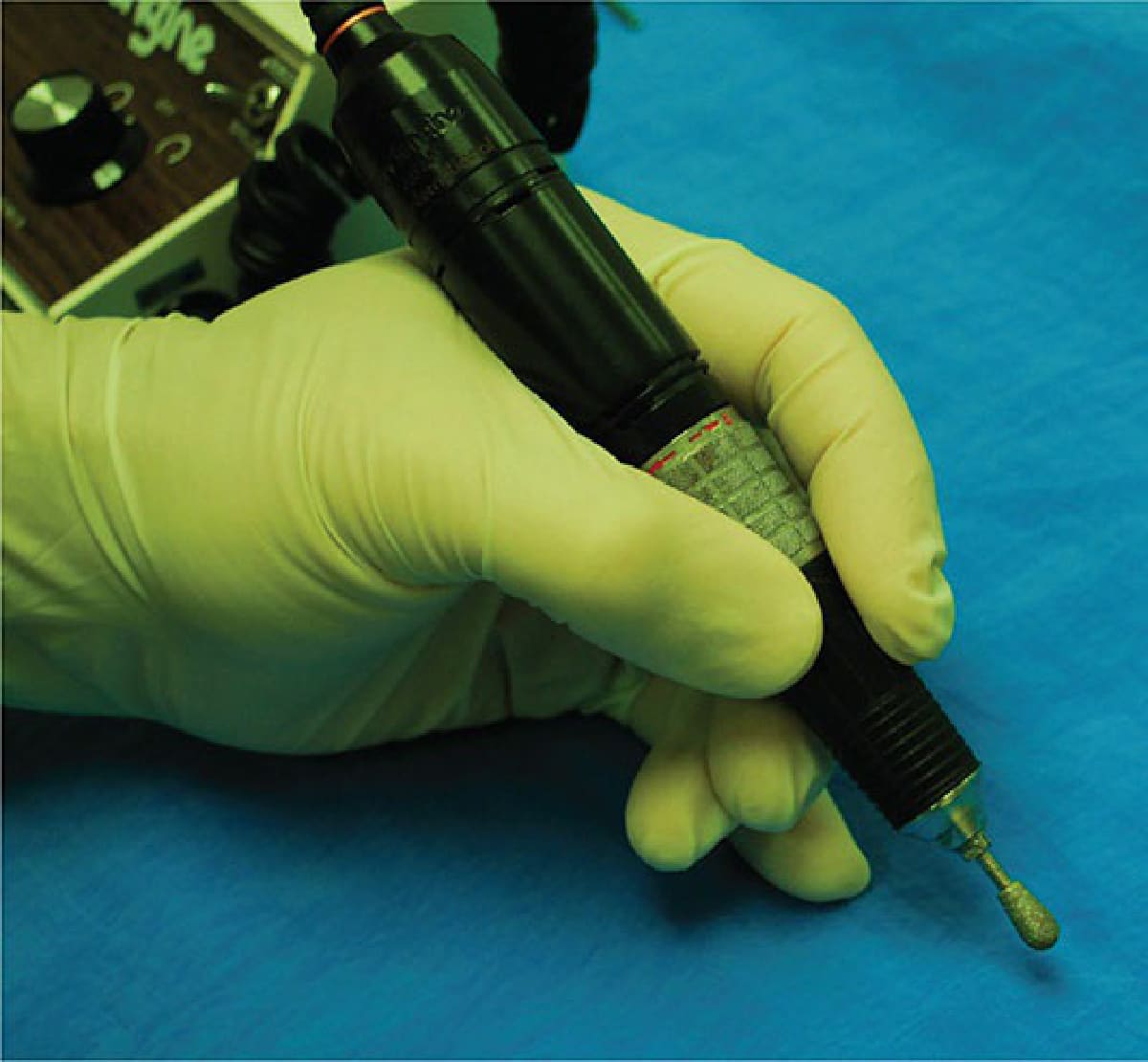
Figure 56-7. Technique for holding hand engine with cone fraise tip. The body of the hand engine is held similar to a pencil. Strokes can be made in any direction.
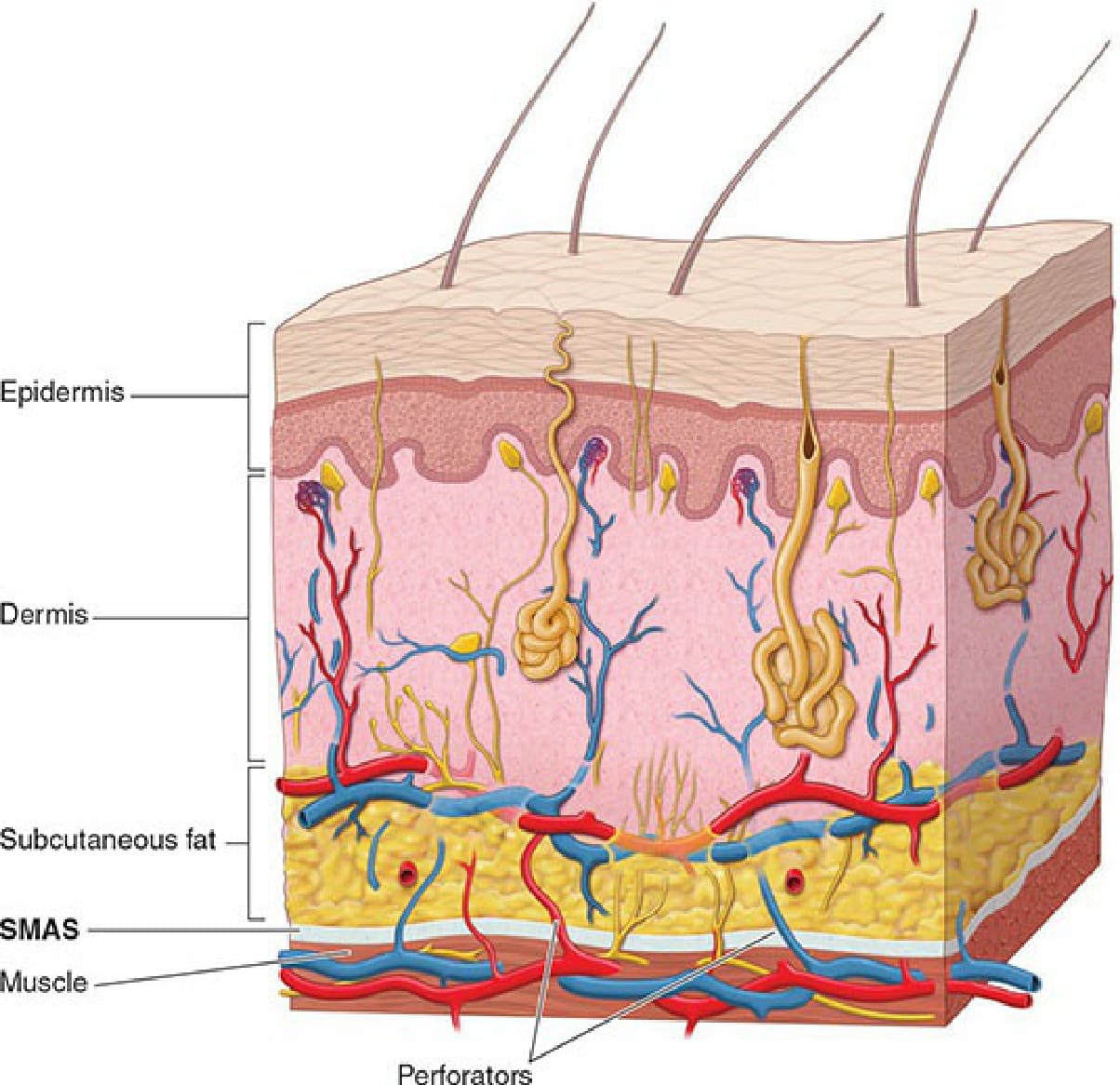
Figure 56-8. Recommended depth of dermabrasion is to the junction of the papillary and reticular dermis.