Preoperative preparation and postoperative care
Preoperative preparation and postoperative care
Attention to adequate preoperative preparation and postoperative care is essential to provide the best outcomes for patients (Tables 56-4 and 56-5). All patients should receive appropriate education, and informed consent should be obtained. Preoperative and postoperative photographs in a standardized format (see Chapter 8) are recommended. Patients with a history of anxiety may benefit from preoperative anxiolytic such as lorazepam 0.5 to 1mg. However, it is important to obtain consent prior to the patient taking any anxiolytic. Local anesthesia with lidocaine with epinephrine 1:100,000 is generally sufficient for the treatment of a targeted area, though full face dermabrasion may benefit from the use of tumescent anesthesia and local nerve blocks.
Postoperatively, patients should be meticulous with skin care to promote wound healing and to detect early signs of impeding complications. Mild postprocedural bleeding can be managed with lidocaine with epinephrine-soaked gauze which can also provide an element of analgesia. Systemic corticosteroids may be used to reduce facial swelling and patient discomfort in larger cases, though evidence is lacking to the safety and efficacy of this approach. Pain is generally limited to the immediate postoperative period, and responds well to over-the-counter medications such as ibuprofen or acetaminophen, though narcotics may be prescribed as needed. Increased pain or significant erythema after 2 to 3 days is unusual, and may indicate an incipient herpetic or bacterial infection. A biosynthetic dressing maybe placed to decrease healing time and degree of pain.32 Dressings may be changed in the office, or the patient can be instructed on how to perform dressing changes at home with the use of dilute vinegar soaks in between changes to remove any crusting.33 Patients must practice strict sun protection during the healing period to help decrease the risk of dyspigmentation.1,34 If indicated by patient history or physical examination, antibiotic and antiviral prophylaxis can be prescribed. Patient should be instructed to refrain from using makeup until reepithelialization is complete.
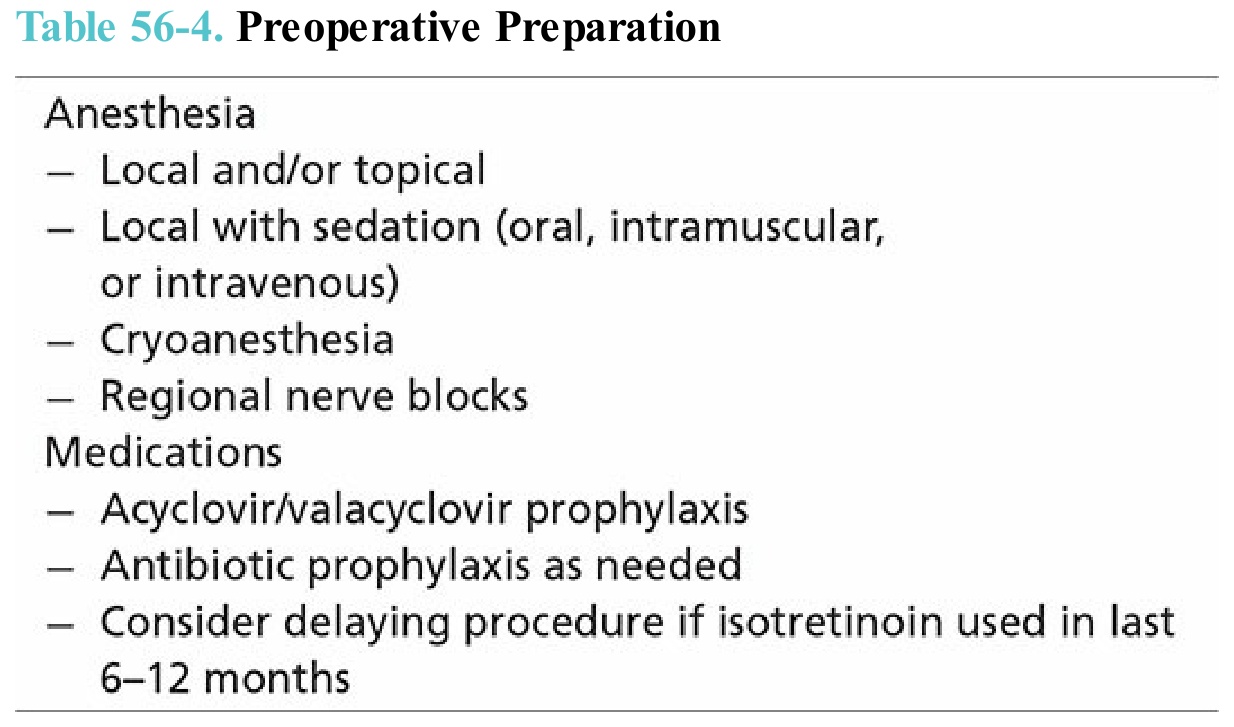
Table 56-4. Preoperative Preparation
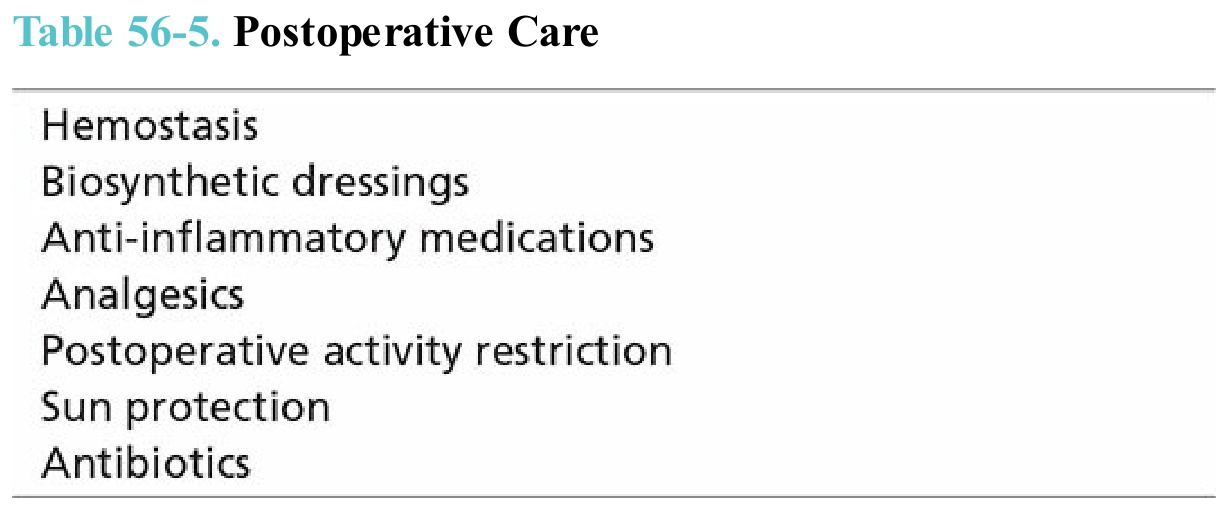
Table 56-5. Postoperative Care