History and physical examination
History and physical examination
A complete history and physical examination should be conducted (Tables 56-2 and 56- 3). Patients with a history of mild bleeding diatheses may benefit from electrobrasion or laser treatment, as these procedures generally produce a less bloody field. In general, none of these procedures should be performed in those with serious bleeding disorders. In addition, a history of blood borne illnesses such as HIV or Hepatitis B or C should be sought out, as the operator may be exposed to significant blood splatter during the dermabrasion procedure. Dermabrasion should be conducted with caution in immunosuppressed individuals, given the risk for infection and delayed wound healing. Prophylaxis with antibiotics (cephalexin 1–2 g daily for 10–14 days) should be considered in patients with a history of impetigo or staphylococcal infections. Similarly, patients with a prior history of herpes simplex virus may be given acyclovir or valacyclovir prophylactically. Though the evidence for abnormal scarring in those who take isotretinoin is largely anecdotal, many would consider delaying any ablative procedure such as dermabrasion or electrobrasion in those who have taken isotretinoin within the last 6 to 12 months.23 In any patient who has a history of keloid formation, or a koebnerizing condition such as psoriasis, lichen planus, or vitiligo, a test spot should be considered prior to full treatment.
Physical examination should be directed at examining the area to be treated for tone and elasticity. If the skin is easily distensible, the patient may be better served with a tightening procedure (e.g., fractionated CO2 laser). However, if the skin is rigid and the
contour irregularities remain fixed (e.g., deeply pitted acne scarring or pincushioning on the nose), dermabrasion is a reasonable choice. Photographs before treatment are recommended to document the degree of pre-existing scarring or pigmentary alterations in the area to be treated. Although dermabrasion is not limited by skin pigmentation, patients with darker skin may be at increased risk of postinflammatory pigment alteration.
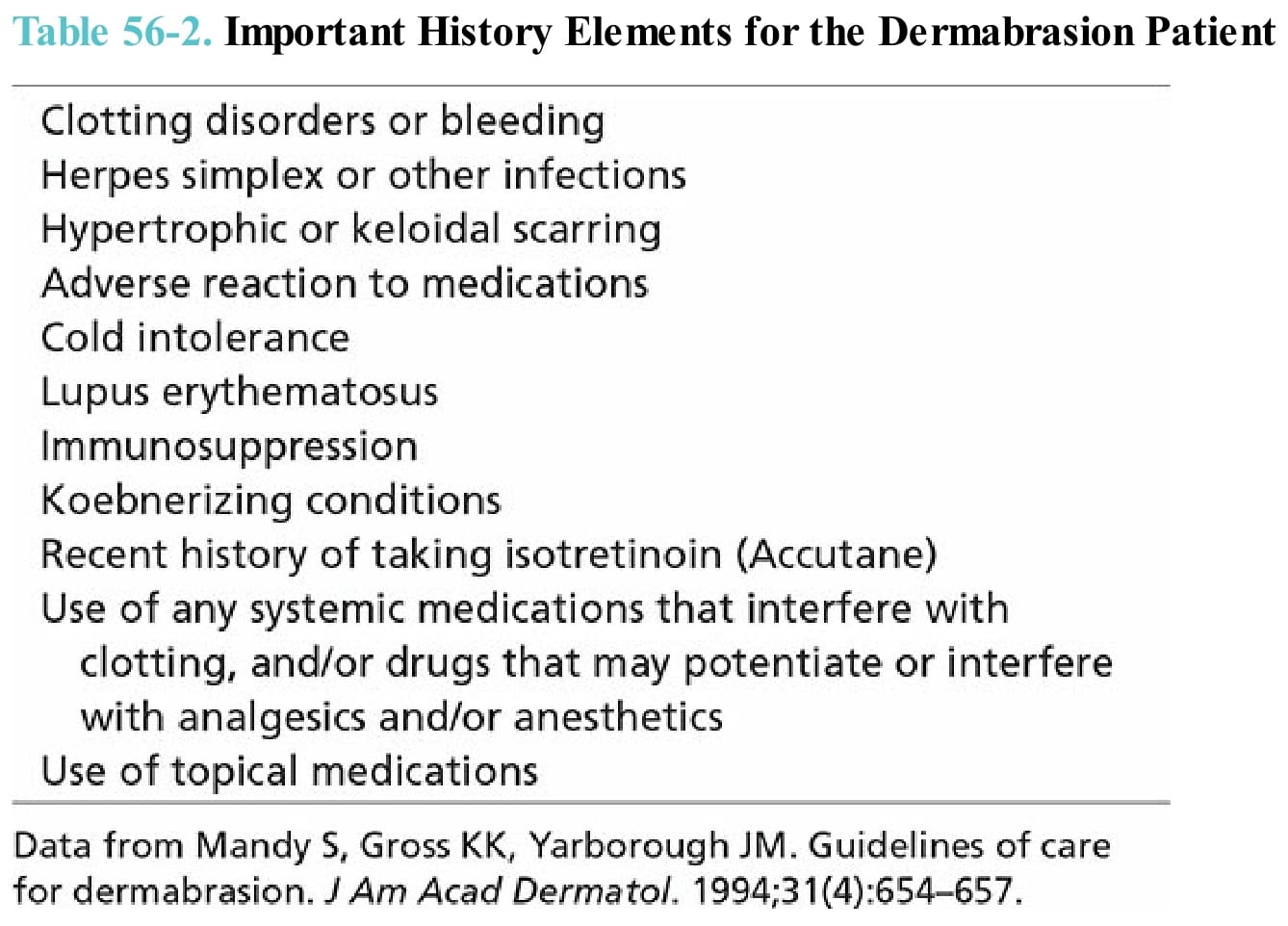
Table 56-2. Important History Elements for the Dermabrasion Patient
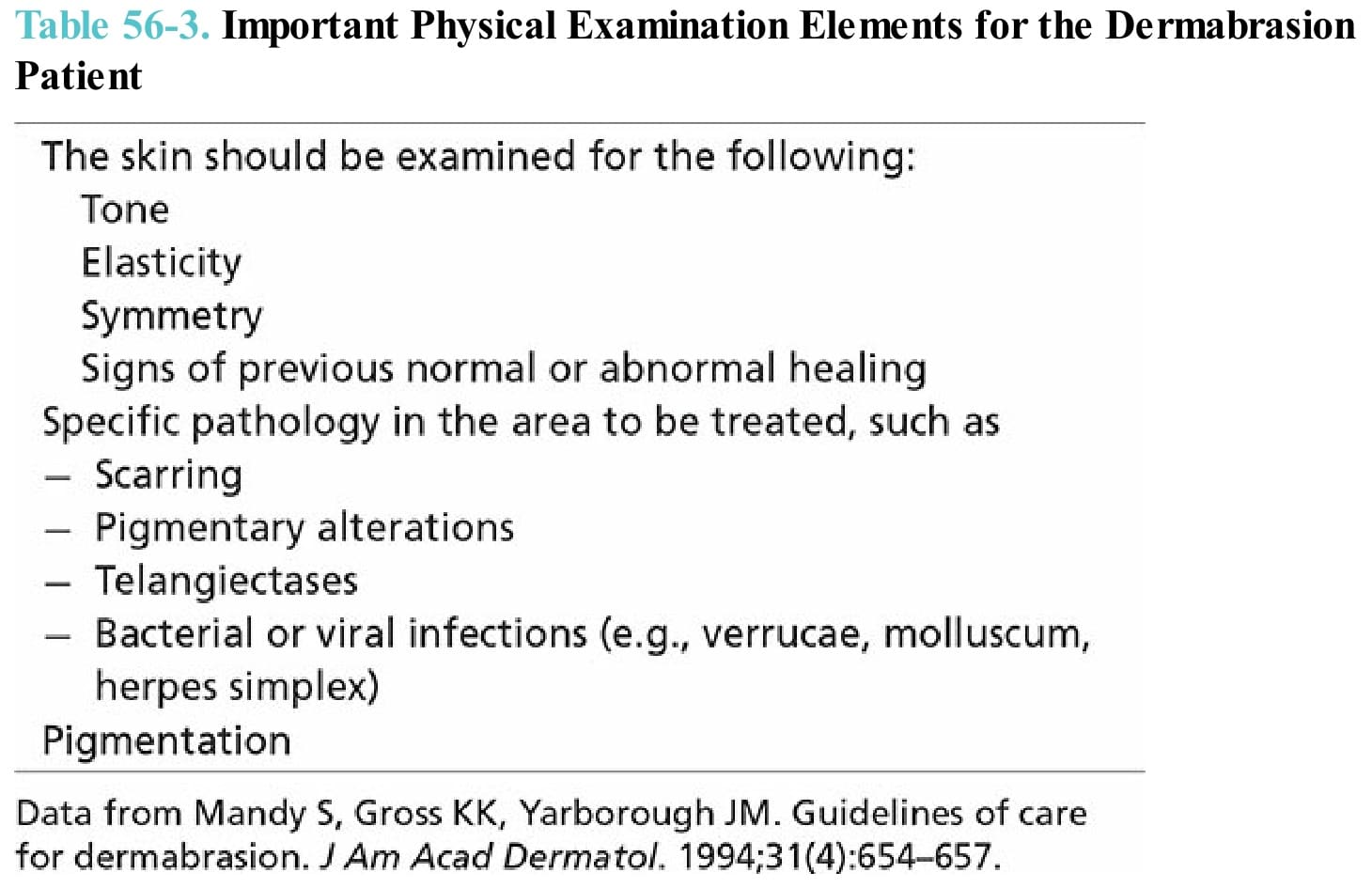
Table 56-3. Important Physical Examination Elements for the Dermabrasion Patient