FIRST CONTACT
FIRST CONTACT
The first contact a prospective patient has with the office is the front desk, whether by phone, online, or in person. That interaction will set the stage for everything else that follows. Phone calls and emails must be answered promptly. Unfortunately, it is estimated that the volume of phone calls to doctors offices has increased up to 50% over the last decade as patients seek help managing approvals for prescriptions (which may be needed even for cosmetic procedures) and try to avoid doctor visits by soliciting information by telephone.4 As more offices set up electronic communication methods with patients, phone receptionists are pulled from the phone to their computer screens. It is therefore critical to balance telephone, online, and in-person demands.
Any employee hired for direct patient content on the phone must be polite, professional, friendly, and have the ability to remain calm. Etiquette for physician’s office staff must be similar to that seen in high-level hotels or retail stores (Table 55-1). Basic guidelines can be gleaned from business sources by studying the most successful customer service companies such as Ritz Carlton Hotels and Nordstrom Department Store.5
Staff speaking with potential patients must be knowledgeable regarding the services offered, the physician and other providers, and financial expectations. When new procedures are added, staff must be informed; it does not inspire patient confidence if the first staff person on the phone has never heard of the procedure. Do not assume that patients know the doctor’s qualifications; credentialing the physician during that initial phone call can make the difference in whether the caller becomes a patient. Many offices do not quote procedure prices by phone. However, the incoming patient must be informed of consult cost, the scope of the visit, and whether there is a possibility of additional fees if procedures are performed on that day. Callers must have the opportunity to speak with someone in detail about upcoming procedures, especially if they may be performed on the date of the consult. Some practices cross-train all employees to have that discussion. At other times, staff responsibility is divided into clinical and nonclinical groups, and therefore excellent communication between them is critical.
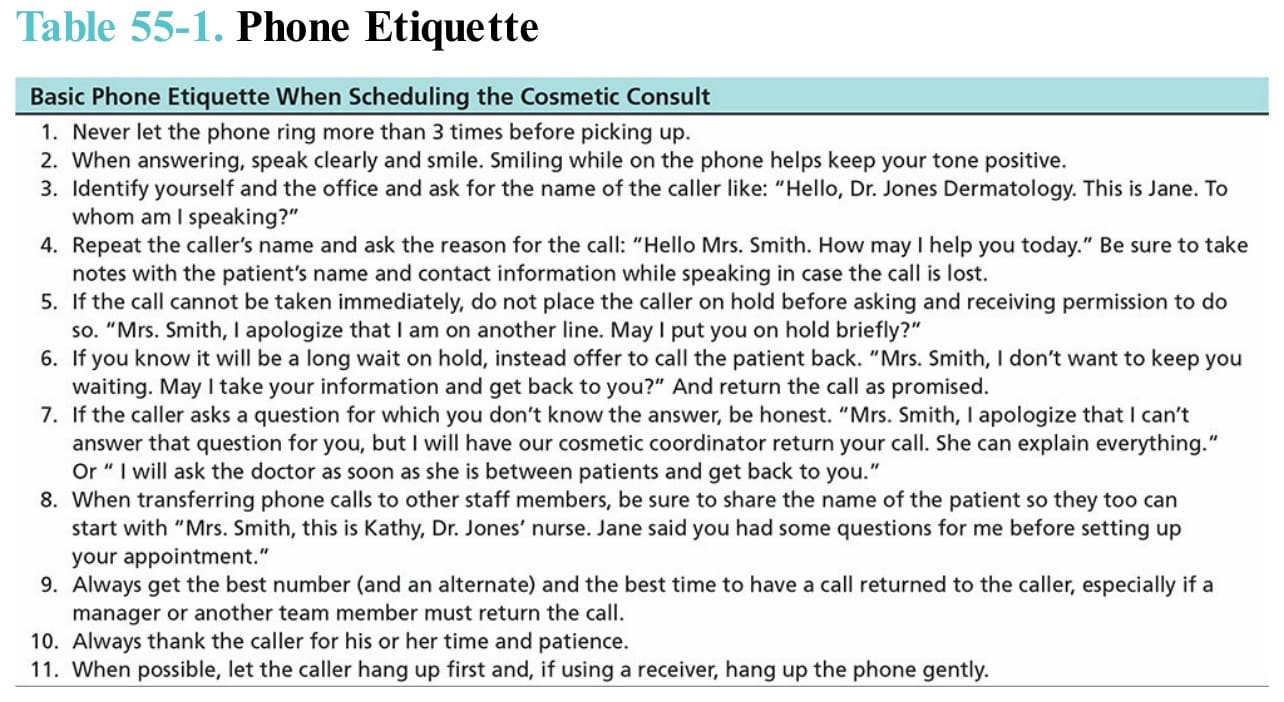
Table 55-1. Phone Etiquette