Suppurativa
Suppurativa
INTRODUCTION
Hidradenitis suppurativa (HS), also known as acne inversa, is a chronic, recurrent, inflammatory and debilitating skin disease that usually presents after puberty. HS is characterized by painful, deep-seated, and inflamed boils most commonly in the axillary, inguinal, and anogenital regions.1 HS is a common disease, with an average prevalence of 1% in Europe and a male-to-female ratio of 1:3.2–4
The pathogenesis of HS is still not completely understood. The disease probably originates from keratinous plugging of the infundibulum, resulting in dilatation and subsequent rupturing of the hair follicle. The expulsion of keratin fibers and commensal bacteria into the dermis upon rupture of the hair follicle leads to a severe foreign-body like immune response, resulting in inflammatory nodules and abscesses.1,5 The aberrant healing may lead to sinus tract formation and scarring. Several exogenous factors have been linked to HS such as smoking and obesity.2,6 Up to 80% of patients with HS are current or former smokers.7
Besides these environmental factors, genetic factors are considered to play a crucial role in the development of HS, with up to 40% of patients reporting a family history of HS in first-and second degree relatives.8,9 Additionally, several mutations have been found in the γ-secretase genes PSENEN, PSEN1, and NCSTN in families with multiple members suffering from HS.10,11 However, the phenotype of HS in these families was severe and very atypical, and these mutations could not be verified in larger populations with common HS. In addition, HS is associated with a variety of concomitant and secondary diseases such as metabolic syndrome, diabetes, inflammatory bowel disease (especially Crohn’s disease), and spondyloarthropathy.12,13
To date, there is no long-term cure for this chronic inflammatory disease. Treatment consists of anti-inflammatory medication and surgical management. Surgery is indicated throughout all stages of the disease (Fig. 54-1).14 The required surgical intervention is
chosen based on the nature of the symptoms, the type of lesions, the presence of sinus tracts, and the size of the area. The presence of inflammation and suppuration determines the need for anti-inflammatory treatment (e.g., systemic antibiotics) before surgery. The preceding systemic treatment reduces inflammation and may thereby possibly reduce the affected area, resulting in a less extensive surgery. Surgical interventions for HS include intralesional injection of triamcinolone, incision with drainage, deroofing, and excisional surgery (including CO2 laser).14
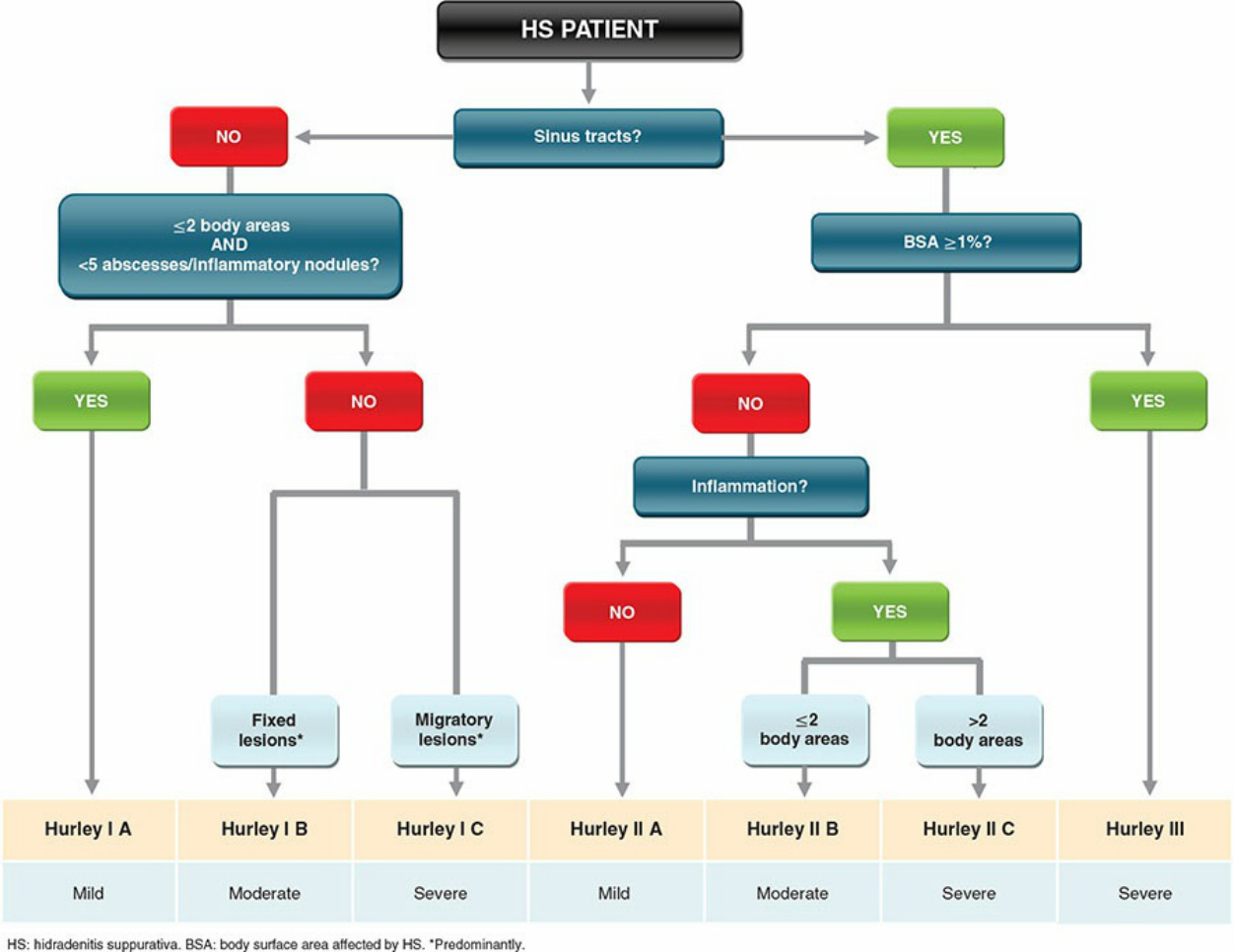
Figure 54-1. Schematic overview of the refined Hurley classification. (Adapted with permission from Horvath B, Janse IC, Blok JL, et al. Hurley Staging Refined: A Proposal by the Dutch Hidradenitis Suppurativa Expert Group, Acta Derm Venereol. 2017 Mar 10;97(3):412–413).