Laser-mediated depigmentation
Laser-mediated depigmentation
For patients with extensive and recalcitrant vitiligo, laser-mediated depigmentation is an option to achieve a uniform skin tone. The most commonly reported lasers used for depigmentation include the Q-switched ruby (694 nm), Q-switched alexandrite (755 nm), and Q-switched Nd:YAG lasers (532 nm). As the absorption spectrum of melanin falls between 600 and 800 nm, these lasers function by targeting melanosomes in residual melanocytes by selective photothermolysis and photoacoustic effects.72,73 The higher the wavelength of the laser, the deeper its penetration into the skin. Lasers have shown greater efficacy in certain patient populations, specifically those with active disease and a tendency toward koebnerization, as this induces depigmentation.74 Lasermediated depigmentation can be used in combination with monobenzyl ether of hydroquinone, a topical depigmenting agent, for better results.
This procedure involves marking the areas to be treated followed by administration of either topical or local anesthesia with lidocaine. Protective goggles must be worn by all personnel in the room, as well as the patient. The clinical endpoint of tissue whitening is used to determine the appropriate fluence setting used during treatment with the laser (Fig. 52-9). A crust will develop that will peel off approximately 1 week after the procedure. Approximately 6 to 8 weeks should pass between sessions to allow adequate time for depigmentation (Fig. 52-10). Adverse events associated with lasermediated depigmentation include swelling, erythema of the surrounding skin, and pain that is typically described as a bad sunburn. Cold packs, emollients, and mild analgesics can be used to alleviate these symptoms. Patients are counseled to practice strict photoprotection postprocedure to avoid repigmentation.48-51,53
CONCLUSIONS
Vitiligo is a disfiguring disorder and treatment is challenging. However, an
appropriately selected candidate may benefit from one of the various surgical techniques available. The risks and benefits of each procedure must be weighed, and physicians and patients should be prepared to consider alternative therapies if faced with treatment failure. Future research may focus on optimizing existing approaches in vitiligo surgery and developing new, sophisticated, and effective adjunctive therapies to optimize treatment response.
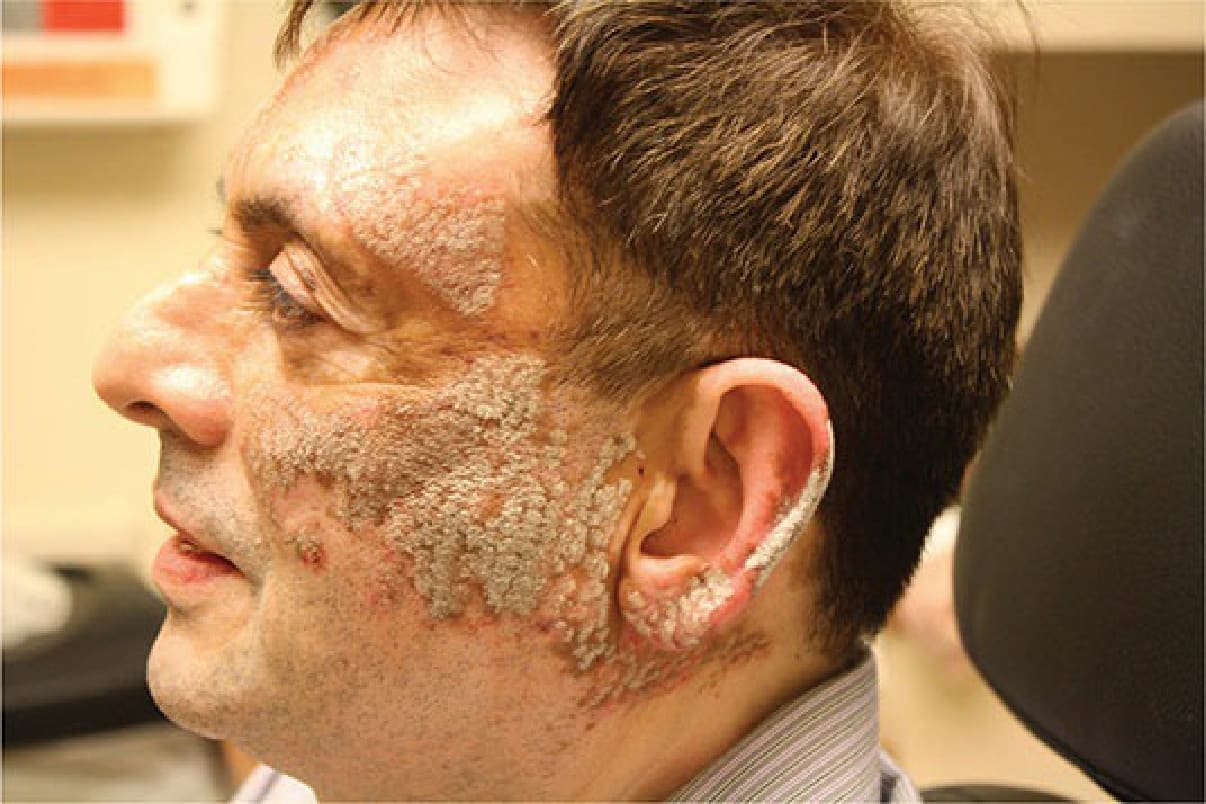
Figure 52-9. Tissue whitening, which is the clinical endpoint for laser-mediated depigmentation.
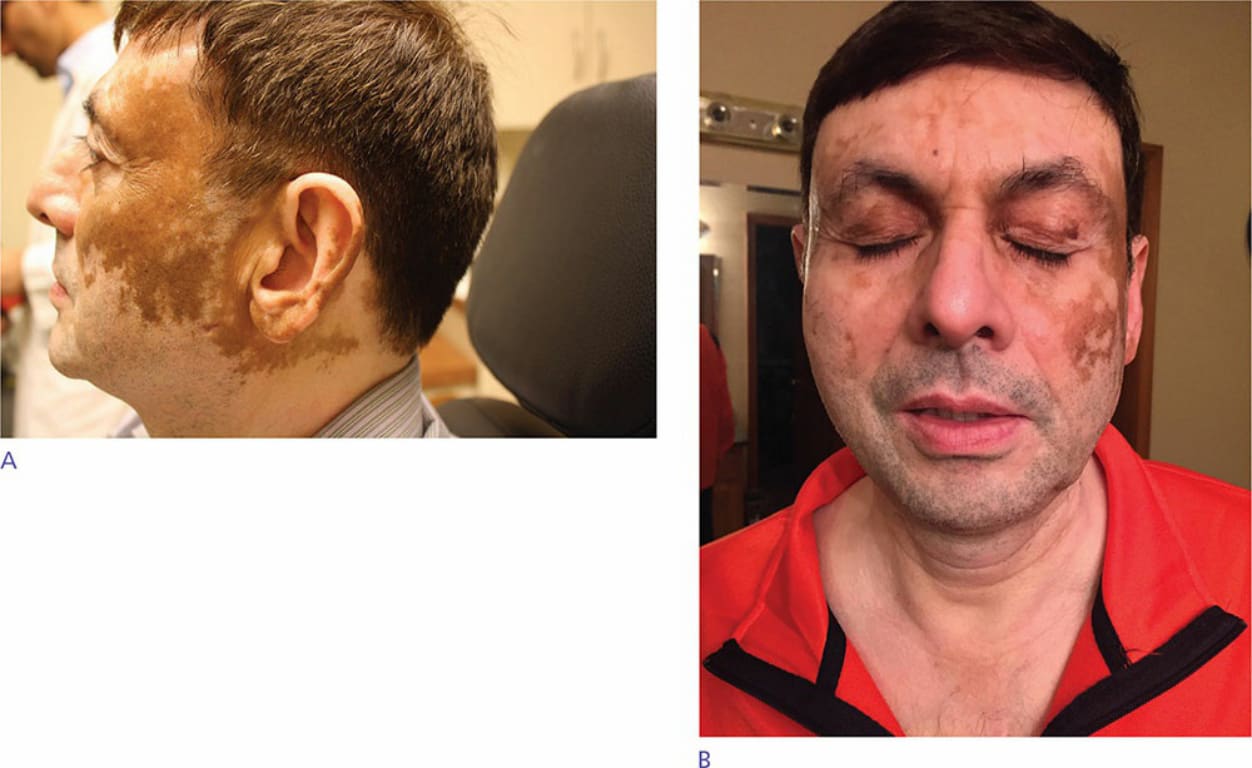
Figure 52-10. (A) Left cheek and ear at baseline. (B) Appearance 9 months after a single session of 532 Qswitched Nd:YAG for depigmentation.