Postoperative care
Postoperative care
Following surgery, patients should be provided with specific instructions on how to care for their graft. Patients are encouraged to wear loose clothing to the procedure to avoid any postoperative displacement or damage to the dressing. It is recommended that patients keep the dressings dry and limit movement at the RS until the dressing removal is performed to ensure graft survival. Elevation of the RS is encouraged to avoid edema and discomfort. For control of postoperative pain, over-the-counter nonsteroidal antiinflammatory agent or acetaminophen is generally sufficient. Patients may notice a green exudate on the dressings; they should be counseled that this results from neutrophilic release of myeloperoxidase rather than infection (Fig. 52-8).23 Concerning signs and symptoms include fever, chills, expanding erythema, warmth, foul odor, and excessive pain. If infection is suspected, antibiotics are indicated.
When the patient returns for dressing removal, all materials should be removed gently to avoid trauma to the graft. Saline can be used to facilitate dressing removal in adherent areas with crusting. The collagen dressing layer is left intact, as it is either absorbed into the skin or detaches once the epidermis is healed. Edges that become loose should be trimmed to avoid being caught on clothing and peeling off prematurely. Following dressing removal, patients are instructed to wash the treated site with a mild cleanser and avoid vigorous rubbing at the site. Vaseline should be applied to the DS and RS to promote healing until the areas do not burn when dry. Patients should not use any other products on the treatment site including cosmetics, medications, or lotions for at least 1 week postoperatively. Shaving can be resumed one week following bandage removal and should be performed in the direction of hair growth for at least 45 days after surgery; thereafter, the hair may be shaved against the grain if desired. Swimming should be avoided for 1 month after treatment due to the presence of potentially harsh chemicals in the water.
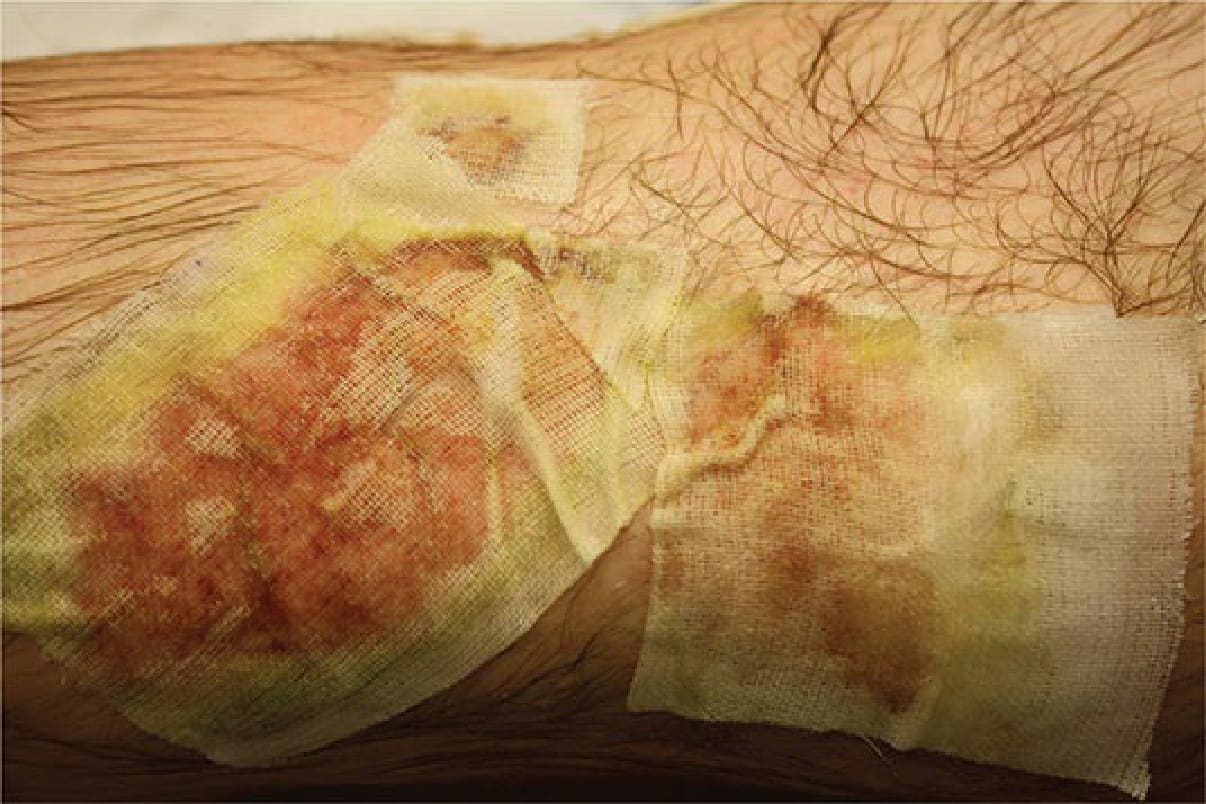
Figure 52-8. Greenish exudate on dressings postoperatively are expected and not an indicator of infection.