MANAGEMENT OPTIONS
MANAGEMENT OPTIONS
Basal cell carcinoma (BCC) and squamous cell carcinoma (SCC) are by far the two most commonly diagnosed NMSCs, with BCC outnumbering SCC. Additional forms of NMSC include Merkel cell carcinoma and dermatofibrosarcoma protuberans. Despite histologic differences, surgical treatment modalities for BCC and SCC are essentially the same. Other forms of NMSC are treated almost exclusively with excisional surgery or Mohs micrographic surgery (MMS).
Though NMSC is the most commonly diagnosed malignancy, these cancers account for less than 0.1% of all cancer deaths.4 Most cases of BCC and SCC have a relatively indolent course, and if detected early there are many treatment modalities available that readily achieve cure. Both surgical and nonsurgical options are available for the treatment of NMSC (Fig. 48-1).
In recent years, there have been significant advances in nonsurgical therapy for NMSC. Still, surgical treatment remains a well-tolerated and effective approach to clinical cure, and generally remains the standard of care. The most common surgical approaches to treatment of BCC and SCC include electrodessication and curettage (EDC), cryosurgery, excision, or MMS. Treatment choice depends on lesion location, patient’s age, patient’s health status, and risks for recurrence. Prior to deciding on a surgical treatment, a biopsy should be obtained in order to histologically examine the tissue to confirm the presence of malignancy. Sampling to the base of the lesion is helpful to guide treatment by stratifying the degree of risk associated with the biopsied lesion, though deep biopsy must be weighed against the risk of aesthetic and functional compromise. Once pathology is confirmed, the clinician must decide the best treatment modality based on both patient (age, site, immune status) and tumor (histologic subtype and degree of invasion) characteristics.
Surgery is the most commonly used treatment approach for NMSC. MMS has become the gold standard for treating NMSCs that are recurrent, complex, or on anatomic locations that benefit from tissue sparing. Other surgical and medical modalities are also effective for less complex lesions. A 27-year review of BCCs treated at NYU Skin and Cancer that compared the efficacy of treatment with EDC, surgical treatment, and radiation therapy revealed that each of these methods have very high cure rates at 5 years.5 Regardless of what approach the clinician deems appropriate, the goal of therapy is to remove the tumor, achieve a high cure rate, preserve the maximal amount of normal surrounding tissue, and maintain an acceptable aesthetic and functional
outcome.6
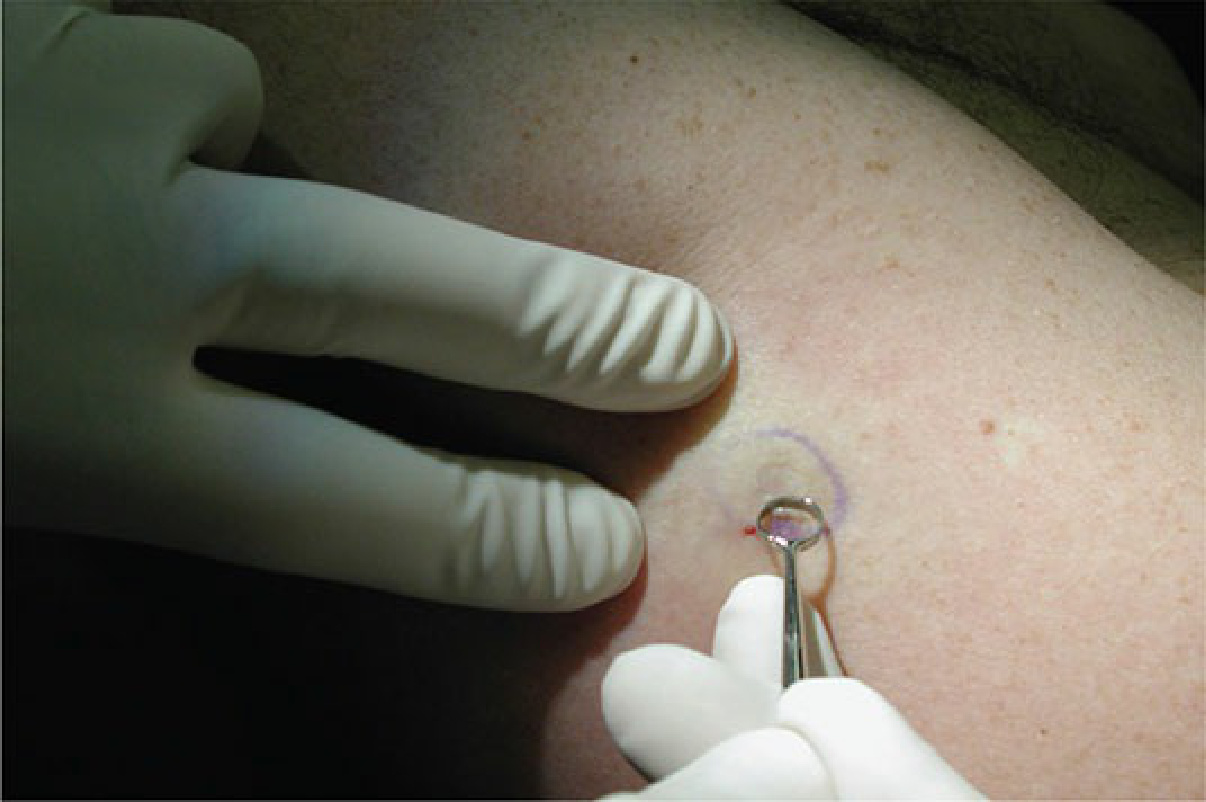
Figure 48-1. Curettage of a nonmelanoma skin cancer.