Linear Closure
Linear Closure
When possible, linear closure is the preferred approach to wounds of the scalp, as such repairs are technically straightforward, heal rapidly, and are minimally traumatic to the patient. The scalp is occasionally so rigid and inflexible that linear closures may not be possible even with relatively small wounds. In some patients, subcentimeter defects can be difficult to approximate, while others have abundant laxity permitting much larger defects to be closed primarily. The relatively lax skin of the temporal scalp, lateral parietal scalp, and occipital scalp may facilitate closure, as can the removal of Burow triangles, which may otherwise impede wound edge approximation due to their inflexibility and mass.
As the galea is more difficult to tear than dermis with suture under normal circumstances, including a bite of galea when performing a sutured closure permits greater tension to be applied to the wound. In general, this requires that the depth of the defect be carried down through the galea to the periosteum, and undermining is performed in the avascular subgaleal plane. Unfortunately, the galea is, by its very nature, inflexible. Some have suggested scoring the galea from the subgaleal plane,
typically at the lateral most extent of subgaleal undermining (galeotomy), or every 1 to 1.5 cm. This release of the galea can occasionally be useful in approximating wound edges that could otherwise not be closed. However, this technique often provides little noticeable benefit, and studies have shown a demonstrably minimal benefit to galeotomy.5
Epidermal closure can be accomplished with layered suturing techniques, and pulley suture techniques may be helpful when closing defects under significant tension. On the scalp in particular, some surgeons favor the use of surgical staples which, when performed properly, induce only minimal tissue strangulation (Fig. 44-14).
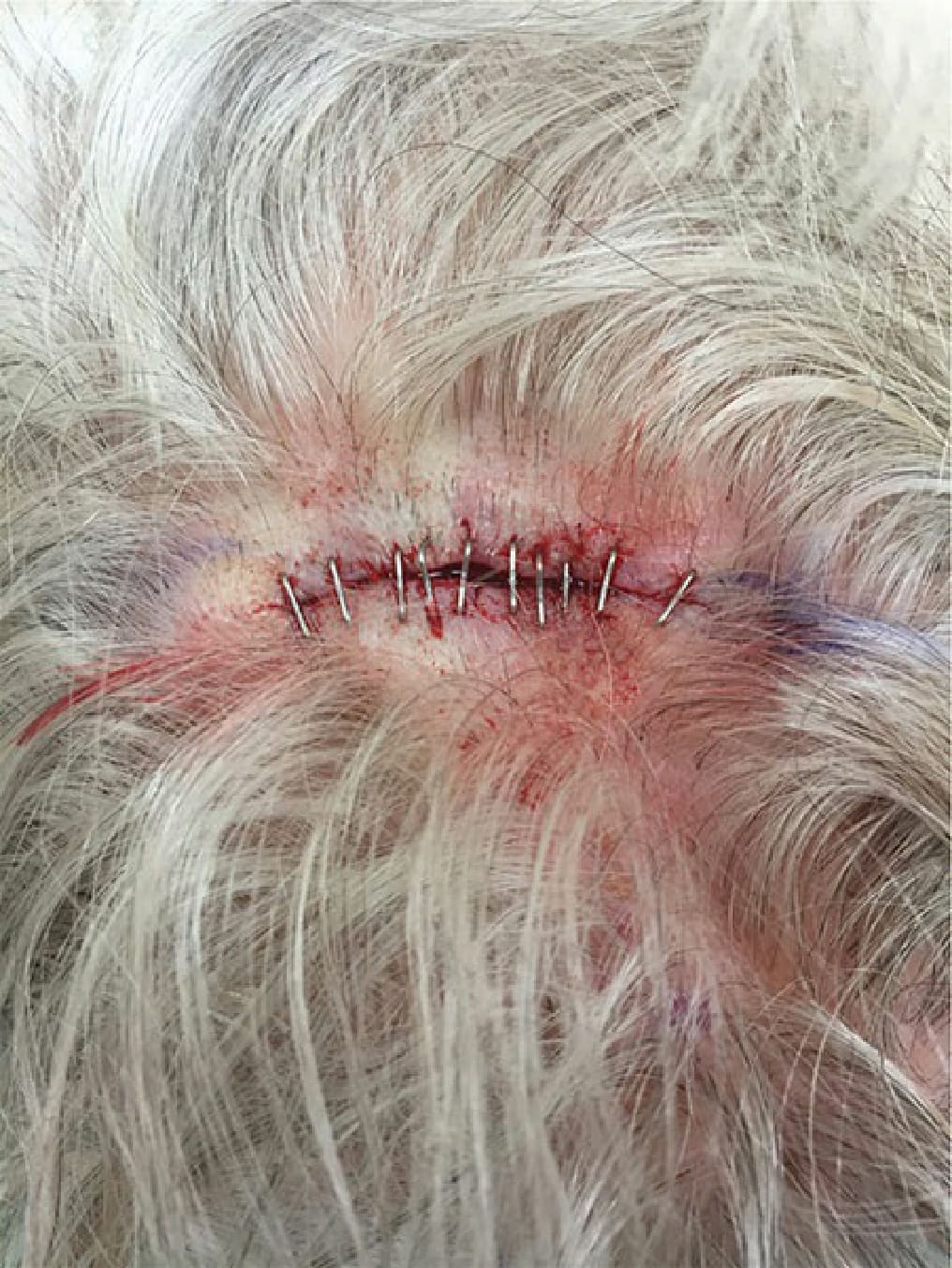
Figure 44-14. Skin closure with surgical staples.