Second intention healing
Second intention healing
Second intention healing predictably results in shiny scars that resemble the tight skin over the pinna.20 The underlying cartilage resists contraction of shallow cutaneous defects. However, deep and broad wounds of the earlobe and helical rim may contract and disrupt the contour of the free margins. Composite wounds involving skin and
cartilage contract more and may change the shape of the ear, especially when the wound is near the helical rim (Fig. 41-4). Contraction from second intention healing of broad or composite defects of the EAC may cause stenosis.
Wounds with intact perichondrium heal faster and have decreased risk for chondritis. Exposed cartilage devoid of perichondrium is prone to desiccation, infection, and necrosis.21 Full-thickness trephinations of exposed cartilage may reduce these complications by recruiting granulation tissue from the intact skin on the other side of the ear. Occlusive dressings, moisturization with petrolatum, and vinegar soaks or oral antibiotics may minimize chondritis.
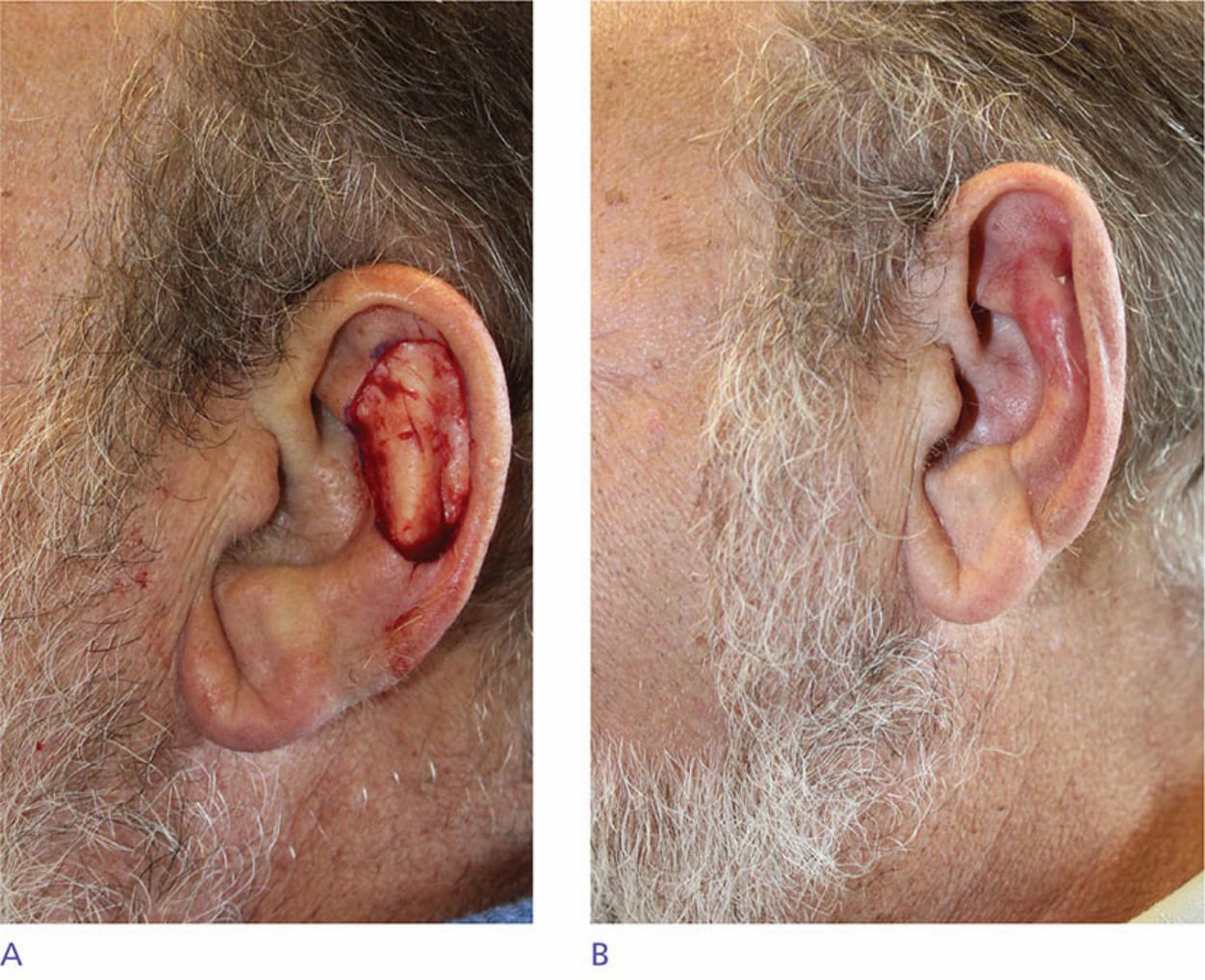
Figure 41-4. (A) Broad antihelical defect allowed to heal by second intention. (B) Appearance 2 months postoperatively with displaced helical rim from wound contraction.