SKIN GRAFTS
SKIN GRAFTS
Skin grafts lack an intrinsic blood supply, so their survival depends on inosculation with the blood vessels of the wound bed. Thicker skin grafts have a greater metabolic demand and an increased risk for failure. To optimize survival, most skin grafts are harvested with epidermis and dermis but minimal to no subcutaneous fat. Consequently, most skin grafts have sufficient volume to restore contour only for shallow wounds with a base of soft tissue over the perichondrium or periosteum. Skin grafts for deep wounds will result in depressed contour or a skeletonized appearance of the nose (Fig. 39-9).
Donor skin should match as closely as possible the color and texture of nasal skin. The forehead and nasolabial folds have a high density of sebaceous glands, but these sites are used infrequently because of the visibility of the donor scars. Donor sites preferably leave scars in less conspicuous locations. Less noticeable donor sites for smaller nasal grafts include the preauricular skin between the tragus and sideburn, which has small vellus hairs closely simulating the distal nasal skin; the glabellar skin, where a vertically oriented closure may be easily hidden; the postauricular skin, which has a thin dermis that nicely matches the skin of the dorsum and proximal nose; and the conchal bowl, whose stiff and sebaceous skin resembles the skin of the tip and ala. Larger nasal wounds require more generous donor sites, such as the supraclavicular skin, which often has similar actinic damage to the nose.
Grafts may be variably noticeable, depending on the normal texture of an individual’s nasal skin. Skin grafts usually are less conspicuous when they replace the thin, nonsebaceous skin of the dorsum, sidewall, and columella (Fig. 39-10). By contrast, grafts are usually readily apparent on thick, densely sebaceous skin of the tip and ala (Fig. 39-11). The density of sebaceous glands varies among individuals, so skin grafts may blend in well for patients with less sebaceous skin.
Full-thickness wounds of the alar margin, soft triangle, and columella may require composite grafts, which contain both skin and cartilage. Composite grafts have an especially high risk for failure, due to their high metabolic demand. As a result, composite grafting is usually limited to wounds less than a centimeter in diameter. The root of the helix is a common donor site for composite grafts.
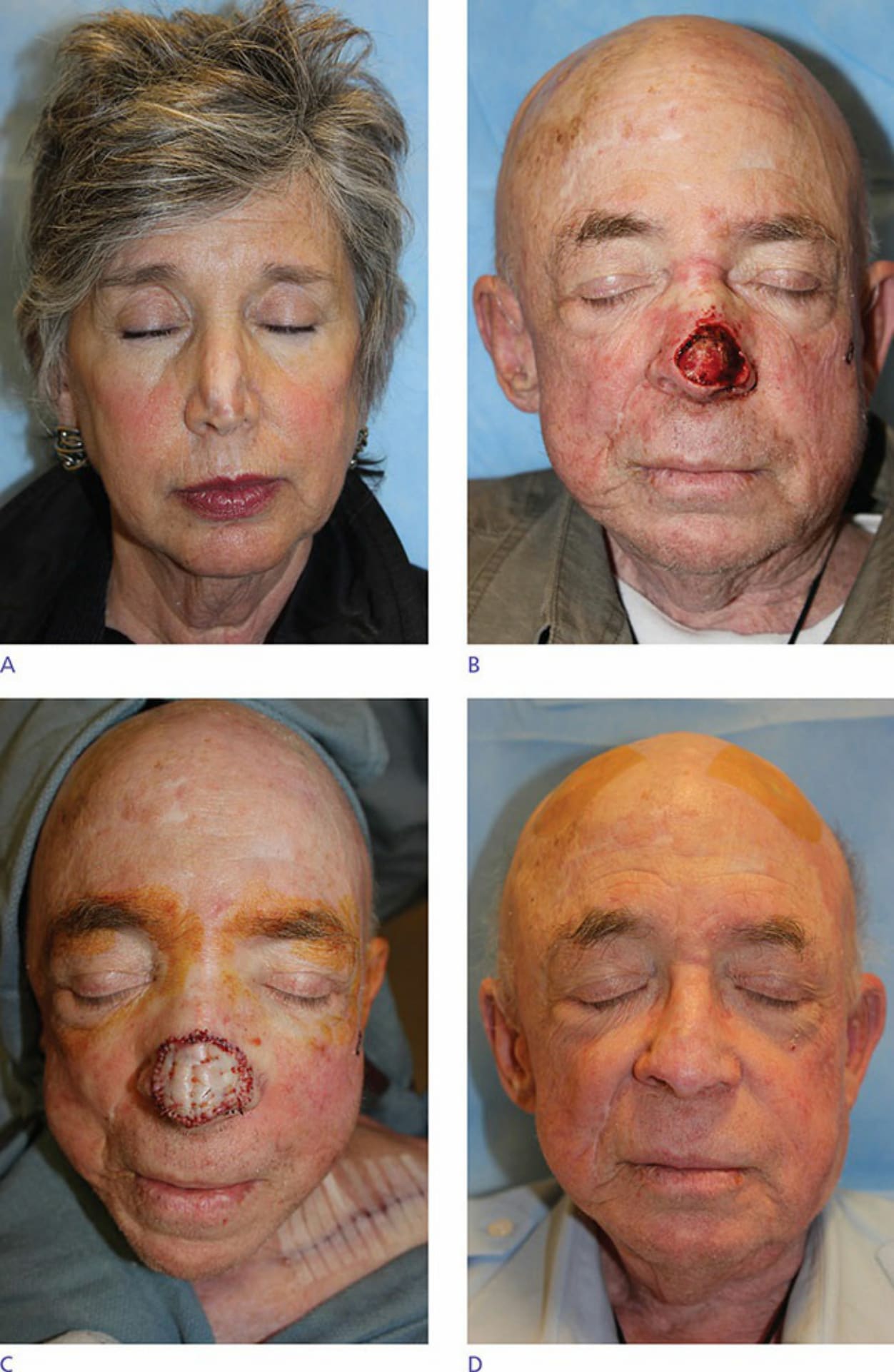
Figure 39-9. Skin grafts usually require soft tissue over the cartilages to preserve nasal contour. (A) Example of skeletonized cartilages from a skin graft without sufficient soft tissue at base of wound. (B–D) Example of preserved nasal contour from a graft with sufficient soft tissue over the lower lateral cartilages.
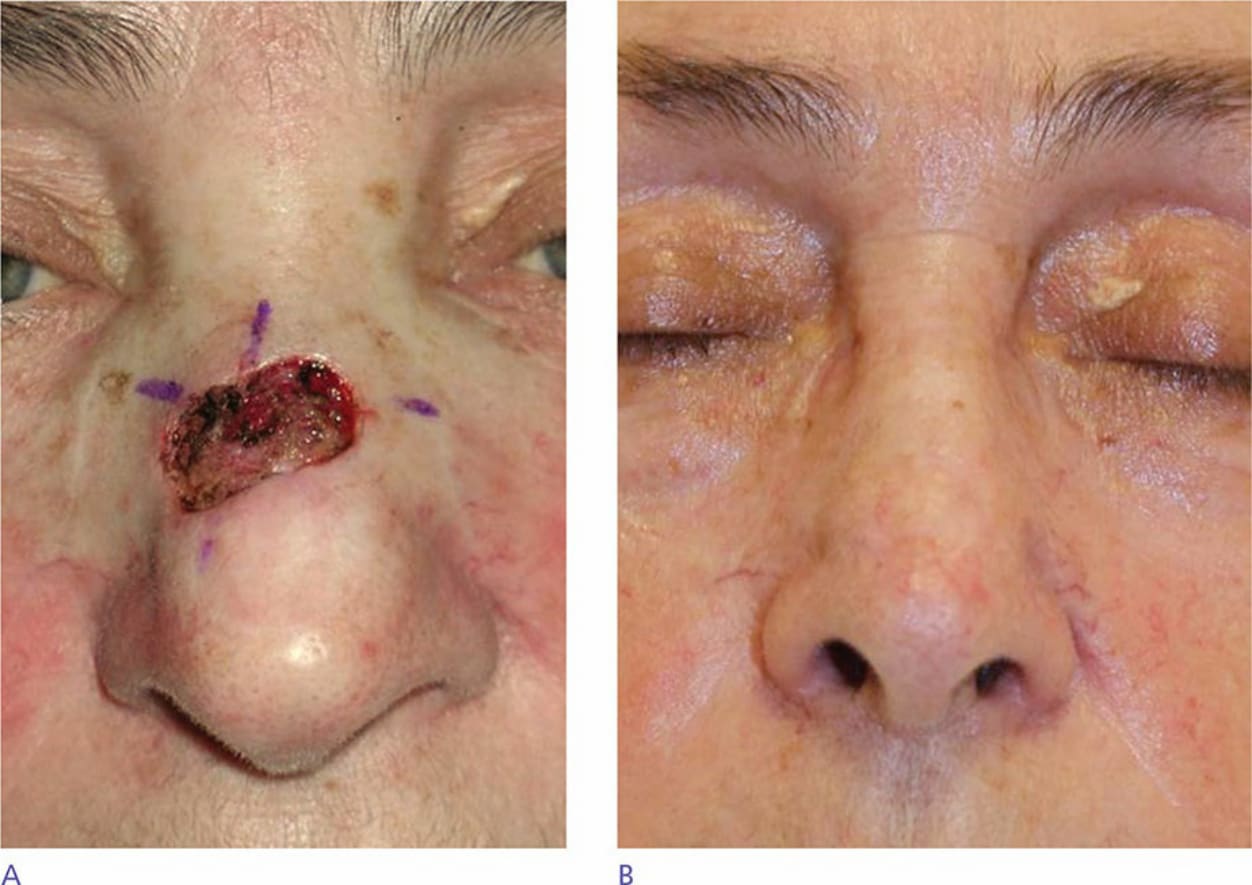
Figure 39-10. Skin grafts often have a better match over the less sebaceous regions on the nose. (A) Shallow defect over the less sebaceous dorsum. The wound was repaired with a full-thickness skin graft. (B) Postoperative appearance with relatively inconspicuous graft scar.
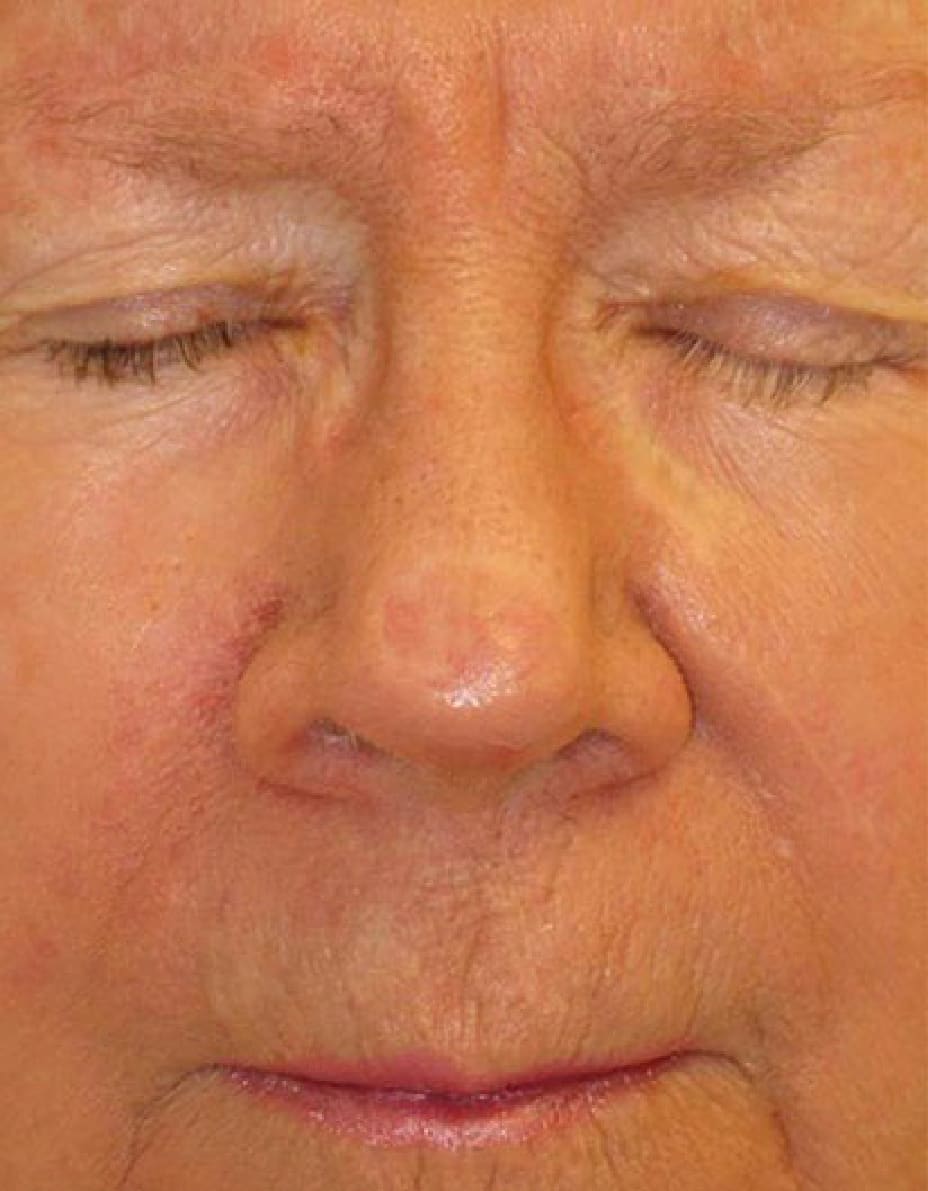
Figure 39-11. Grafts on the more sebaceous distal nose are often noticeable.