SECOND-INTENTION HEALING
SECOND-INTENTION HEALING
Second-intention healing has two predictable outcomes: the scar will have a shiny texture, and the scar will contract. Therefore, ideal wounds for second-intention healing are located in areas where the skin normally has a shiny texture and where scar contraction will not cause anatomic distortion. The shiny scar from second-intention healing is less conspicuous on the smoother skin of the nasal dorsum, proximal sidewalls, medial canthus, and columella. By contrast, shiny scars may contrast against the more sebaceous skin of the nasal tip, ala, and root (Fig. 39-6).
Scars formed by second-intention healing may also hide in or recreate concavities, such as the alar groove, the alar insertion, and the medial canthus (Fig. 39-7).7,8 However, this strategy must be employed judiciously, since scar contraction may cause anatomic distortion or lead to blunting of a previously pronounced concavity. For example, wound contraction at the alar groove may elevate the free alar margin or result in a webbed scar. Contraction after second-intention healing of wounds of the nasal sidewall and medial canthus may pull on the free eyelid margin or cause webbing from tension on the adjacent, loose eyelid skin.
The likelihood of anatomic distortion and webbing is greater for deep wounds spanning the concave junction between cosmetic subunits. The ideal defect to minimize distortion from second-intention healing is shallow, with surrounding skin that is stiff and supported by a strong nasal skeleton. Patients should expect evolving color and volume of the scar. Scars that are initially pink and hypertrophic usually mature to a hypo- or hyperpigmented color with a flatter contour.
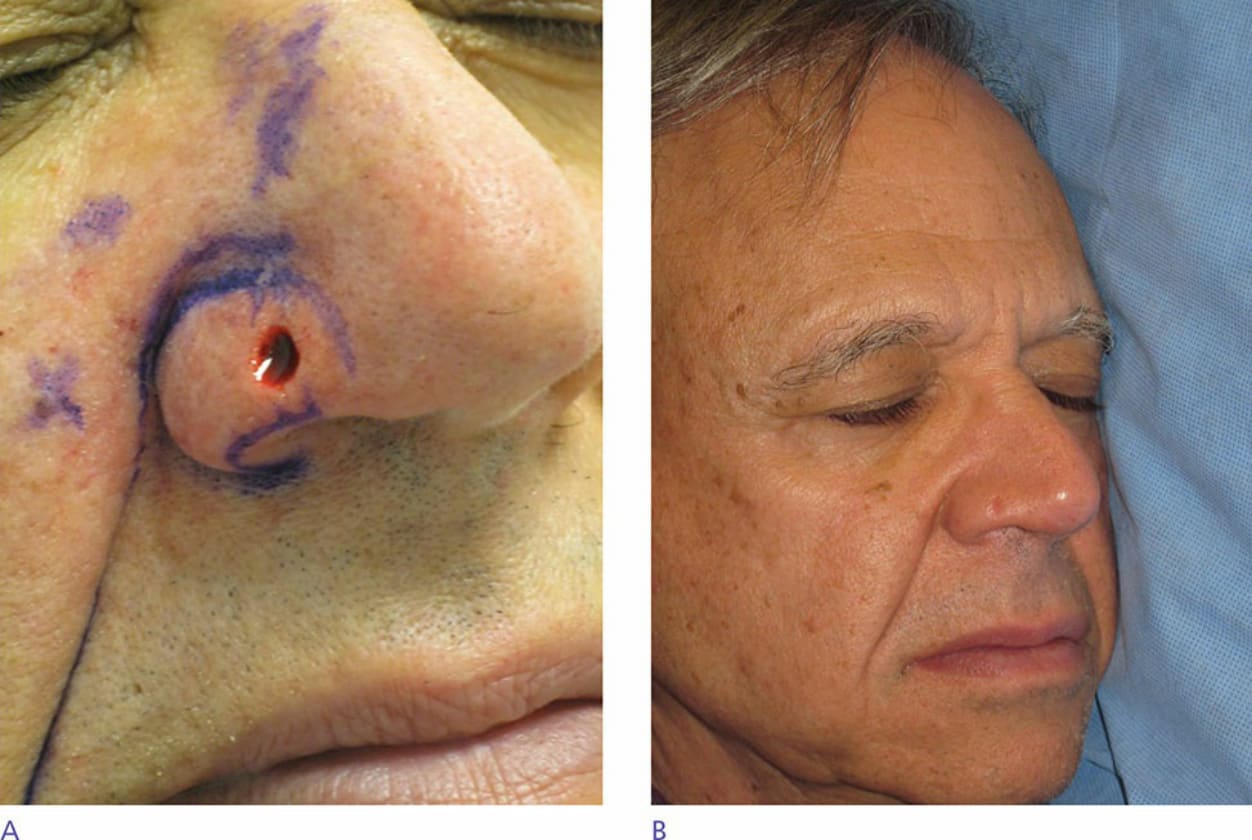
Figure 39-6. Second-intention scars may be conspicuous on sebaceous skin. (A) A small defect in the middle of the convex alar subunit was left to heal be second intention. (B) The shiny, depressed scar is conspicuous.
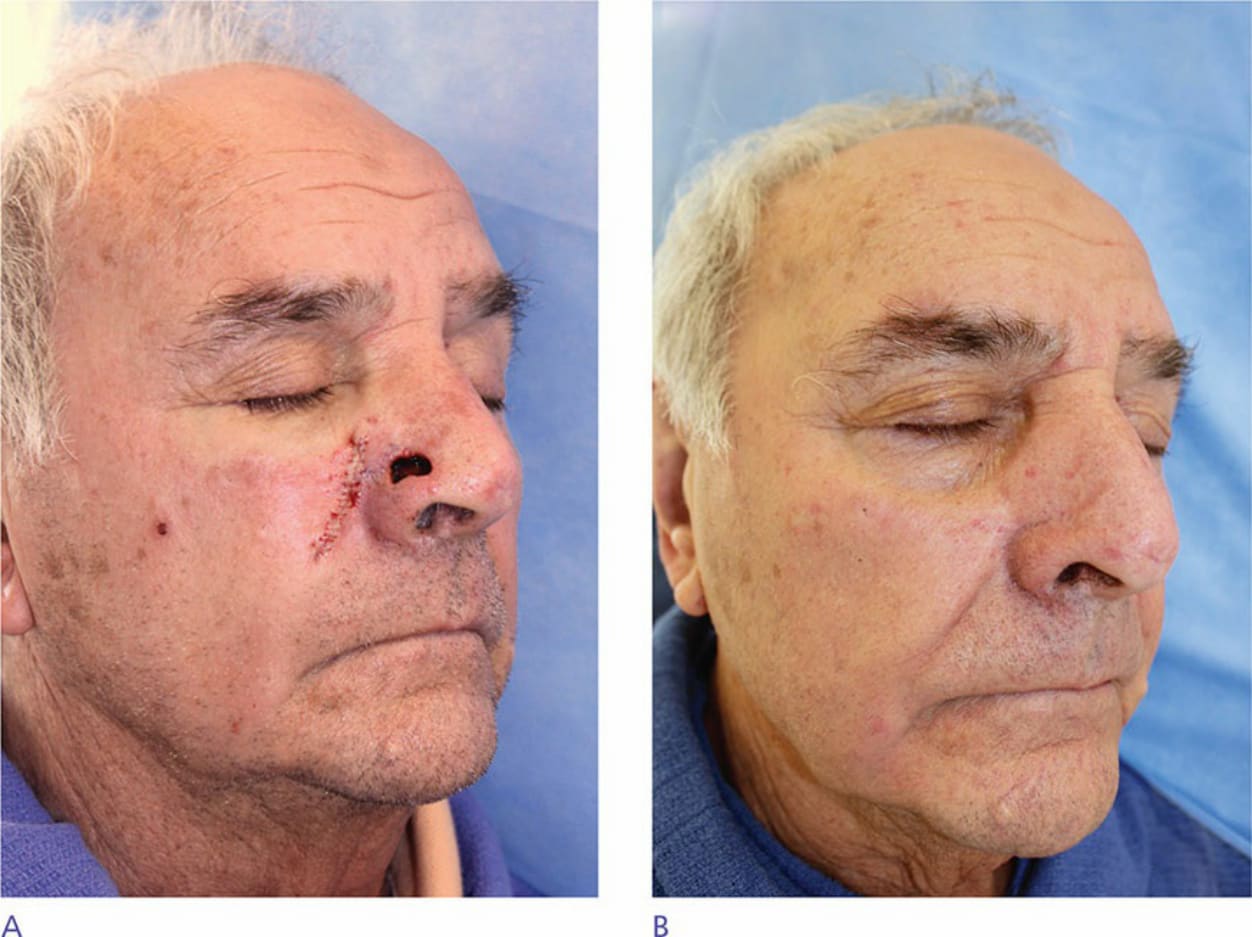
Figure 39-7. Second-intention healing of wounds in concavities often heals inconspicuously. (A) A shallow wound of the alar groove was left to heal by second intention. (B) The scar hides in the naturally concave alar groove.