Suture Reaction
Suture Reaction
All sutures elicit some degree inflammatory response when embedded in tissue, but the response is variable. Several factors contribute to tissue reactivity including suture material, configuration, caliber, and absorbability. The degree of inflammatory response to biologic sutures (i.e., fast, chromic, or plain gut or silk) is much higher than that seen with synthetic sutures (i.e., nylon or polypropylene).145 Additionally, monofilament configurations of suture are thought to lead to less reactivity when compared to a multifilament configuration. Immediate postoperative suture reaction is characterized by erythema and tenderness of the skin. When suture reaction develops later in the postoperative course, it often presents as a “spitting suture,” where there is residual suture material in the skin and/or an inflammatory foreign body reaction (Fig. 36-11). Spitting sutures tend to occur 1 to 4 months postoperatively and present as a focal, aseptic pustule at the site of a buried suture. One study examined 140 patients and found that suture reaction was significantly less with poliglecaprone-25 (3.1%) as compared to polyglactin-910 (11.4%).146 Surgical techniques that can help prevent spitting sutures include placing absorbable sutures deep in the dermis, utilizing the set-back suture technique, cutting sutures at the knot, and closing wounds with minimal tension.146–148 To treat a spitting suture, the site can be nicked with an #11 blade and the purulence expressed and residual suture removed.
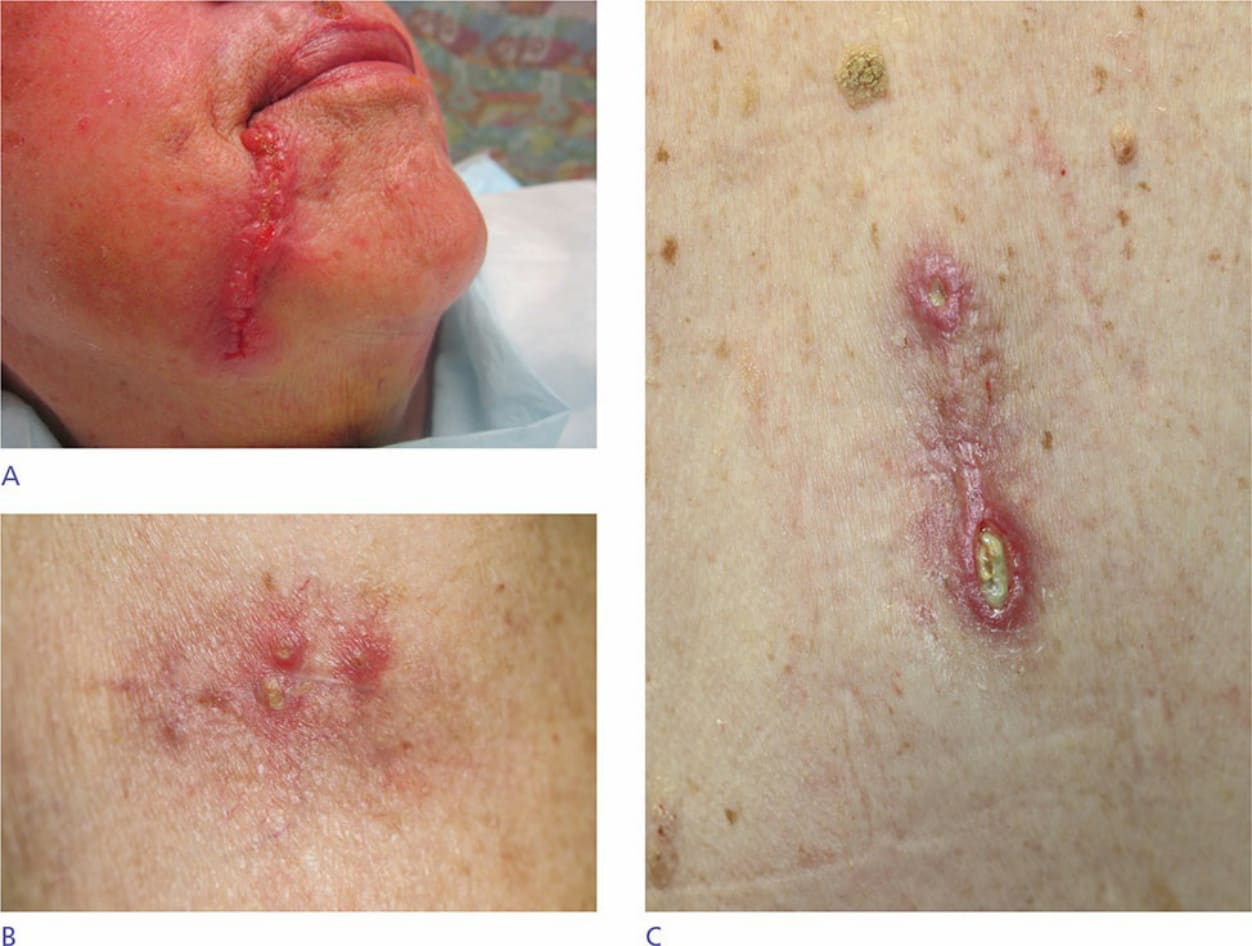
Figure 36-11. (A) Immediate suture reaction presenting as erythema and edema at 1 week postoperative. (B) Late suture reaction to deep sutures presenting as sterile pustules along the closure line at 6 weeks postoperative. (C) Late suture reaction presenting as small ulceration along suture line.