Matrixectomy
Matrixectomy
Partial matrixectomy is a useful procedure for severe or recurrent onychocryptosis.14 Because of the interplay between the nail plate, the soft tissues of the digit, and the protective function of the plate, total matrixectomy is a procedure of the last resort when the desired endpoint is permanent removal (e.g., in cases of onychogryphosis).
Matrixectomy can be performed surgically or chemically. Surgical matrixectomy is technically more challenging, more painful, and more time consuming than chemical destruction. If during surgical matrixectomy, any remnant of matrix is left behind, a piece of nail plate will regrow as a nail spicule.
Chemical destruction of the matrix with phenol 88%, sodium hydroxide 10%, or trichloroacetic acid (TCA) 100% is a simple, efficient, and reliable procedure with lower recurrence rates than surgical intervention.14–16 After the digit is anesthetized and exsanguinated with the use of a tourniquet, a thick protective layer of petroleum jelly is applied onto the perionychium. A lateral strip of nail plate is avulsed, and cauterant is applied to the matrix for 1 minute (sodium hydroxide and TCA) or 4 minutes (phenol) (Fig. 34-11). At this point, dilution, rather than neutralization, is performed, using saline rather than alcohol. A greasy bulky dressing is then applied. Postoperative pain is
minimal (especially for phenol and TCA that destroy the terminal myelinized nerve endings), and is fully controlled with acetaminophen or nonsteroidal anti-inflammatory agents. Postoperative care includes daily 5- to 10-minute soaks in warm water. Patients should be educated that oozing will persist for up to 6 weeks after the procedure, and that any crusting should be gently removed.
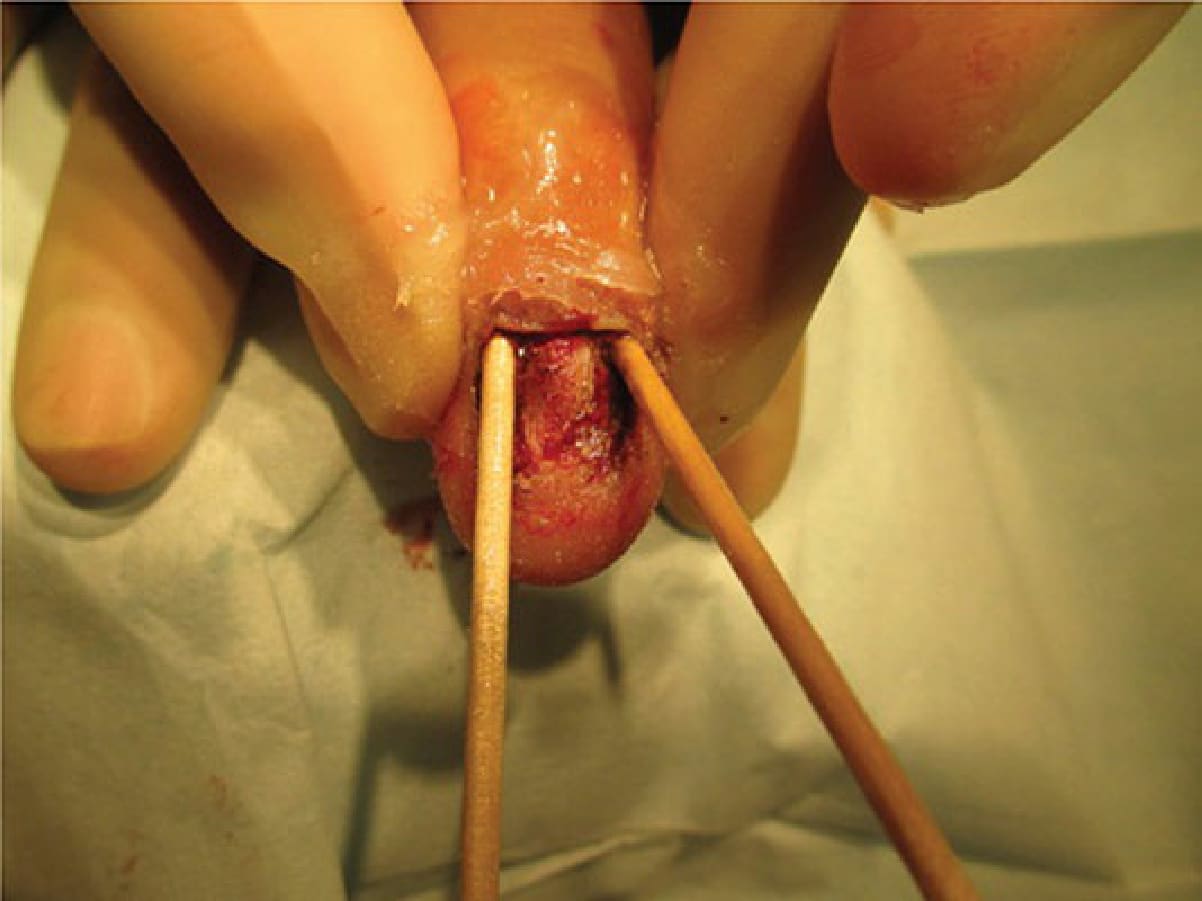
Figure 34-11. Chemical matrixectomy.