SURGICAL INSTRUMENTS
SURGICAL INSTRUMENTS
Nail surgery requires a few specific instruments, including a Freer elevator and a nail splitter (English anvil nail splitter) (Fig. 34-7).
A bloodless field is necessary for adequate visualization during surgery and for phenolization of the matrix.6 To accomplish this, a tourniquet is often required. The tourniquet may be a Penrose drain secured with a sturdy hemostat or a sterile glove with a small hole snipped in the fingertip of the glove finger to be operated on and rolled back to the base of the digit, achieving a full exsanguination of the finger/toe (Fig. 34-8). Adequate pressure is also obtained with the T-RINGTM (Precision Medical Devices) (Fig. 34-9). Debate exists as to a safe duration for the use of a tourniquet, with the goal always being to keep it in place for as little time as necessary for adequate visualization. Surgical loupes that provide magnification of 2.5 to 4.2 times can also aid in visualization during the procedure.10
The surgical specimen must be submitted to dermatopathology review in a condition adequate for interpretation. One useful approach for submission of small specimens, including those obtained during tangential excision, is to place the specimen on filter paper (ideally with a nail template) in a cassette padded with sponges that is then placed in the formalin container.11
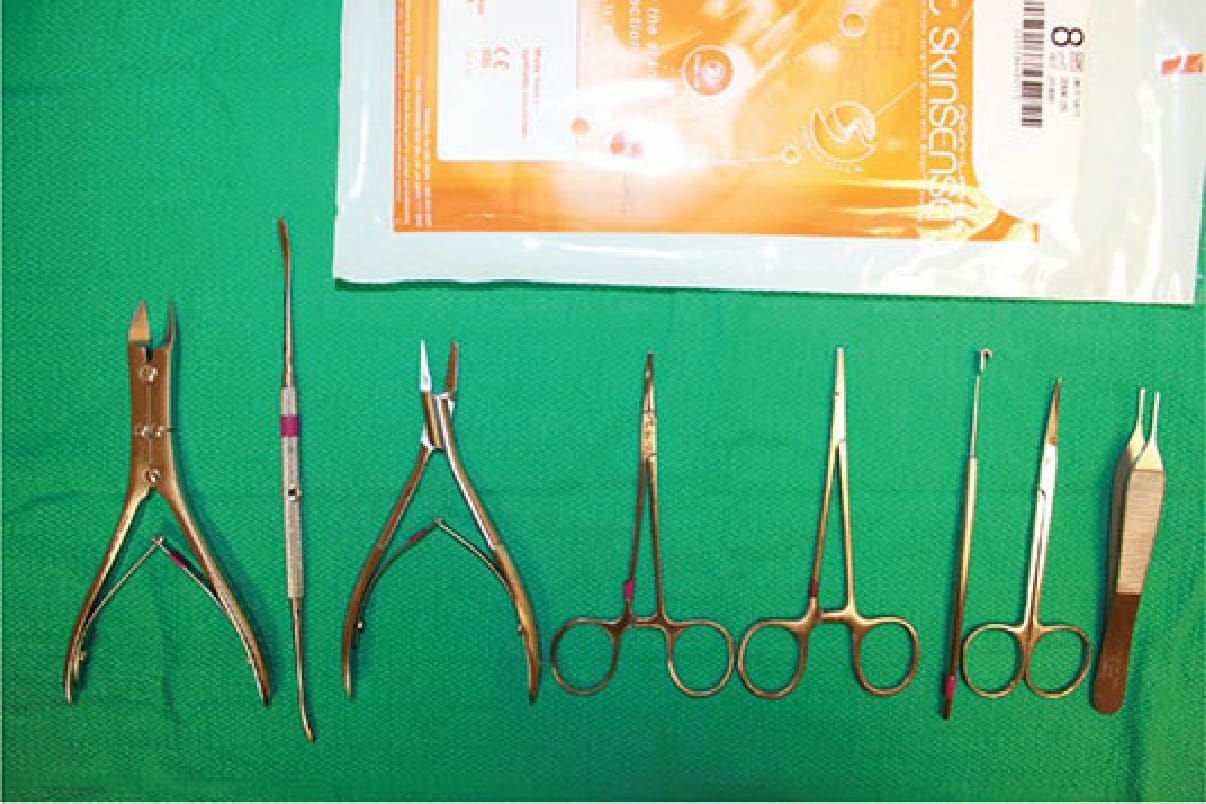
Figure 34-7. Surgical tray for nail surgery. From left to right: Dual action nail nippers, freer elevator, English anvil nail splitter, curved hemostat, mosquito, skin hook, iris scissors, forceps.
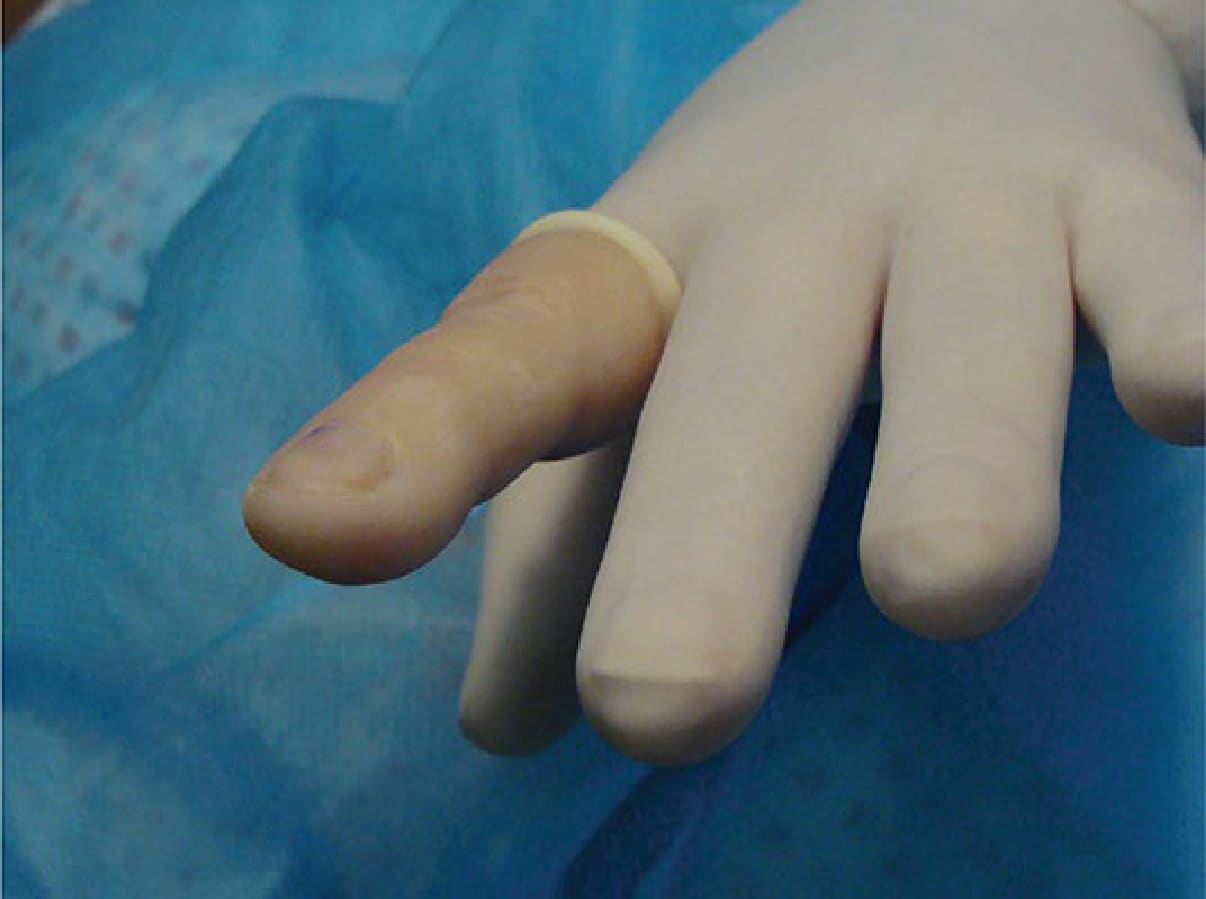
Figure 34-8. Glove tourniquet. A sterile surgical glove can be used as a tourniquet by rolling back the glove finger on the affected digit.
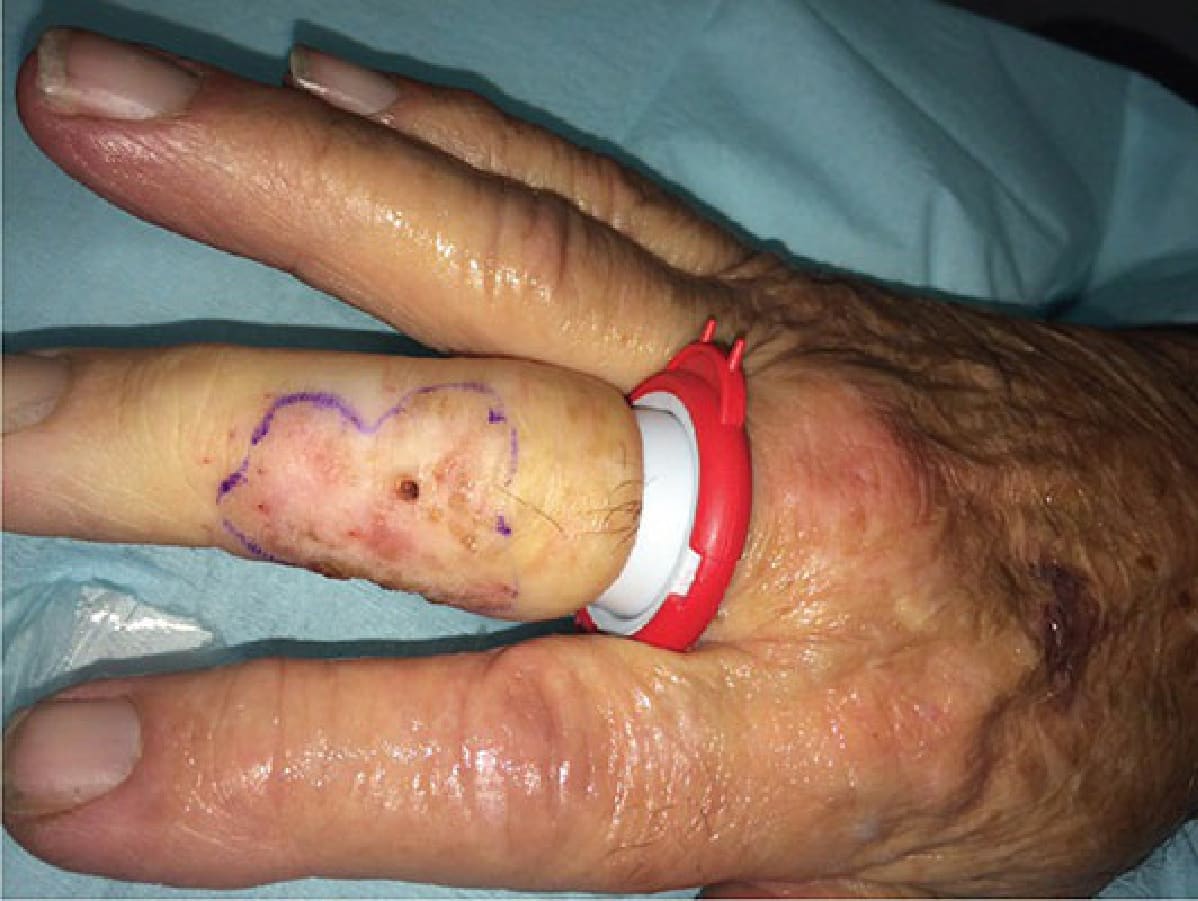
Figure 34-9. T-RING™ tourniquet.