PRINCIPLES OF ADVANCEMENT FLAP DESIGN
PRINCIPLES OF ADVANCEMENT FLAP DESIGN
Advancement flaps may be conceptualized as modified linear closures, with one or both apical standing cones (dog ears) moved laterally to facilitate aesthetic or functional closure. When a free margin such as the eyelid or lip, or a cosmetic subunit junction, would be violated by a linear closure, advancement flaps may be utilized to direct the standing cones away from these natural boundaries (Fig. 21-1). Additionally, advancement flaps often camouflage scars by placing incision lines along natural creases or cosmetic subunit junctions.
Common locations for advancement flaps include the upper and lower cutaneous lips, the nasal sidewall, the infraorbital cheek and lower eyelid, the forehead and temple, the preauricular cheek, and the helical rim. Advancement flaps have also been described for nasal tip defects (e.g., East–West flap).1 However, the relatively immobile skin of the nasal tip and proximity to free margins limit the utility of advancement flaps to relatively small defects in this location.
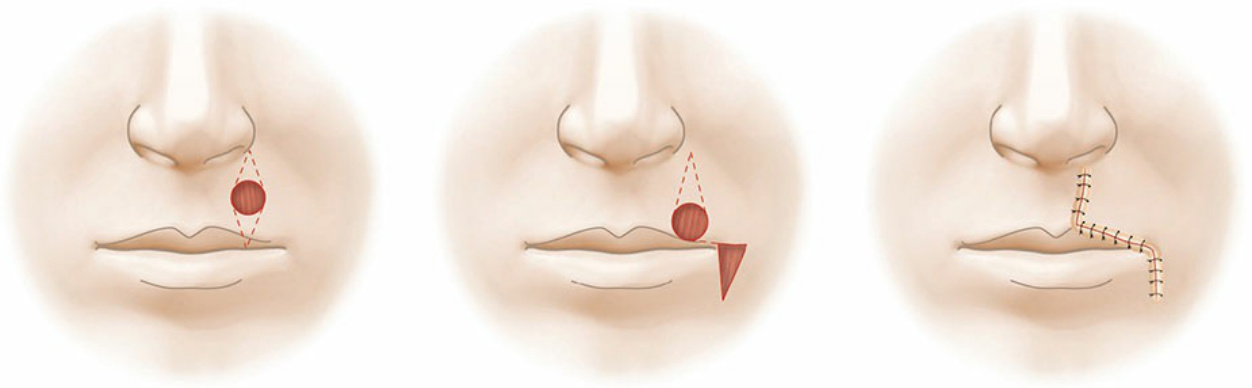
Figure 21-1. Advancement flaps allow for displacement of standing cones when they may infringe on free margins or cosmetic subunit junctions.