VASCULAR ANATOMY
VASCULAR ANATOMY
The skin of the head and neck has a robust vascular system that is derived from the subdermal and epidermal vascular plexuses. In the skin, the deep musculocutaneous arteries give rise to the subdermal vascular plexus, which is found at the junction of the dermis and subcutaneous tissue. Arterioles from the deep subdermal plexus supply the epidermal appendages and give rise to the intradermal vascular plexus. The intradermal vascular plexus is found in the reticular dermis and branches to form the superficial vascular plexus that ultimately becomes the capillary loop system in the papillary dermis. It is this capillary loop system that supports the metabolic needs of the epidermis. Due to low perfusion pressures and blood flow within the intradermal plexus, it is essential that the undermining of a random flap be performed in the plane of subcutaneous tissue. Inclusion of vessels of the subdermal plexus helps to ensure adequate blood flow and viability (Fig. 20-1).1,2
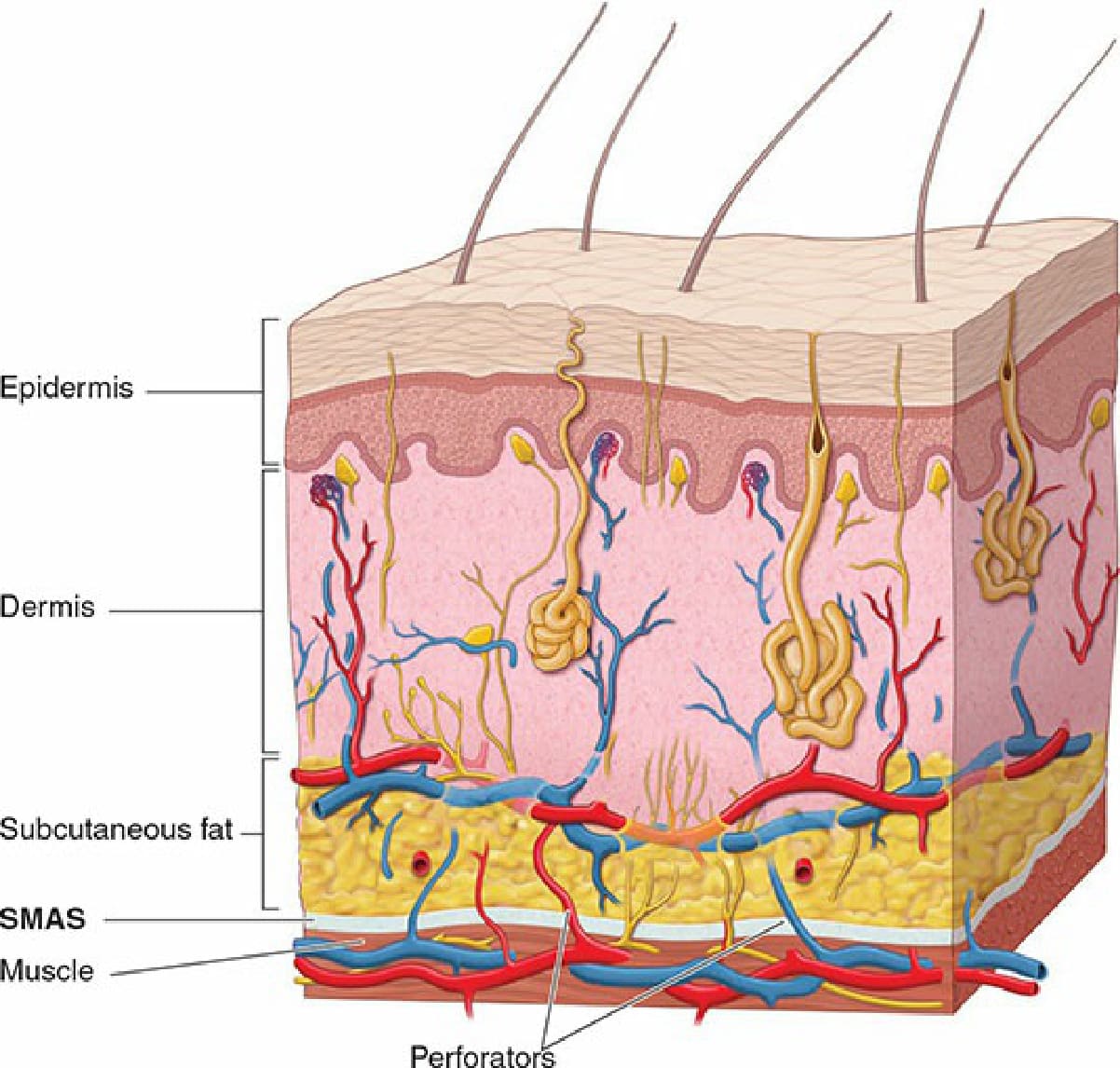
Figure 20-1. Cutaneous vascular anatomy. The subdermal plexus found in the mid to superficial subcutaneous tissue provides the vascular supply to random pattern flaps. The intradermal vascular plexus lacks the perfusion pressure and bloodflow to support cutaneous flaps alone. Deeper musculocutaneous arteries provide the vascular supply for axial pattern flaps.