Eyelids
Eyelids
Linear repairs on the upper eyelids may be performed as long as significant postoperative asymmetry is not anticipated. If this occurs, a modified blepharoplasty on the contralateral lid may be performed to restore symmetry. On the lower eyelid, excisions may be designed parallel to the lower lid as long as the tension vector across the sutures is perpendicular to this axis (Figs. 18-28 through 18-32). If needed, a stress maneuver with open-mouth and upward gaze should be performed prior to closure
design. Keep in mind that Frost sutures (Fig. 18-33) do not mitigate the risk of ectropion due to poorly designed repairs; they simply prevent this occurrence secondary to edema in the immediate postoperative period. For a detailed discussion of eyelid repairs, see Chapter 38.
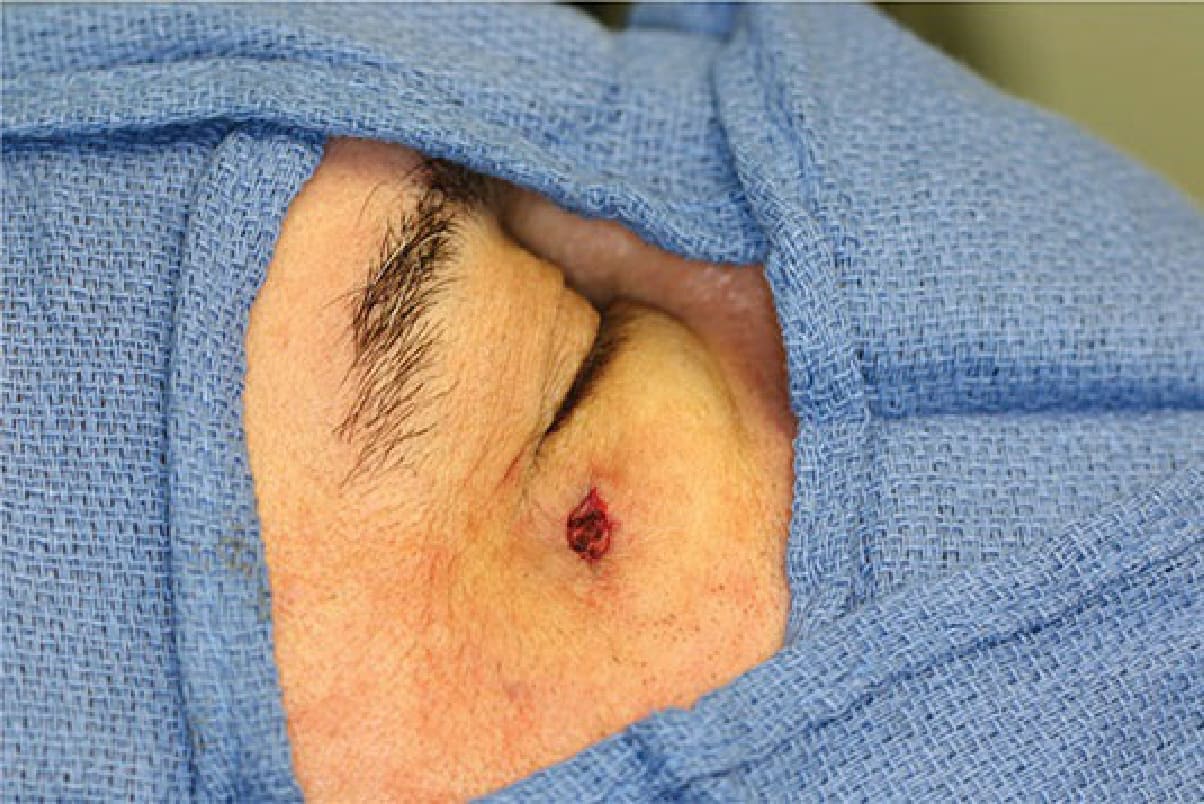
Figure 18-28. A defect near the eyelids can be closed in a linear fashion as long as tension vectors are considered.
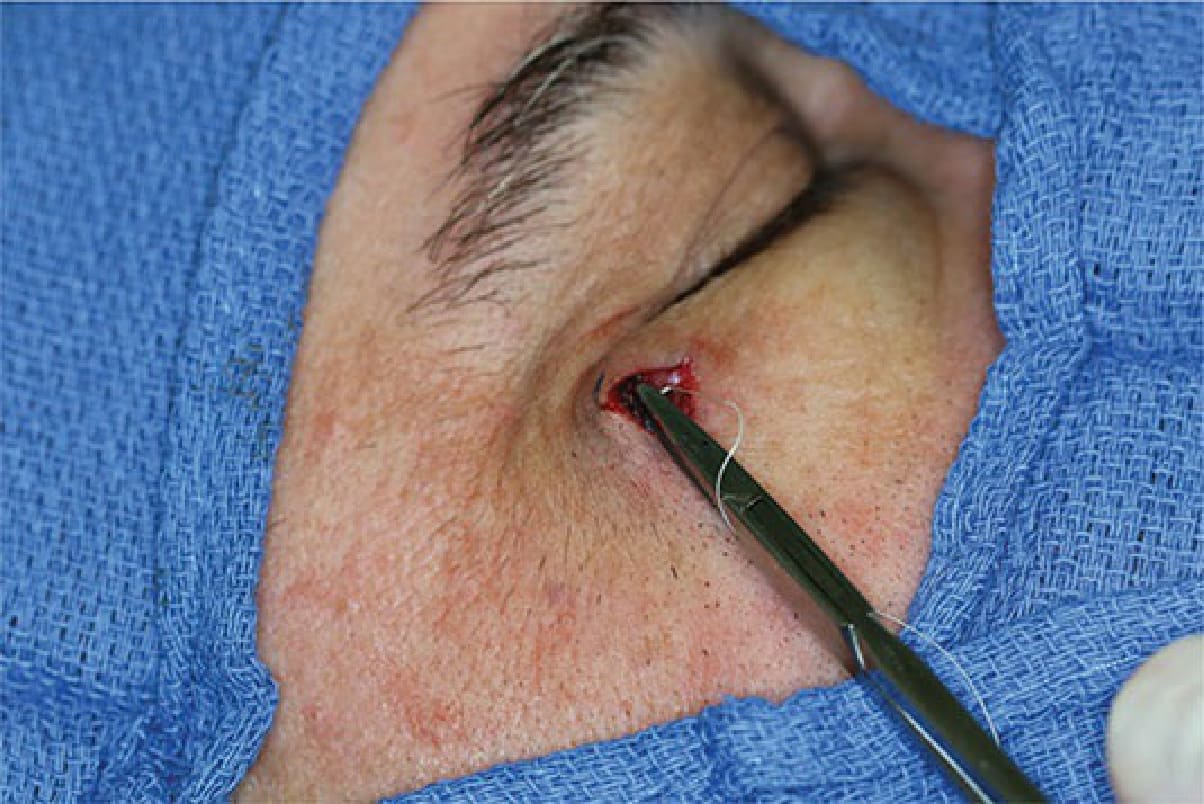
Figure 18-29. The first suture is placed with the goal of maintaining tension vectors parallel to the free margin.
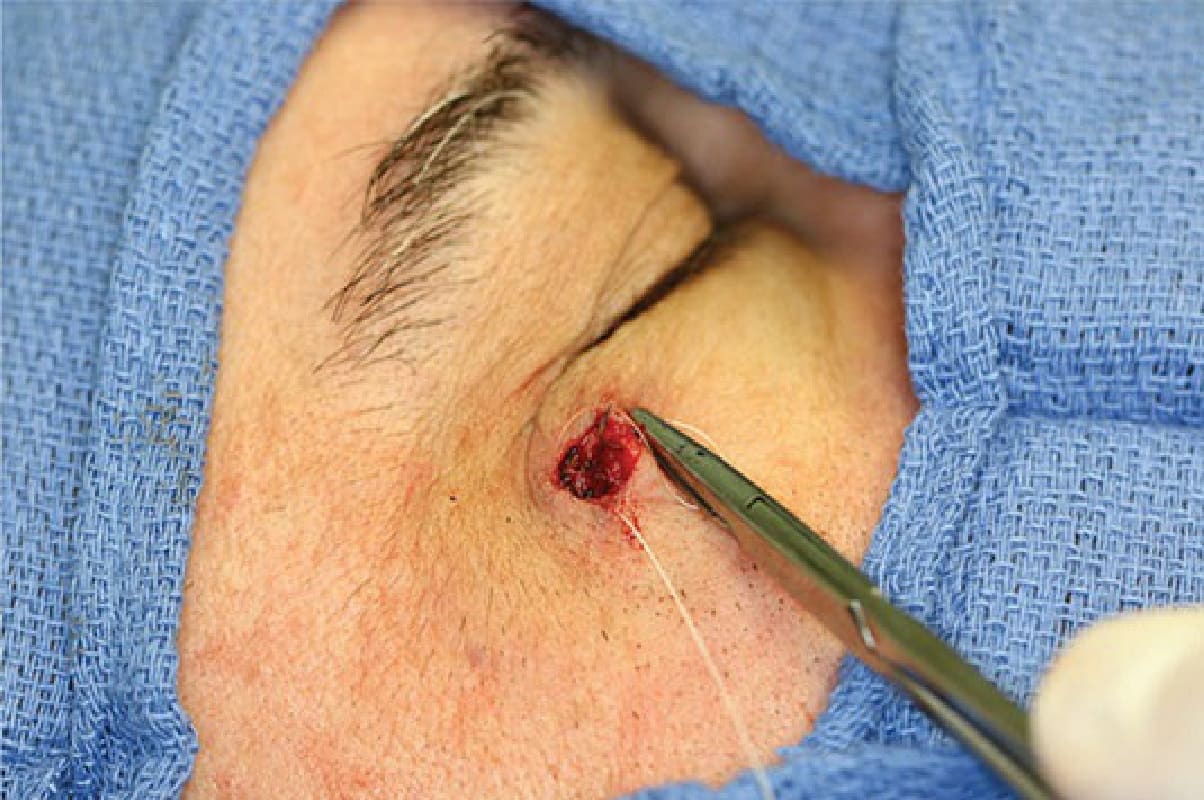
Figure 18-30. The second half of the suture is placed.
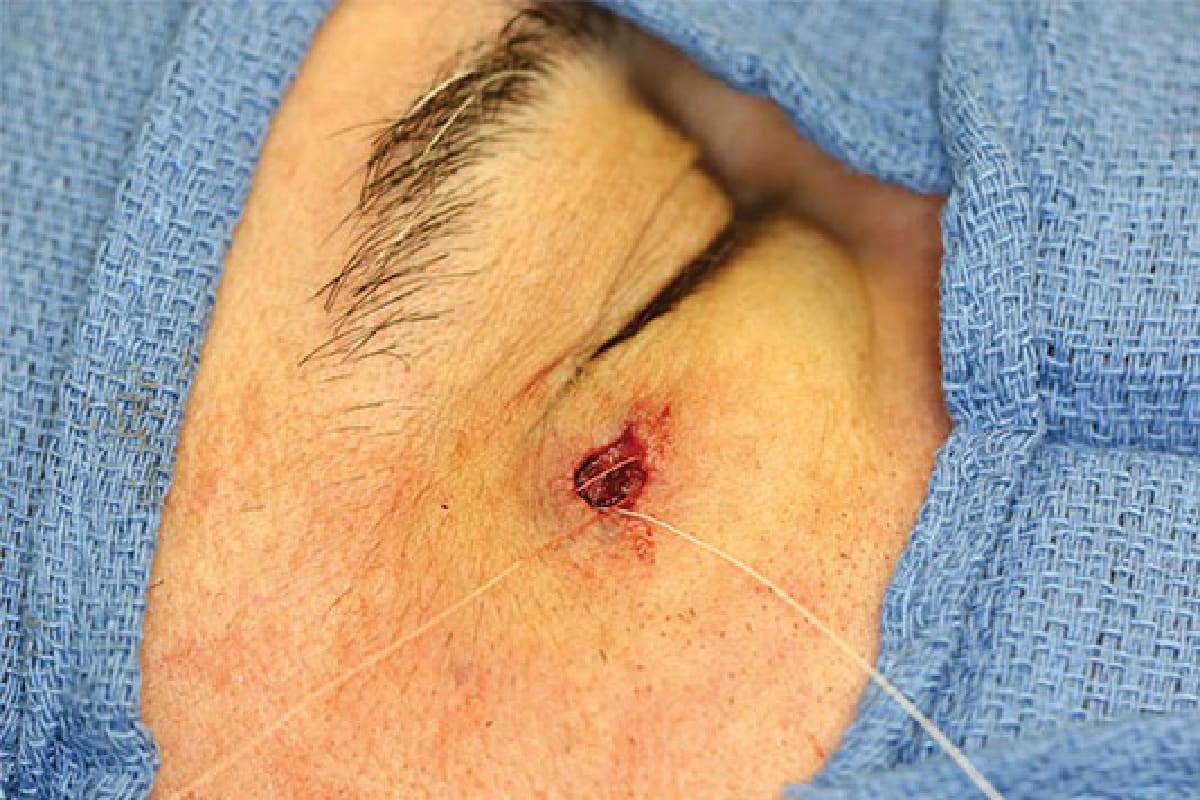
Figure 18-31. Note that the suture material is oriented horizontally so that there will be no vertical pull on the lower eyelid, reducing the risk of ectropion.
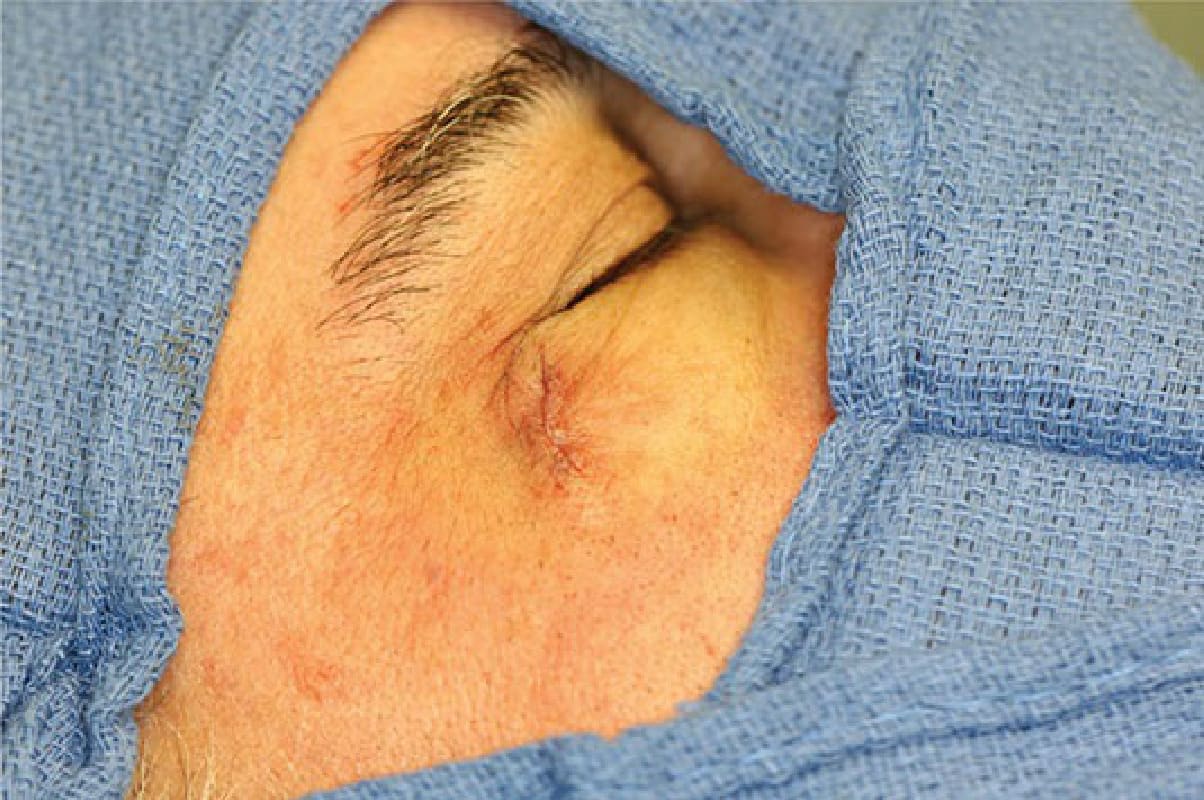
Figure 18-32. The wound is shown after the placement of an additional buried suture. Note the wound eversion without any evidence of ectropion.
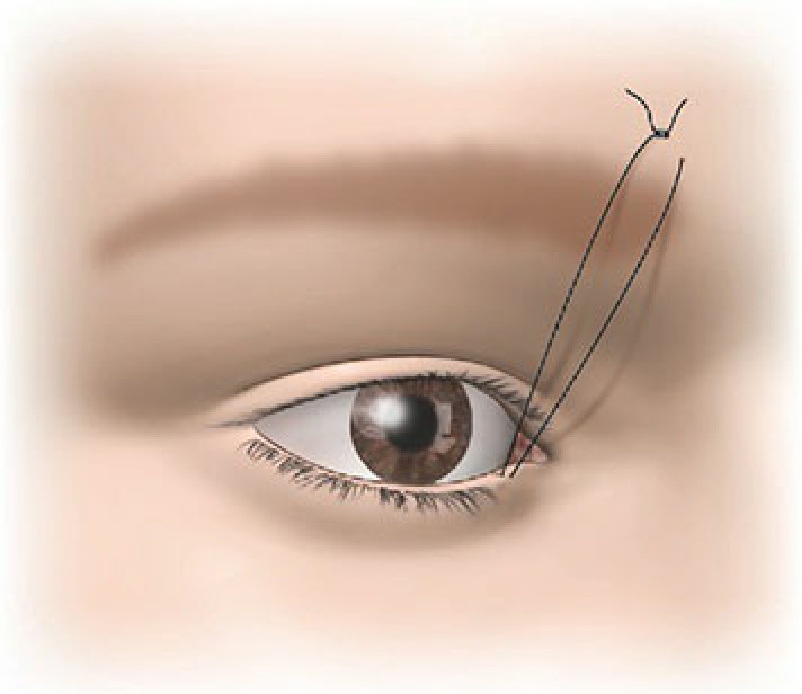
Figure 18-33. A Frost suture may be used to minimize ectropion secondary to postoperative edema in an otherwise well-designed repair.