Electrocoagulation
Electrocoagulation
Electrocoagulation can be performed in two manners: contact mode or spray (fulguration) mode. In contact mode, the depth of coagulation is proportional to the size of the electrode tip and its associated power (Table 20-2).
For superficial coagulation of small areas (i.e., destruction of small seborrheic keratoses or warts), a fine-tipped electrode should be used. The fine tip concentrates the current to a fine point, allowing the surgeon to use lower power. When using a finetipped electrode, the current density in the tissue rapidly decreases with the increasing distance from the electrode. As a result, heat generation is confined to the narrow vicinity of the electrode tip, allowing targeted heating of the superficial lesion while decreasing the chance of dermal heating, damage, and subsequent scarring.14
For deeper coagulation, a large-tipped electrode (i.e., a ball- or disc-shaped electrode) and higher power should be used. A large-tipped electrode is effective for deep coagulation but not superficial coagulation because unlike with a fine-tipped electrode, where current density rapidly decreases with the increasing distance from the electrode, current density slowly decreases with the distance, and thus a larger and deeper area is heated. Large-tipped electrodes are, therefore, only indicated for deep coagulation (i.e., destruction of deep reticular dermis after curettage in the setting of destruction of a nonmelanoma skin cancer).
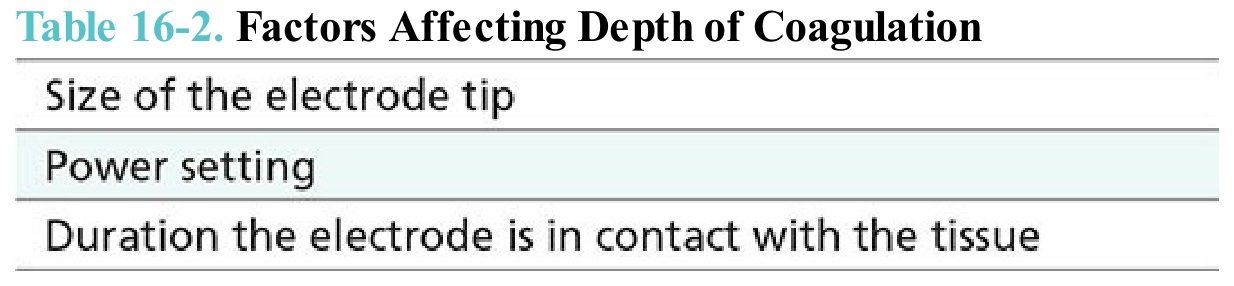
Table 16-2. Factors Affecting Depth of Coagulation