Terminology
Terminology
Electrosurgery refers to the passage of high-frequency alternating electrical current through tissue to achieve a desired surgical effect, such as coagulation or cutting (Table 16-1). All true electrosurgical devices utilize a high-frequency electrical generator and two electrodes. Electric current flows from the active electrode through the patient’s body and returns to the electrosurgical generator via the dispersive (return or indifferent) electrode (Fig. 16-1). When current passes through tissue, the tissue’s resistance converts the energy into heat. This differs from electrocautery, which can be conceptualized as a directly heated metallic object, such as a hot iron. In electrocautery, instead of current flowing through the patient’s body, electrical current directly heats a metallic probe that is then applied to the tissue (Fig. 16-2). Since no current passes through the patient, electrocautery is most commonly used when the operative site is near a patient’s pacemaker, defibrillator, or deep-brain stimulator, or to limit destruction to only the superficial tissue layers, since no heat is generated in deeper tissue.
In electrosurgery, a small active electrode delivers electrical current to the surgical site. The current is concentrated in a small area providing high current density to induce heating and thermal tissue damage.5,6 A return electrode attached to the patient’s body then collects and disperses this current at a reduced current density that does not induce tissue heating.
Electrocoagulation is the process whereby tissue undergoes thermal denaturation through the heating of tissue below its boiling point.6 Additional slow heating vaporizes the water content in the coagulated tissue causing tissue drying, also known as desiccation. As superficial coagulated tissues dry out (desiccate), they become less electrically conductive, thereby preventing current from flowing and heating deeper tissue and thereby limiting the depth of coagulation.
In electrosection, tissue adjacent to the electrode is rapidly increased in temperature above its boiling point. This causes a rapid explosive vaporization of the water content in the targeted tissue coupled with tissue fragmentation. This tissue fragmentation permits the electrode to pass through the tissue and function as a cutting instrument.7–9
A range of electrosurgical devices are available for dermatologic surgery. These range from simple desiccator units (Fig. 16-3) to high-powered operating room ready multifunction devices (Fig. 16-4).
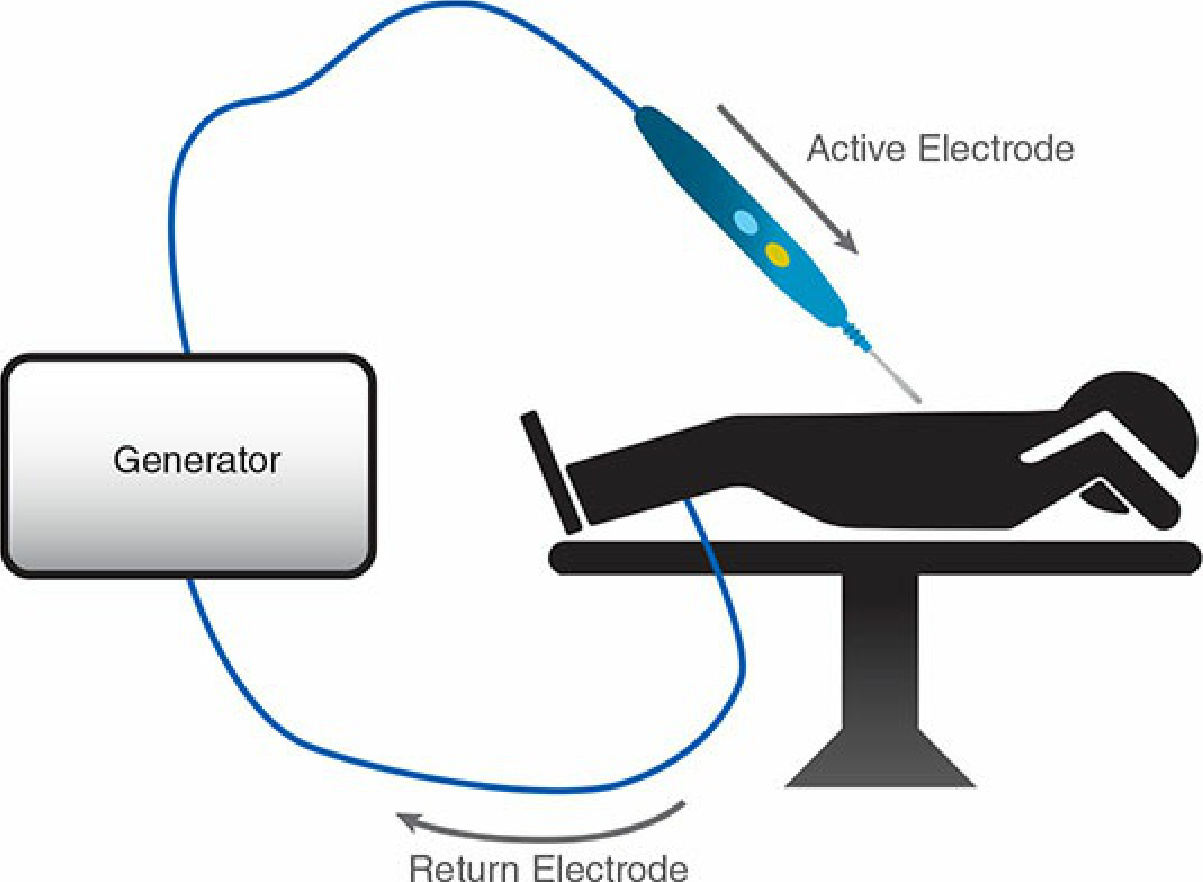
Figure 16-1. An electrosurgery unit. Current flows from the generator, through the active electrode and into the tissue. The tissue’s resistance converts this energy into heat. The current then returns to the generator by way of a return (dispersive or indifferent) electrode.
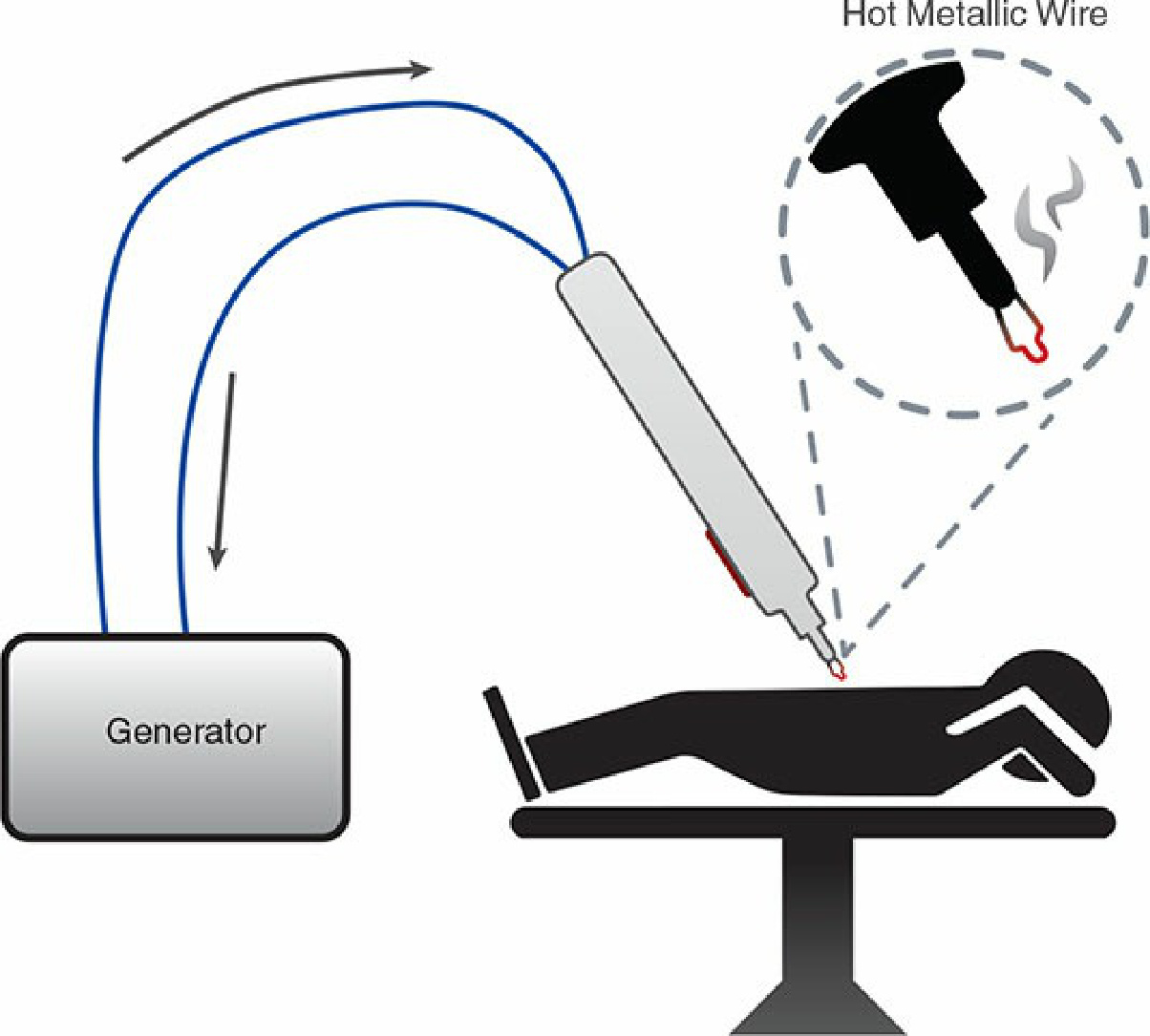
Figure 16-2. An electrocautery unit. Unlike in electrosurgery, current simply heats the tip of the electrode, which is then applied directly to the tissue to heat the superficial tissue layers.
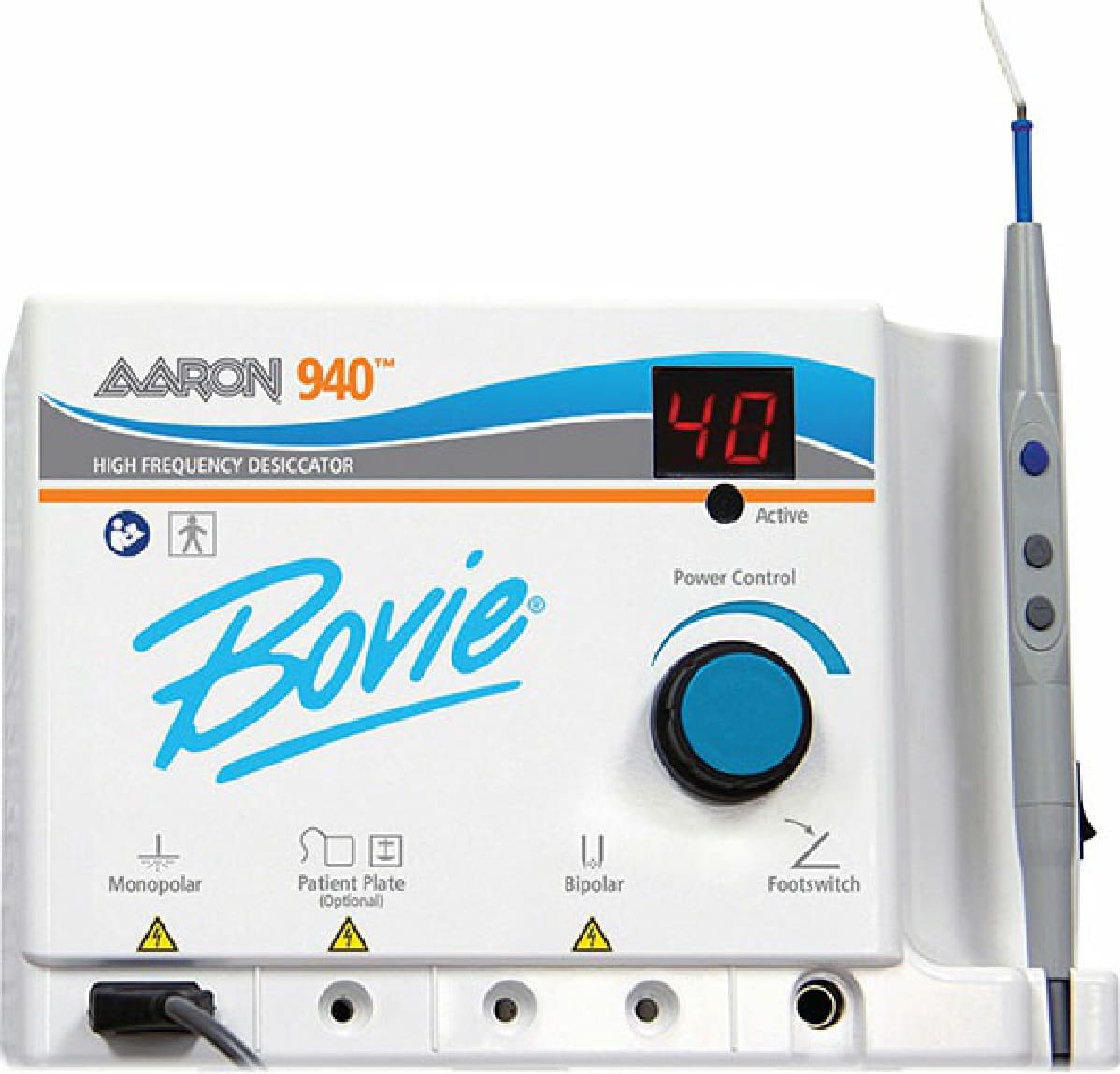
Figure 16-3. A simple electrodesiccation unit. This device is appropriate for almost any dermatologic surgery application.
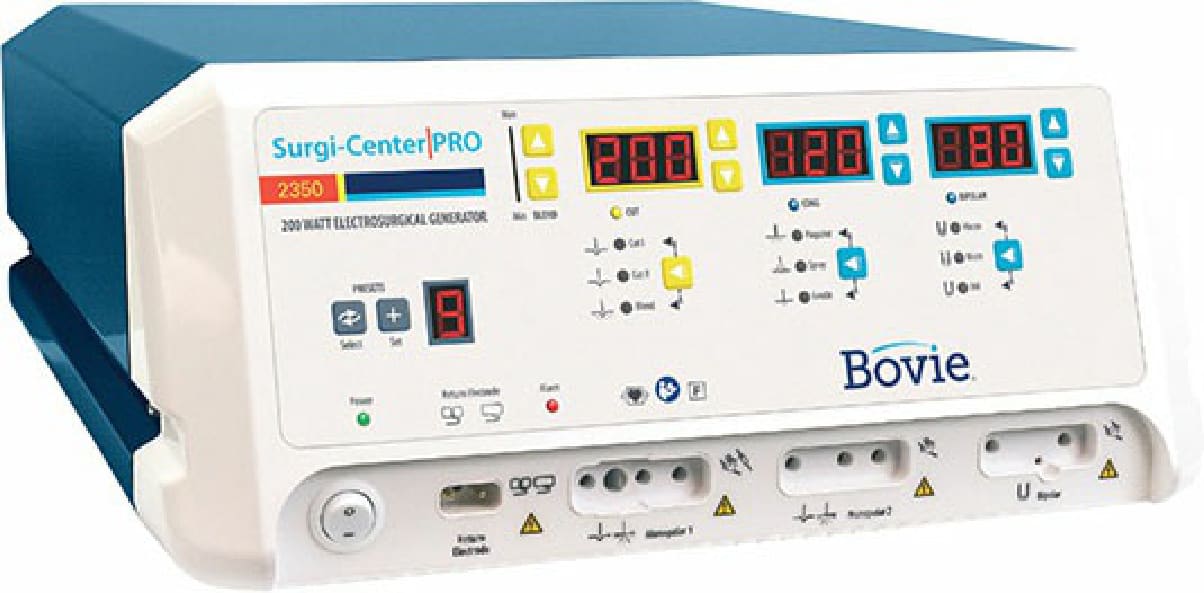
Figure 16-4. A high-powered electrosurgical unit.
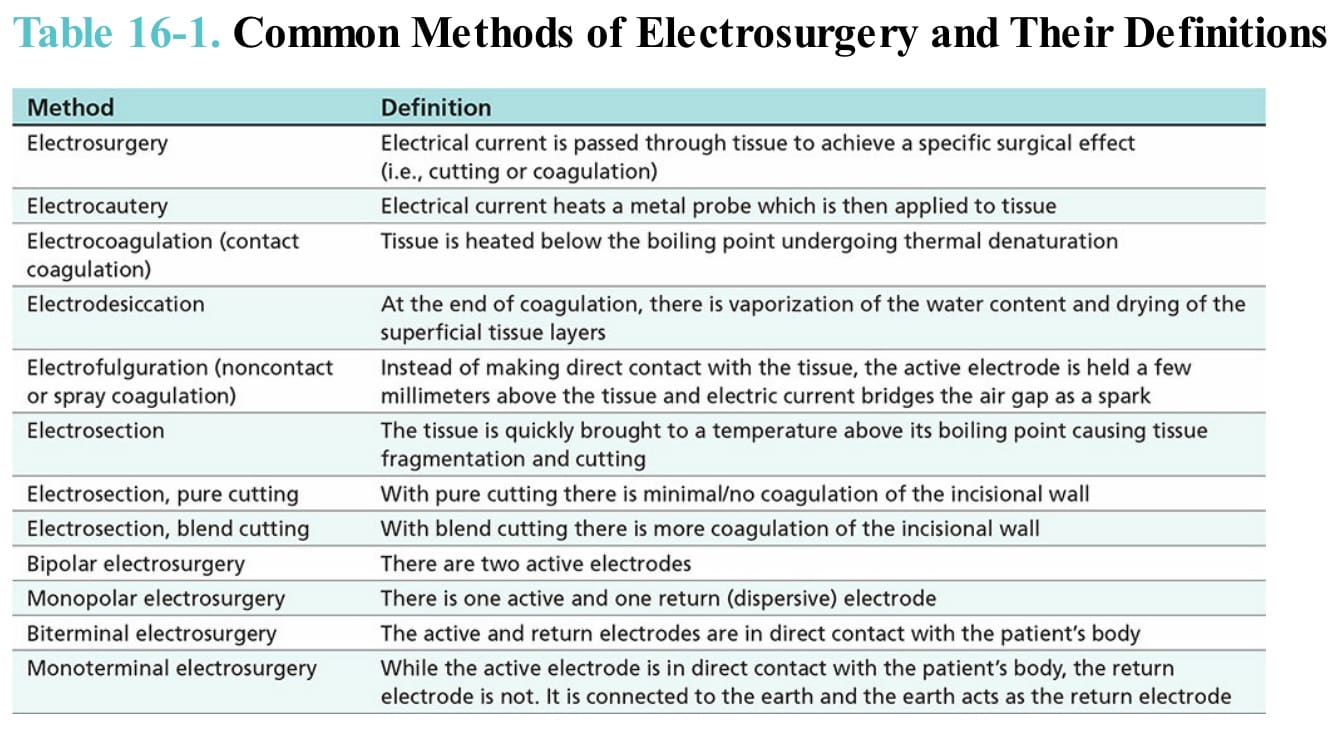
Table 16-1. Common Methods of Electrosurgery and Their Definitions