MECHANISM OF ACTION
MECHANISM OF ACTION
Cryoablation induces tissue necrosis through multiple mechanisms including direct cellular injury, apoptosis, vessel thrombosis, and immune response activation. Direct cellular injury occurs through the formation of intracellular and extracellular ice (Fig. 15-6). Intracellular ice results in the destruction of cell membranes and vital organelles, and is maximized by rapid freezing. Extracellular ice alters the osmotic gradient between cytoplasm and extracellular fluid. Together, these changes result in irreversible cell death. Cellular damage continues during the thawing phase, in which the formation of large ice crystals imposes shearing forces on surrounding tissue. To maximize the damage accrued during recrystallization, thawing should proceed as slowly as possible.13
In addition to direct cellular injury, cryosurgery also has a destructive effect on microcirculatory vasculature. Freezing causes damage to capillary endothelial cells, resulting in platelet aggregation and thrombosis of papillary dermal vessels.
Additionally, freezing destroys mast cell membranes and causes degranulation, which results in histamine-mediated increases in capillary permeability. Subsequent vasodilation results in increased edema and inflammatory cell infiltration.
The immunologic effect of cryosurgery is less well defined. Evidence of a systemic immune reaction is found in reports citing resolution of multiple verrucae after cryosurgical treatment of only a few lesions—an abscopal response. This reaction is likely incited by the release of DNA, RNA, uric acid, and other intracellular elements following the destruction of cell membranes. These elements activate toll-like receptors, triggering subsequent immunologic cascades. An innate immune response is generated initially, resulting in early infiltration of granulocytes, monocytes, and macrophages. An adaptive immune response follows, in which dendritic cells travel to regional lymph nodes to undergo maturation and antigen presentation.10
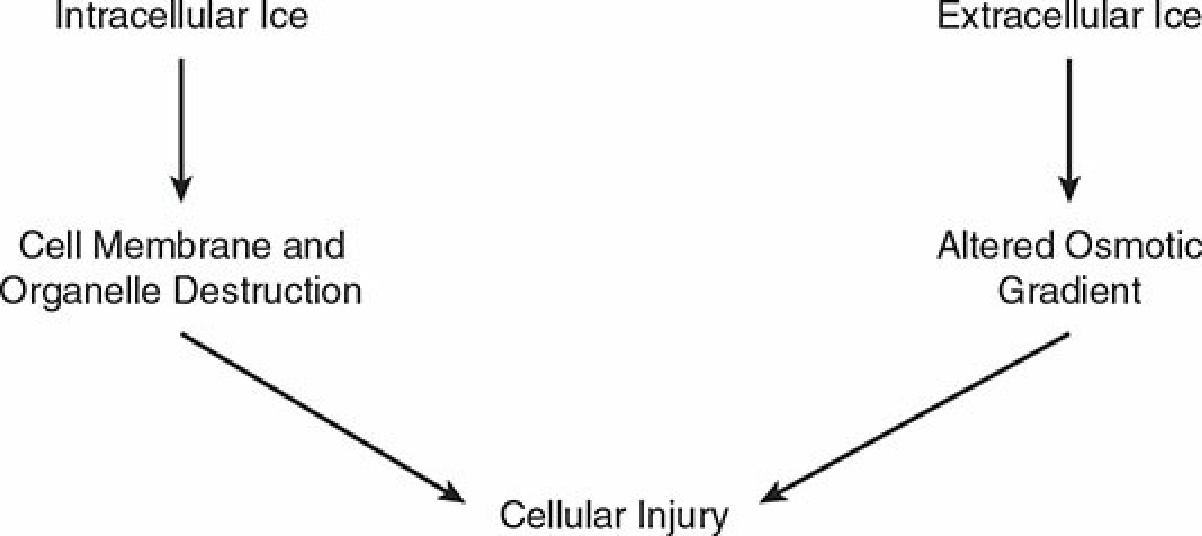
Figure 15-6. Direct cellular injury occurs through the formation of intracellular and extracellular ice.