Anesthesia, preparation, and postoperative care
Anesthesia, preparation, and postoperative care
Prior to any biopsy, local anesthesia should be obtained by the use of lidocaine. Epinephrine is typically added at a dilution of 1:100,000 or 1:200,000 to induce vasoconstriction, and the lidocaine is frequently buffered with sodium bicarbonate to reduce the burning sensation during injection. Data vary regarding whether warming or chilling the lidocaine solution results in less pain during injection, with some data favoring either method. Slow injection, vibration, application of an ice cube, or pinching of the skin can all be used to decrease the pain involved with injecting the local anesthetic (Table 14-1).
Superficial dermal injection may be more painful, though it provides instant and total anesthesia, while deeper injections hurt less, but take time for complete anesthesia to take effect. Lidocaine is vasodilatory and the vasoconstrictive effects of epinephrine take several minutes to take effect. Thus, biopsy before the onset of action of epinephrine may result in excessive bleeding. Buffered lidocaine has a finite shelf-life (roughly 1 week), and outdated solutions produce only partial anesthesia with excessive bleeding.
Biopsy sites in periorificial areas as well as the lower leg are more prone to infection. For these sites, some clinicians will add 0.15 mL of clindamycin, 150 mg/mL to 50 mL of buffered lidocaine with epinephrine to achieve a concentration of 408 mcg/mL, which has been shown to reduce the rate of local infection.4
Correct positioning of the patient is essential. If a biopsy site is likely to bleed, a clean barrier should be placed under the affected area. The area should be clean and well organized with all instruments in place, the biopsy bottle open and labeled with the patient’s name, date of birth, and biopsy site, and gauze, hemostatic solution (typically 20% aluminum chloride or Monsel’s solution), white petrolatum, and a band-aid
already positioned. The surgical assistant should read the site on each bottle before the specimen is placed into the formalin to assure that it is going into the correct bottle. The specimen should be fully immersed in the formalin solution, and visual inspection by the physician should confirm it is in the bottle before the cap is applied.
For biopsies on the head and neck, caustic hemostatic agents should be used with extreme caution near the eyes. A cotton-tipped applicator (CTA) should be dipped into the cautery solution and rolled dry so that drips are unlikely. For lesions near the eyes, the patient should be positioned so that gravity and creases will not draw the hemostatic solution into the eye. The wound should be blotted dry immediately after the biopsy and a CTA moistened with hemostatic solution rolled gently over the site, rather than twisted into the tissue. The wound surface should then be blotted to remove any excess hemostatic solution, as it will otherwise continue to burn the tissue and produce excess scarring.
Monsel’s solution has the potential to cause a visible tattoo and must be used in a precise fashion. The wound must be blotted completely dry and the moistened CTA rolled quickly over the surface to obtain hemostasis. Incorrect application of excessive Monsel’s solution to a bleeding wound results in a heavy black crust with continued bleeding through the crust, whereas a barely moistened CTA rolled across a dry wound produces instant hemostasis with little risk of tattoo.
Patients should receive written instructions regarding wound care. Most wounds can be cleaned with soap and water, then covered with white petrolatum and a bandage. Antibiotic ointments carry a risk of contact allergy and anaphylaxis, and make gramnegative wound infection more likely.5 An exception is often made for wounds with exposed cartilage, which may be treated with topical gentamycin ophthalmic ointment or 0.025% acetic acid compresses twice daily to reduce the risk of Pseudomonas chondritis. Patients should be instructed to expect shave biopsy sites to become red around the edges and slightly yellow in the center during wound healing, and should be reassured that this does not represent infection.
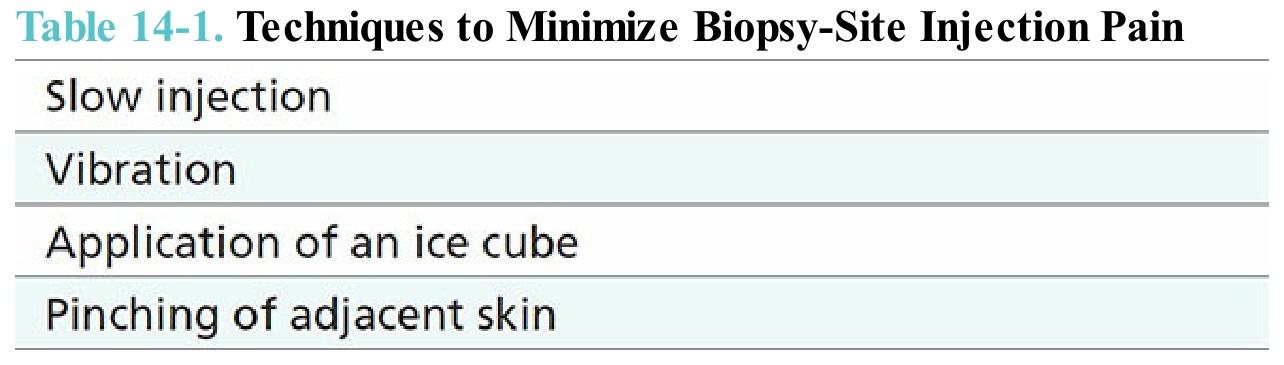
Table 14-1. Techniques to Minimize Biopsy-Site Injection Pain