Cryoanesthesia
Cryoanesthesia
The use of cold as an adjunct can be very helpful in reducing the pain associated with minor procedures such as cosmetic injectables, digital blocks, and wart destruction.5,6,58 The placement of a cold pack for 5 to 10 seconds prior to cosmetic injectables is a rapid and inexpensive way to provide the patient with increased comfort.
Cryorefrigerant provides another source of effective anesthesia by rapidly cooling the skin.5,6,59 They are held 6 in from the target zone and sprayed until the treatment area turns white,6 usually in 4 to 6 seconds. One should wear a mask and eyewear to avoid inhaling the vaporant and to protect the eyes from inadvertent contact.5 Ocular exposure from cryorefrigerants and even cryotherapy has been reported to cause pigmentary alterations and scarring.5,60,61 Those containing ethyl chloride are flammable, so care must be taken around lasers or sources of heat.5,6,61 Other cooling devices that have been used in dermatology include sapphire cooling laser tips and the Zimmer™ machine.5,6 The benefits of these technologies are twofold; they provide anesthesia for the patient and protect against laser-induced thermal injury and blistering. A thorough list of cooling applications is found in Table 12-5.
Cryoanesthesia can also be performed effectively using liquid nitrogen; for needlephobic patients, shave biopsies may be anesthetized using a brief liquid nitrogen spray, though the dermatopathologist should be informed as theoretically freeze artifact could occur.
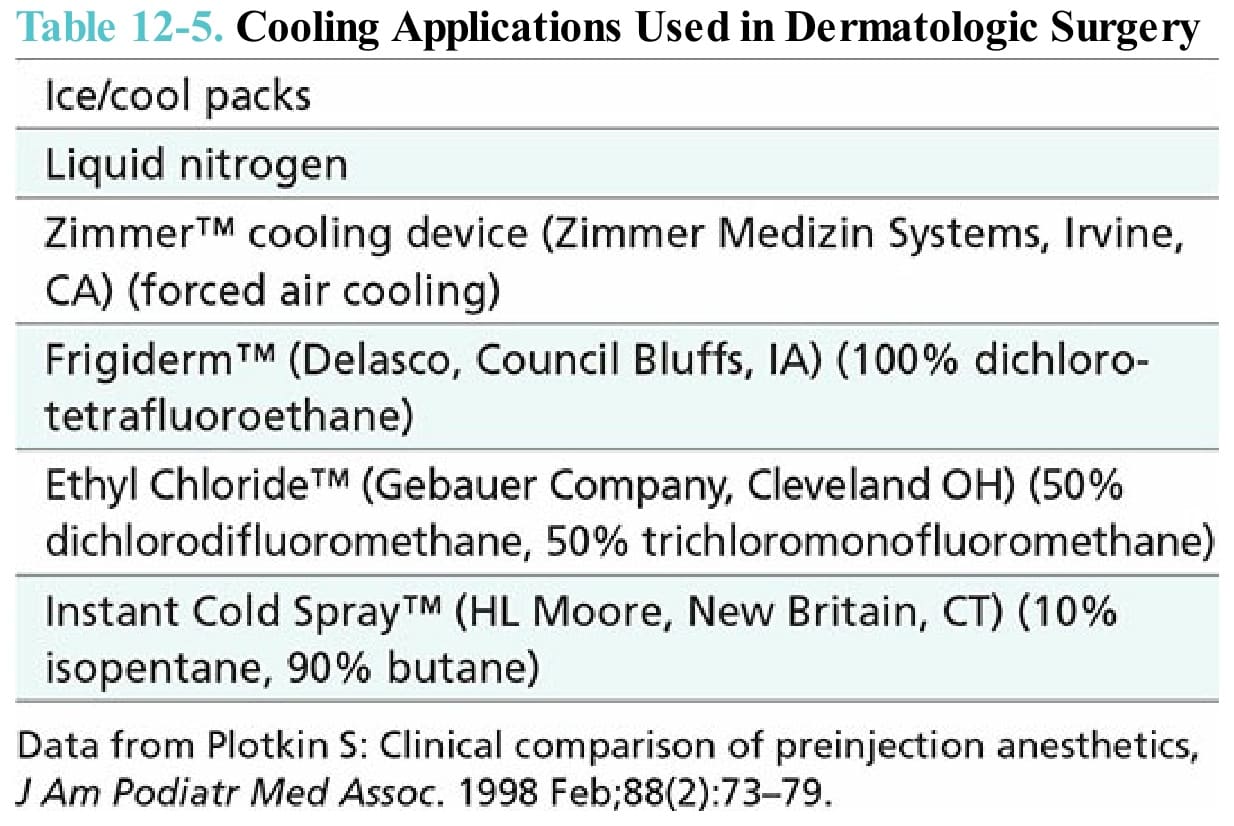
Table 12-5. Cooling Applications Used in Dermatologic Surgery