CLASSIFICATION
CLASSIFICATION
Local anesthetics have two main chemical classifications,5 and depend on the structure of the intermediate chain: those, which contain an amide group (e.g., lidocaine), and those which contain an ester attachment (e.g., procaine). This linkage is very important to the anesthetic agent as it defines the pathway by which the molecule is metabolized and excreted.6
Amide anesthetics are hepatically metabolized.5,6 Lidocaine is considered an intermediate potent anesthetic, and has a wide range of clinical uses.9 It exhibits a rapid onset of action, shows no cross reactivity to ester-type local anesthetics,5 and is therefore safe to use in patients who are allergic to procaine or tetracaine. Lidocaine comes in 0.5%, 1%, and 2% concentrations, and lasts on average for 30 to 400 minutes.6 Bupivacaine is a high-potency amide anesthetic, which lasts for 2 to 6 hours.6 Longer-lasting effects of bupivacaine have been attributed to its slower elimination time.10 Lidocaine and bupivacaine in combination have been studied and shown to prolong mean anesthetic duration,11 as is sometimes required with longer Mohs surgery procedures. A comprehensive list of amide anesthetics is shown in Table 12-1.
Ester local anesthetics are metabolized by pseudocholinesterase and excreted in the urine.6,8 The strength and duration of these agents correlate inversely with their rate of hydrolysis.6 Patients with atypical12 or low levels of pseudocholinesterases are prone to a greater risk of inadvertent toxicity.6 PABA is a major metabolic product of ester anesthetics, and a main reason for contact allergies.8 The most common types of ester anesthetics are benzocaine, procaine, tetracaine, and cocaine.6 The latter is a highly effective vasoconstrictor, and has been used for nasal procedures.13 Procaine has a rapid onset of action but shorter half-life, lasting for 15 to 30 minutes.6 Tetracaine is 10 times more potent than procaine and is often used as an ocular anesthetic drop.14,15 Chloroprocaine was developed to meet the need for a shorter-acting anesthetic agent with a favorable safety profile.16 It is licensed in Europe for procedures lasting up to 40 minutes. Although less toxic than lidocaine, it is a more painful anesthetic to administer due to its acidic pH.14
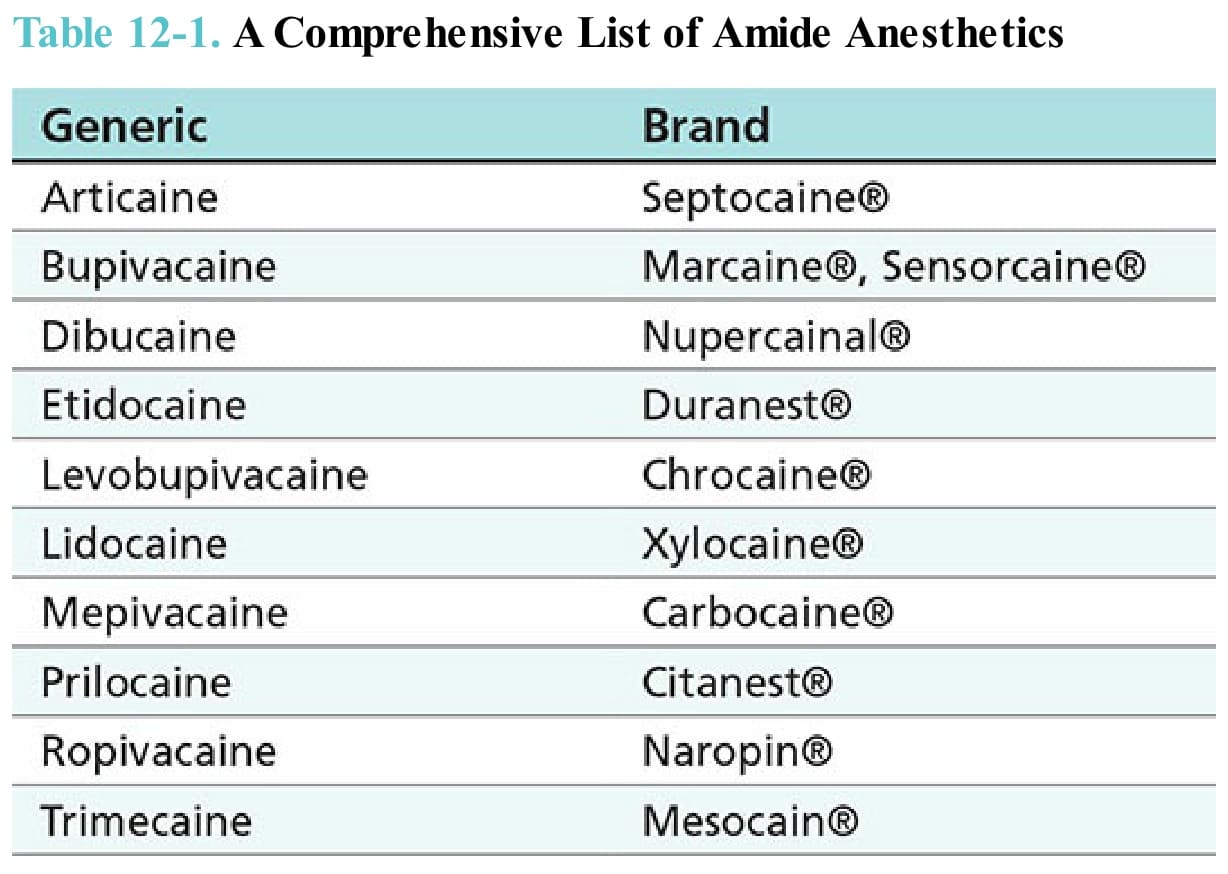
Table 12-1. A Comprehensive List of Amide Anesthetics