Study population
Study population
The investigator must specify demographic characteristics of the target population that will practically address the research question. Establishing geographic and temporal criteria ensures that the sample is representative and that the study is feasible. Optimizing feasibility may also involve ensuring the reliable identification of the study population, as well as sufficient sample size. A larger sample size can yield more accurate results but must be balanced by the associated costs of data acquisition and analysis. The sample size should be adequate to convey reproducible outcomes and have adequate power.
In the case where a dermatologic surgeon is evaluating the efficacy of a novel topical treatment for actinic keratoses, inclusion criteria may involve a dermatologic disease state, such as patients with a history of actinic keratoses, or may involve a more general demographic state, such as patients who are 18 years or older, obese patients, or patients with a history of tanning bed use. Determining the inclusion criteria is a balancing act; it must be broad enough to include enough subjects to impart sufficient power to the study, while staying focused to answer the specific research question. In amassing of articles for a systematic review, selection of specific search terms and an inclusion time frame of published date may represent inclusion criteria for abstracts to analyze.
Exclusion criteria may clarify the scope of a research project. Exclusion criteria may represent patient characteristics (excluding those with a history of melanoma), disease characteristics (excluding superficial type basal cell carcinomas), or study specific (exclusion of articles written in non-English languages for a systematic review).
In some cases, rigorous inclusion and exclusion criteria may select for ideal patients that fail to reflect a general population. Thus, the results of the study may not have
generalizability. For instance, a trial for a targeted drug therapy for SCC may exclude patients with comorbidities, immunosuppression, or cancer. While this may help with study outcomes and decrease drop out, the average patient with SCC will have one or more of these conditions, and thus the data may not be generalizable to the general skin cancer population.
Inclusion and exclusion criteria apply to both intervention and control groups. Control groups are important in observational and interventional studies as their presence permits a clinical comparison. Without comparing a new suturing technique with the standard of care, superiority cannot be demonstrated. Matching control and intervention groups mitigate confounding. For example, having no significant difference in age, gender distribution, socioeconomic status, or baseline health status between control and intervention groups ensures that other disease processes or social determinants of health are not driving the observed difference.
Sources of electronic data available in databases and patient registries useful for identifying a study population for clinical research in dermatologic surgery are outlined in Tables 11-3 and 11-4.12
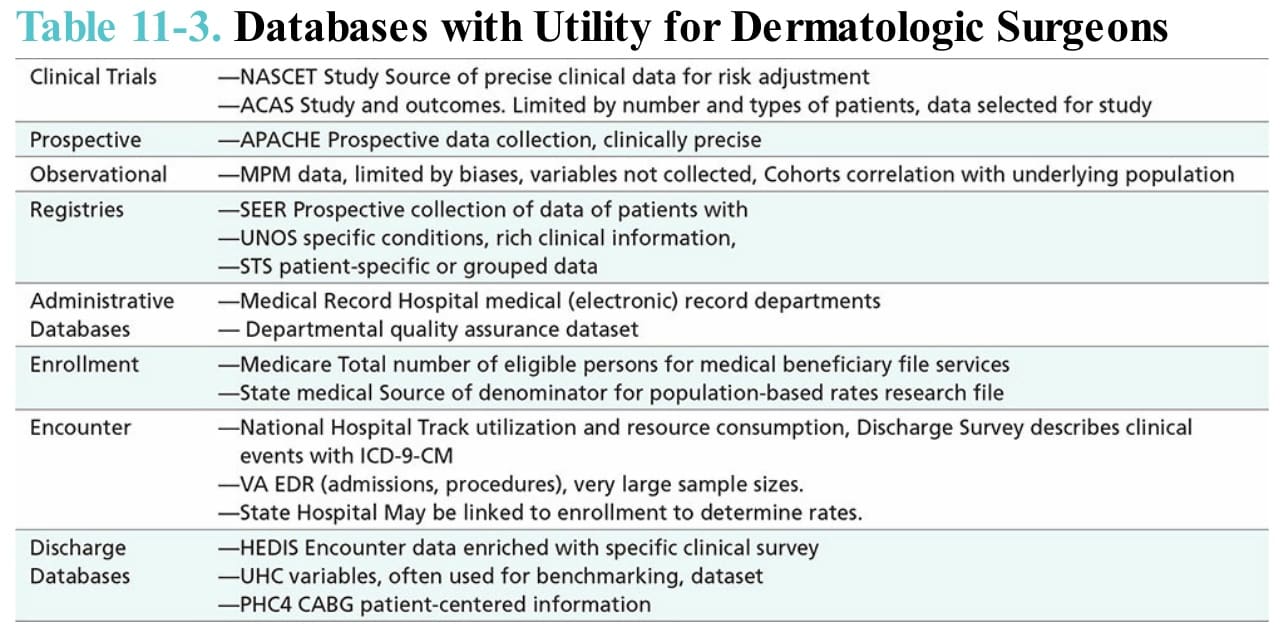
Table 11-3. Databases with Utility for Dermatologic Surgeons
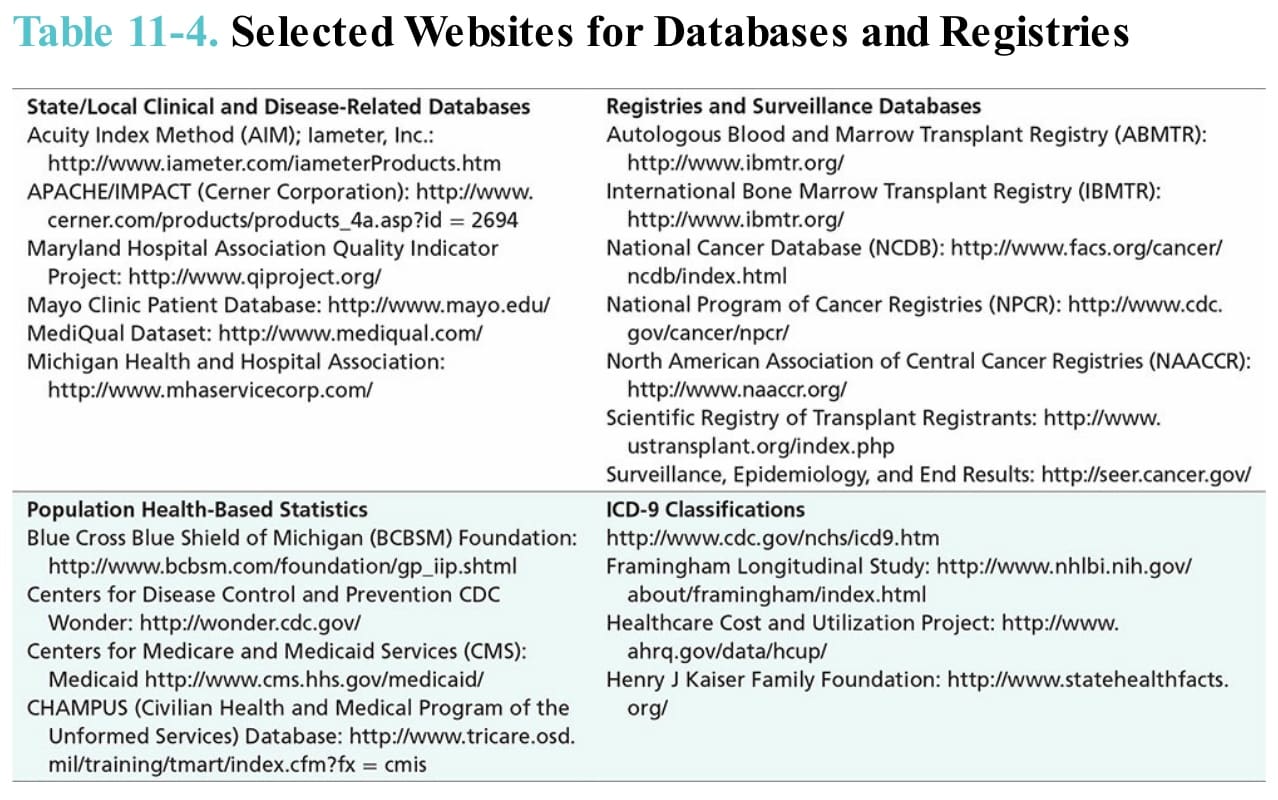
Table 11-4. Selected Websites for Databases and Registries