Modifiers
Modifiers
Appendix A of the CPT® lists numerical modifiers that are to be appended to CPT codes to distinguish certain services or situations. Whenever an E/M encounter or a billable procedure is performed during the global period, one must append an appropriate modifier to the primary billing code to specify that the service provided is unrelated to the global period service (Table 10-14).
24: Unrelated E/M service by the same physician or other qualified health care
professional during a postoperative period
25: Significant, separately identifiable E/M service by the same physician or other
qualified health care professional on the same day of the procedure or other service
57: Decision for surgery (refers to E/M service resulting in a decision to perform a
90-day global surgery the day of or day after the evaluation)
58: Staged or related procedure or service by the same physician or other qualified
health care professional during the postoperative period
59: Distinct procedural service (append to distinguish additional procedures
performed on one day)
76: Repeat procedure or service by same physician or other qualified health care
professional
79: Unrelated procedure or service by the same physician or other qualified health
care professional during the postoperative period
Therefore, this entails tracking of preceding services and their global periods. Modifier .24 is appended to E/M codes during the Global Period, and .79 is added to surgical/procedural codes billed during the Global Period. When a distinct, separately identifiable E/M service is provided on the day of a procedure, one appends modifier .25 to the E/M service code. The patient record should support such a claim. Routine billing of an E/M code along with every procedure will cast one as an outlier biller, and is likely to eventually result in insurance company action, such as in the form of a focused chart audit.
Occasionally, one will perform a second procedure, related to the first, during the global period. Typical scenarios include a wide excision of a melanoma within 10 days following an initial, diagnostic excision, or a division and inset of an interpolation flap during its 90-day global. Such services require appending a .58 modifier, indicating that the second procedure is a consequence of the first.
Finally, dermatologic surgeons commonly perform more than one procedure, such as multiple malignant neoplasm destructions, or actinic keratoses destructions along with unrelated lesion biopsies or destructions, during one patient encounter. Insurers must distinguish that the procedures done were separately identifiable and individually payable. Modifier .59 specifies distinct procedural services, and should be appended to secondary procedures done on one day. Medicare, however, may require a .76 modifier when two or more procedures are done for an identical diagnosis, or when the two procedures have the same CPT® procedure code. Thus, if a Medicare claim that seems properly coded with a .59 modifier is rejected, one should consider appending a .76 modifier instead.
The choice of which code should have no modifier (primary code) and which should have a modifier is based on the National Correct Coding Initiative (NCCI), a project of the Centers for Medicare and Medicaid Services (CMS) dedicated to promoting correct coding and generating guidelines so as to avoid improper payments for Medicare outpatient services. The entity generates a Policy Manual for Medicare Services, and quarterly updated procedure-to-procedure (column 1/column 2) edits that specify whether a service paired with another is covered, and if so, which should be subject to
the .59 modifier. Figure 10-2 illustrates the format of the NCCI edits and commonly used edits. The NCCI may be accessed at http://www.cms.gov/Medicare/Coding/NationalCorrectCodInitEd/NCCI-Coding- Edits.html/
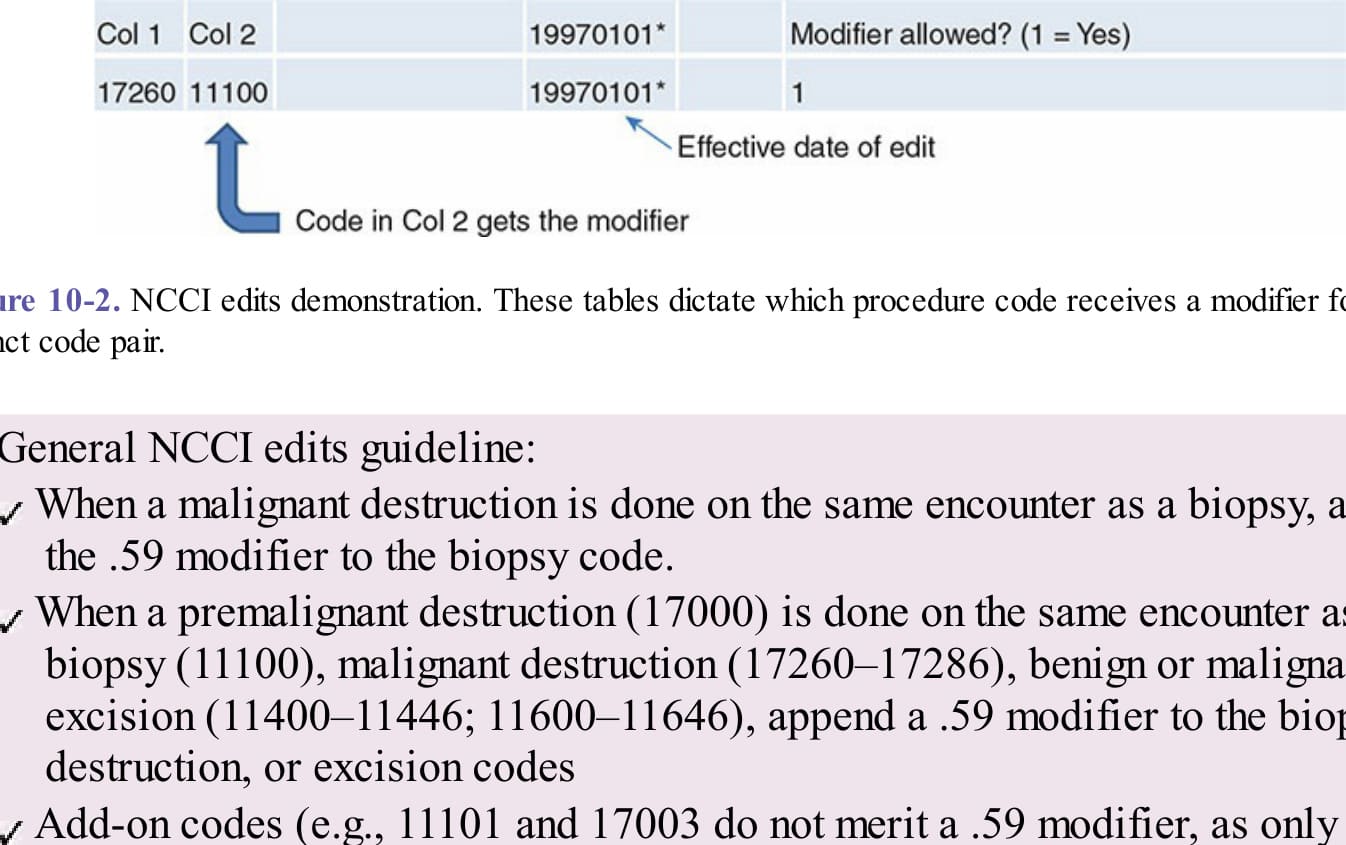
Figure 10-2. NCCI edits demonstration. These tables dictate which procedure code receives a modifier for each distinct code pair.
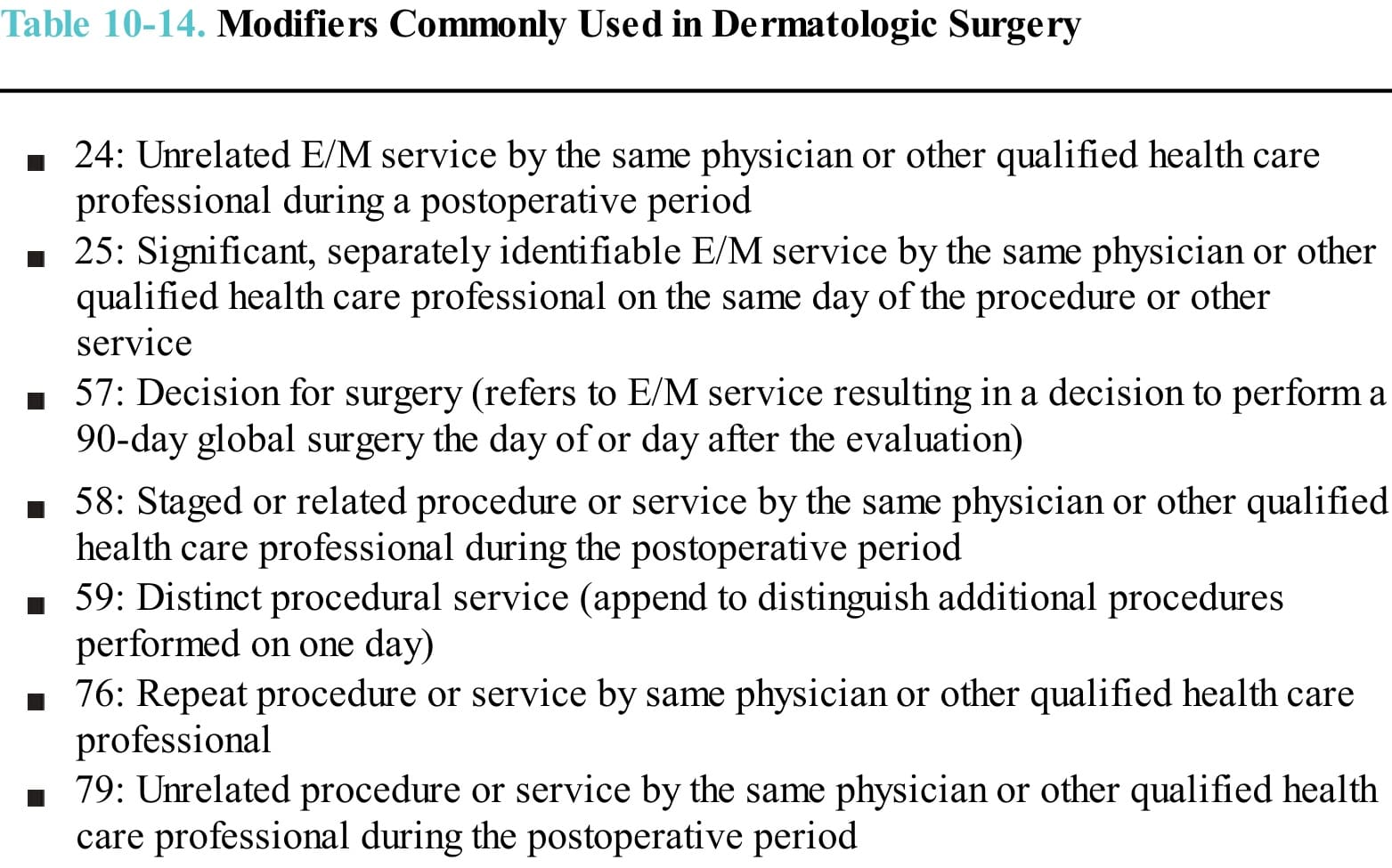
Table 10-14. Modifiers Commonly Used in Dermatologic Surgery