Suture materials
Suture materials
While the needle has a major effect on the ease and efficiency of the surgical procedure, suture material choice also has the potential to impact wound closure significantly. Any
suture, including absorbable sutures, may be used for transepidermal suture placement, which may permit the use of a single suture pack for both buried and epidermal sutures.
Many suture characteristics are commonly discussed, including handling, memory, pliability, knot security, tissue reactivity, and others. While there are subtle differences between the handling characteristics of different suture materials, most modern options fall well within the realm of utility, so that while the handling of silk, for example, is clearly superior to the handling of nylon, even nylon handles very well. Similarly, certain materials, such as catgut, may be highly reactive, though the more frequently used formulations, such as chromic gut and fast-absorbing gut, do not lead to enough inflammation to make a marked clinical difference in most situations. For the most part, monofilament sutures lead to less tissue drag, and therefore are useful with running techniques, while braided sutures provide excellent handling and knot security, and are therefore useful for interrupted buried sutures. With improvements in materials, the distinction between outcomes now likely relates more to suturing technique than to choice in suture materials (Table 6-1).
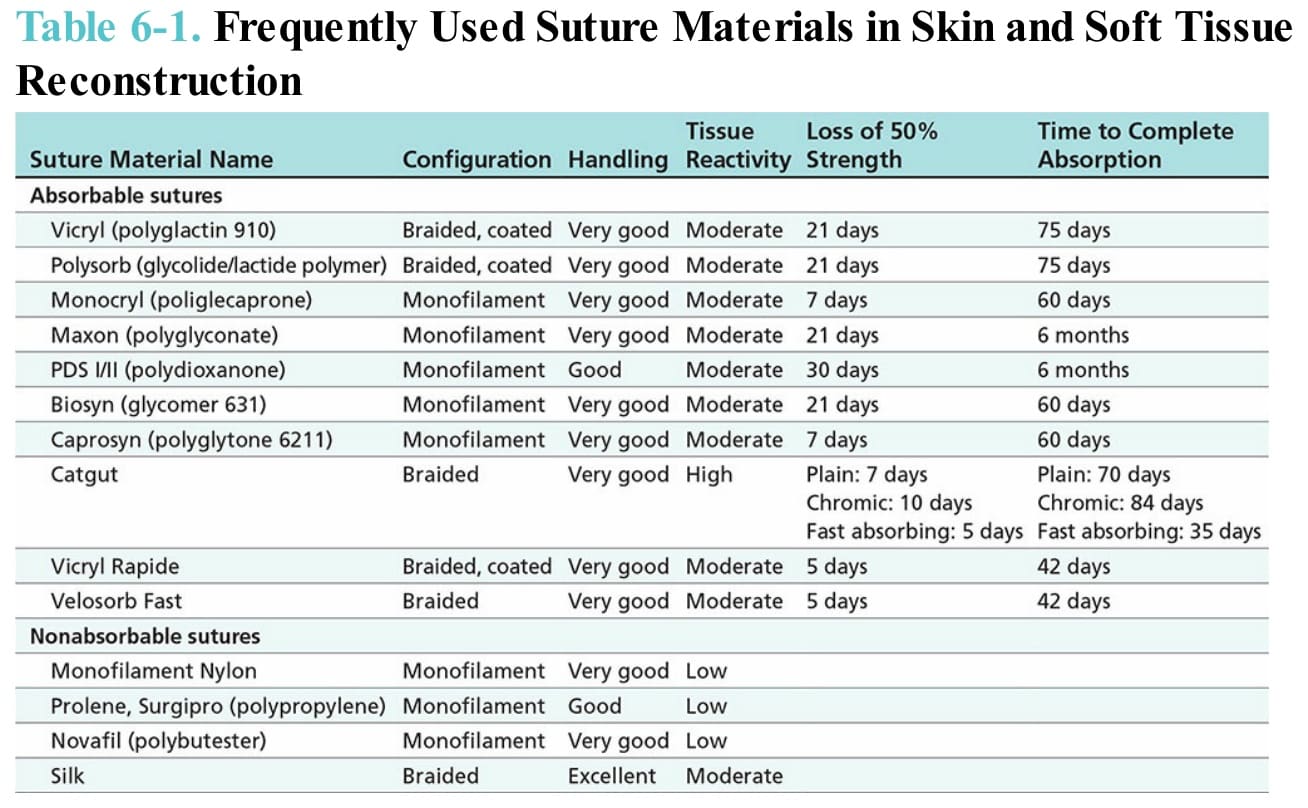
Table 6-1. Frequently Used Suture Materials in Skin and Soft Tissue Reconstruction