Introduction
CHAPTER 4 The Surgical Suite
Terrence A. Cronin, Jr.
SUMMARY
A well-equipped, well-designed surgical suite improves the surgical experience
for the patient as well as the dermatologic surgeon and maximizes patient safety.
Dermatologic surgeons have historically operated in an array of surgical
settings, including hospital operating rooms, outpatient ambulatory surgical centers (ASCs), and office-based surgical suites.
The surgical suite or operating room needs to be well lit, well ventilated, and
include ample floor space for an electric operating table, emergency equipment, Mayo stand(s), instrument storage, electrosurgical equipment, and sink.
Beginner Pearls
Multiple electrical outlets in the surgical suite are very helpful.
The surgical table should ideally be located at the center of the room. While a wider
table may be more comfortable for larger patients, a narrow table allows the dermatologic surgeon to access the surgical site more easily and maintain good ergonomic posture.
Expert Pearls
Eyeglass-mounted LED lights provide direct illumination for the surgical field and are
increasingly becoming the norm as long-lasting battery packs coupled with a decreased price point make these the illumination technique of choice for many surgeons.
Interior design features such as outdoor photographs, spacious rooms, and
architectural window features providing more sunlight have positive effects on perceived anxiety and postoperative pain.
Aesthetically pleasing healing environments can have a positive influence on patients,
and many authors recommend the purposeful use of architecture, art, and music to improve the surgical experience for the patient.
Since surgical rooms are often kept at a cooler temperature than other offices (given
the heat generated by lighting, surgical gowns, and other equipment), for patients’ comfort, extra blankets and pillows may be made available.
Don’t Forget!
Ergonomic approaches to minimizing injury risk for the surgeon include modifying
footwear, flooring, surgical instruments, operating position, lighting, and table height.
When designing and building a dermatologic surgery suite, it is important to consider
future growth.
Pitfalls and Cautions
Erring on the side of larger operating rooms with abundant storage permits future
expansion and flexibility.
State and federal laws govern medical waste disposal.
Multiple surveys of Mohs surgeons found that over 90% of respondents experienced
symptoms exacerbated by surgery including stiffness and pain of the neck, shoulders, and lower back, as well as headaches.
CHAPTER 4 The Surgical Suite
INTRODUCTION
Dermatologic surgery encompasses a broad range of procedural complexity, from standard procedures such as biopsies, electrosurgery, sclerotherapy, soft-tissue augmentation, and toxin/filler injections to more aggressive surgical procedures such as skin cancer excisions, Mohs surgery, complex reconstruction, laser resurfacing, liposuction, and hair restoration.
It is important that the dermatologist practice with skill in a well-equipped, welldesigned surgical suite that improves the surgical experience for the patient as well as the dermatologic surgeon, and—most importantly—maximizes patient safety. Dermatologic surgeons have historically operated in an array of surgical settings, including hospital operating rooms, outpatient ambulatory surgical centers (ASCs), and office-based surgical suites.1,2 Any office-based surgical facility should ideally be organized into separate rooms providing reception, laboratory, and the surgical suite.
The ASC tends to be a sophisticated extension of the dermatologic surgery practice in which the ASC is a separate defined entity within a larger medical office. Specific requirements for ASCs vary from state to state, and therefore will not be addressed in detail. In general, facility fee reimbursement from third-party payers requires state licensure and Medicare certification.1
The dermatologic surgeon needs a large dedicated room to operate comfortably, whether standing or sitting, along a 360-degree circumference around the patient.2 The surgical suite or operating room needs to be well lit, well ventilated, and include ample floor space for an electric operating table, emergency equipment, Mayo stand(s), instrument storage, electrosurgical equipment, and sink. It should convey a comfortable, yet efficient, professional appearance and be easily and frequently cleaned. Ideally, it should convey an atmosphere that reflects a clean, meticulous, well-organized, highquality medical facility.3 In the event of an emergency, the surgical suite should be able to accommodate emergency equipment and personnel. Table 4-1 shows a “shopping list” of items needed for a typical surgical suite.
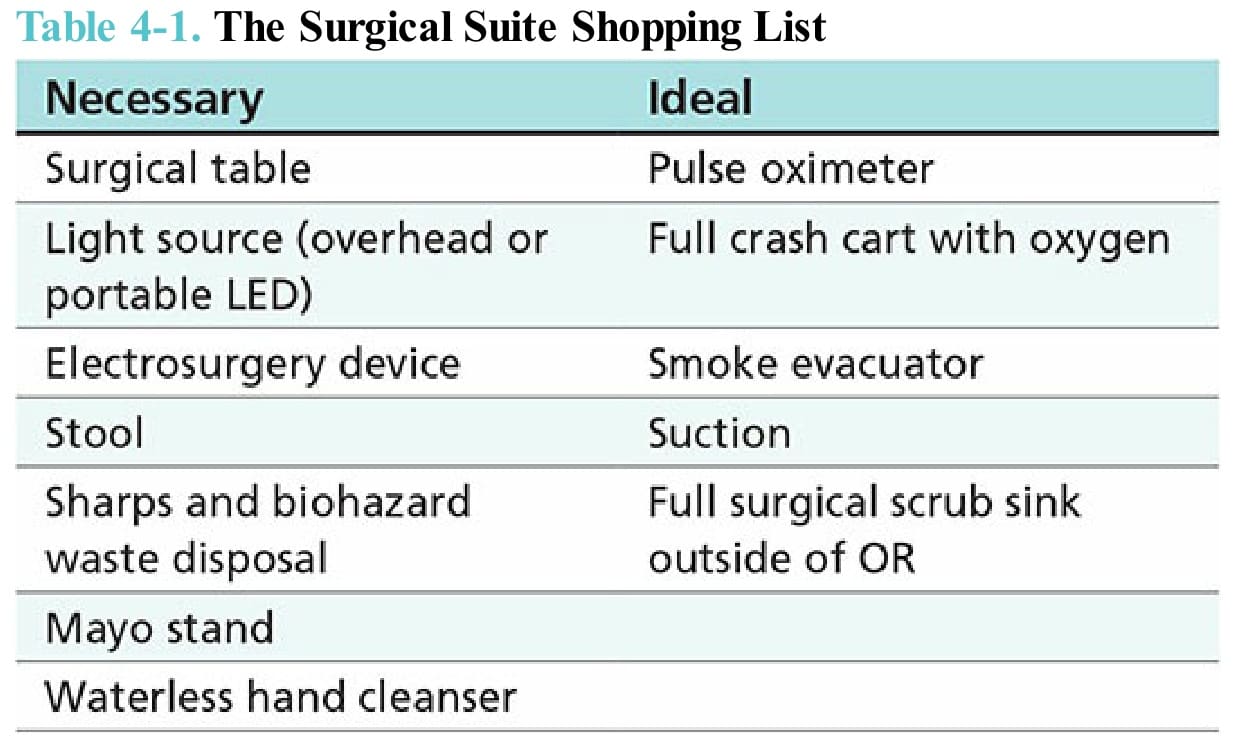
Table 4-1. The Surgical Suite Shopping List