Aftercare
Aftercare
Once the incisions are closed, topical antibiotic ointment is applied followed by a disposable perineal pad and cold pack. The injected bupivacaine provides approximately 4 hours of analgesia after which the patients may experience some pain
which manifests as burning or stinging. They are instructed to take narcotic pain medications every 4 to 6 hours as necessary for the next 24 to 48 hours. A peri bottle is given to the patient at discharge with instructions to spray warm water over the incisions after micturition. In patients over the age of 35, topical conjugated estrogen (Premarin) is prescribed, and may be applied to the area three times per week for 6 weeks. This may help with wound healing in women with vulvovaginal atrophy. An oral second-generation cephalosporin antibiotic is prescribed for 5 days.
Patients are instructed to rest for 3 to 4 days and attempt to elevate the pelvis as much as tolerated. They may apply moist cool packs to the area. Patients may shower on day 2 after surgery. It is important to avoid harsh soap during the healing period. Tight fitting pants and jeans are discouraged during the first few weeks to avoid disrupting the sutures. The first postoperative visit is on day 14, when the incisions are checked and external sutures are usually noted to be dissolving. Patients are then seen at 2 months postoperatively. At this point, most of swelling has diminished and patients are allowed to return to full exercise and sexual intercourse.
The basic surgical instrument set up for labiaplasty can be seen in Figure 81-10.
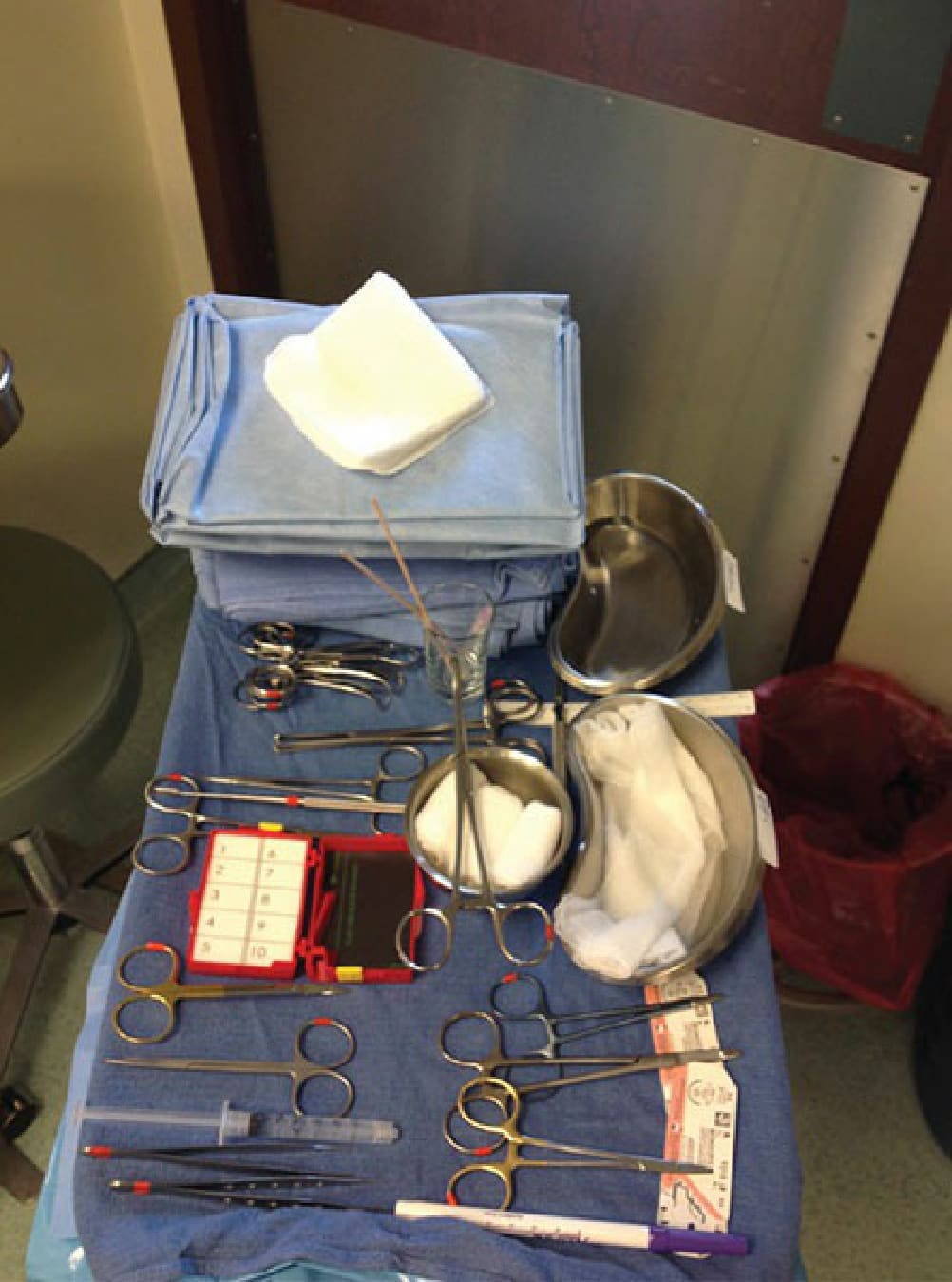
Figure 81-10. Instrument setup for a labiaplasty technique.