Step 3: Energy-based treatment of fat
Step 3: Energy-based treatment of fat
For HDBC, VASER ultrasound technology is essential. The ultrasound breaks through scar tissue and adhesions, and reduces fat without significant effort so that extraction is simpler. Steam heat generated from this technology provides significantly more skin tightening than other fat-reducing technologies (e.g., laser- or radiofrequency-assisted techniques). Additionally, the fat that is reduced with this technology is safe for fat
harvesting and transferring which is an essential component to the final outcome of an HDBC procedure. The typical training is to use a 2- or 3-ringed probe 1 minute for every 100 cc of tumescent anesthesia; however, additional time (2–2.5× normal) should be used for significantly larger fatty areas or if more etching is going to be desired in the treated area. Risk of vascular plexus injury and seroma formation is a real concern with longer treatment times, so postoperative care is essential. For superficial treatment, a 5- ringed probe may be preferred. For cellulite, fibrotic, and thick fatty layers, a 2-ringed probe is preferred. Fifty percent to 70% resonance is the normal energy delivery, but if fat grafting is desired, nothing above 60% should be used.
Finally, to enhance skin tightening in problem areas such as the arms, neck, inner thighs, buttock roll, and lower abdomen/mons pubis, superficial radiofrequency such as ThermiRF can be used to heat the dermis and enhance the VASER results (Fig. 60-9).
roll, and lower abdomen/mons pubis.
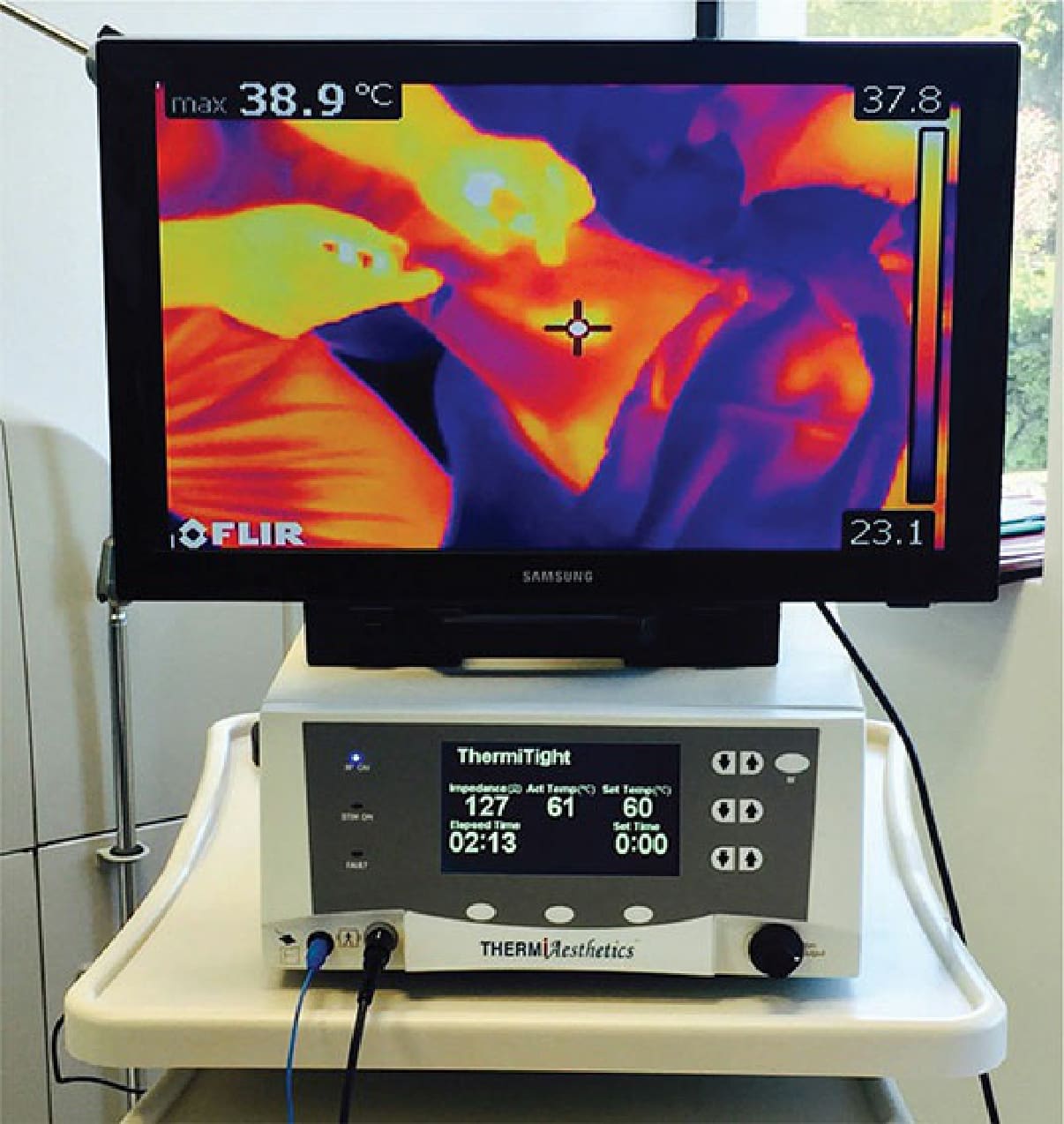
Figure 60-9. Radiofrequency tightening. ThermiRF superficial radiofrequency probe is used post VASER high definition liposuction to give more skin retraction in areas of previous looseness such as the arms, inner thighs, buttock