OUTCOMES AND COMPLICATIONS
OUTCOMES AND COMPLICATIONS
In the overwhelming majority of cases, if utilized properly, aesthetic application of BTX is exceedingly safe, effective, and a rewarding experience for both injector and patient. However, as with any cosmetic procedure, appropriate establishment of
expectations as well as ability to manage complications are paramount. In order to avoid dissatisfaction, patients need to be counseled on the differences between the immediate short-term benefits of a single treatment and the long-term benefits of continued maintenance therapy. A recent meta-analysis of clinical trials reported that the most common complications of upper face BTX include headache, eyelid ptosis, and heavy eyelids or brow ptosis.108 Other complications include “Spock” brow (excessive brow arch), undesired alteration of facial expression, redistribution of muscular bulk in the case of incorrect masseter injection (Figure 57-11), and difficulty with head elevation after overtreatment of platysmal banding. For the most part, these complications can be addressed with judicial balancing treatments with additional neuromodulator. In the case of over-injection, time and supportive measures will reassure the patient that the effect is temporary. Eyelid ptosis can be treated with apraclonidine eyedrops until natural improvement occurs.109
CONCLUSIONS
BTX remains one of the cornerstones of aesthetic and antiaging medicine. However, current standard of care for advanced practitioners revolves around the combination treatment with neuromodulators, soft-tissue fillers, and energy-based devices.110 In almost every circumstance, the appropriate use of BTX therapy can enhance an aesthetic treatment regimen leading to greater patient benefit and satisfaction.
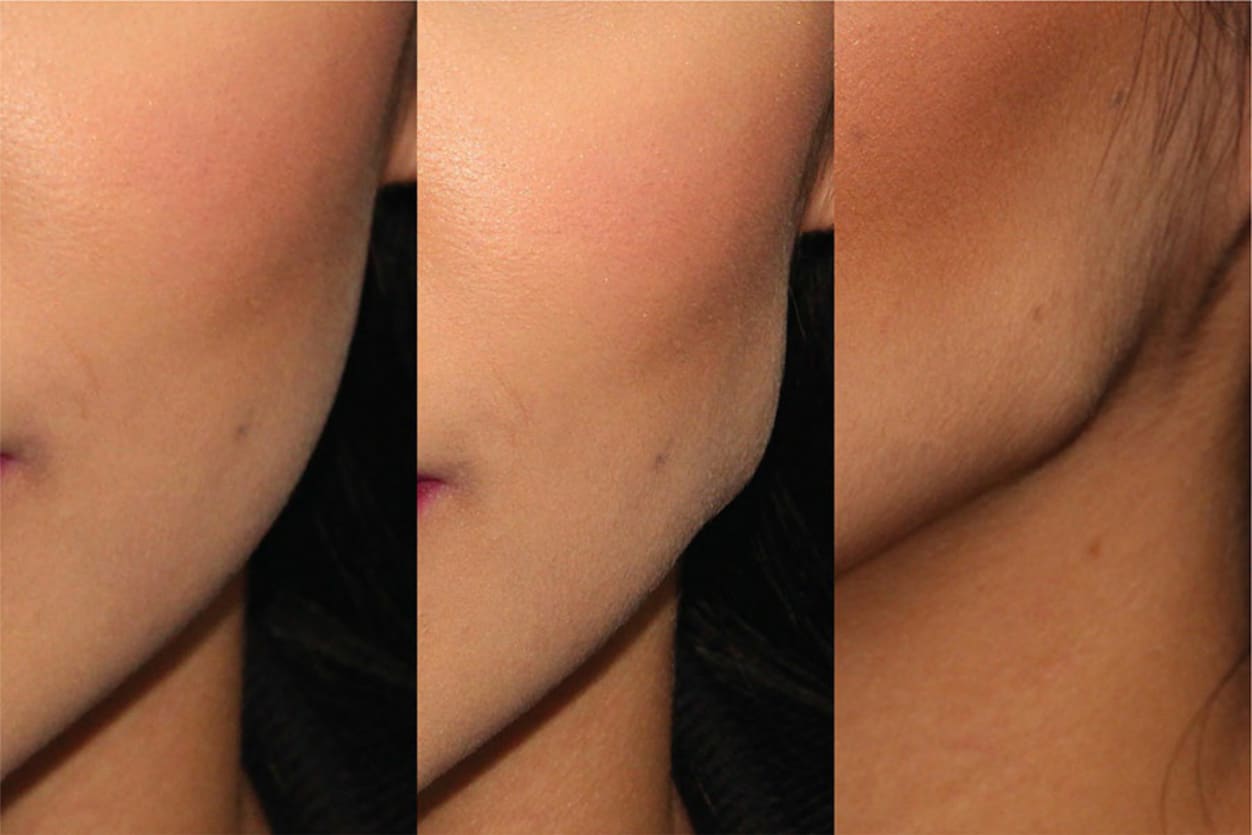
Figure 57-11. Imbalanced atrophy of the masseter muscle. This patient was treated with a single injection point into the masseter muscle and developed excessive atrophy at that point while simultaneously developing relatively abnormal hyperactivity in untreated areas. Left panel: At rest. Middle panel: Clenching the jaw. Right panel: Clenching the jaw at 45-degree angle photograph.