Clinical features of CAN
Clinical features of CAN
The diagnosis of CAN is made clinically, and there are different sets of criteria to identify these nevi (see Table 47-1).28,29 In contrast to CN, CAN tend to be larger in diameter and may have some features of the ABCDs of melanoma (asymmetry, border irregularity, color variegation, enlarged diameter), which can make melanoma screening challenging in patients with numerous CAN. The criteria used by Tucker et al. are considered to be the most clinically relevant as they were used for one of the largest studies on melanoma risk and nevi. These consist of diameter ≥5 mm; presence of a macular component; and at least two of the following criteria: (1) variable
pigmentation, (2) irregular and asymmetric outline, (3) indistinct borders.28 The Dutch Working Group proposed an alternative set of criteria for CAN also shown in Table 47- 1.29 Clinical examples of CAN are shown in Figure 47-1.
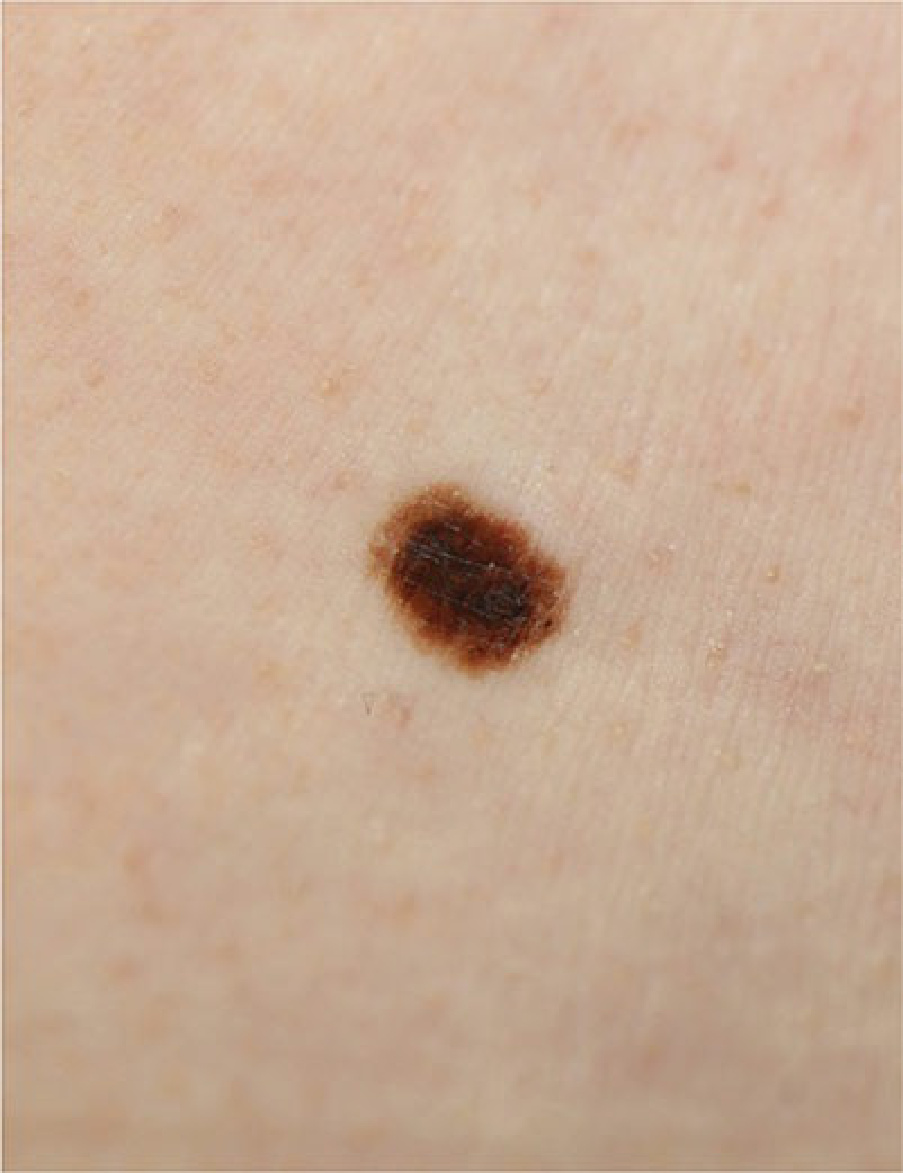
Figure 47-1. Clinically atypical nevus.
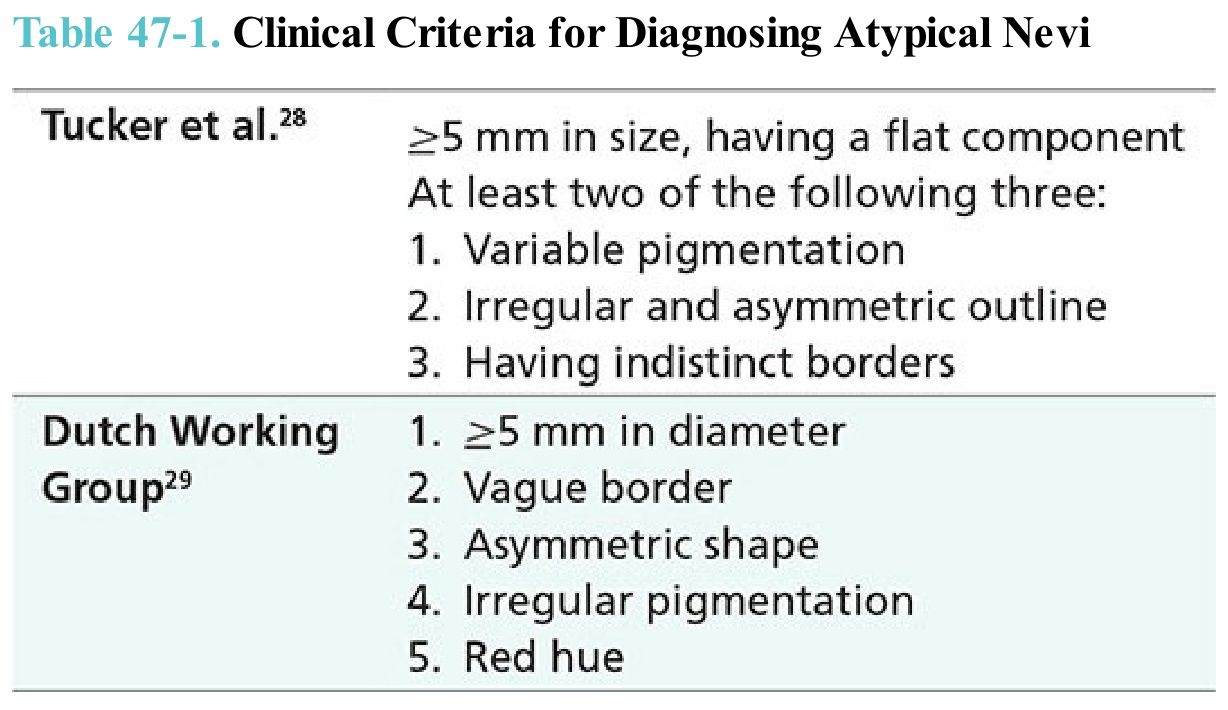
Table 47-1. Clinical Criteria for Diagnosing Atypical Nevi