Linear repair
Linear repair
Linear closures have a limited role in ear reconstruction due to the inelasticity of the thin, adherent skin and resistance from underlying cartilage.22 Fusiform closure of small defects of the looser, posterior auricular skin, and earlobe may be possible. However,
closure tension may buckle the underlying cartilage or distort the free earlobe margin. Fusiform closures oriented parallel to the free margin may be possible for small helical rim defects in patients with especially loose or thick skin (Fig. 41-5). Increasing the length:width ratio of the fusiform closure to 5:1 is usually helpful to reduce standing cones and to preserve a natural helical rim contour (Fig. 41-6).
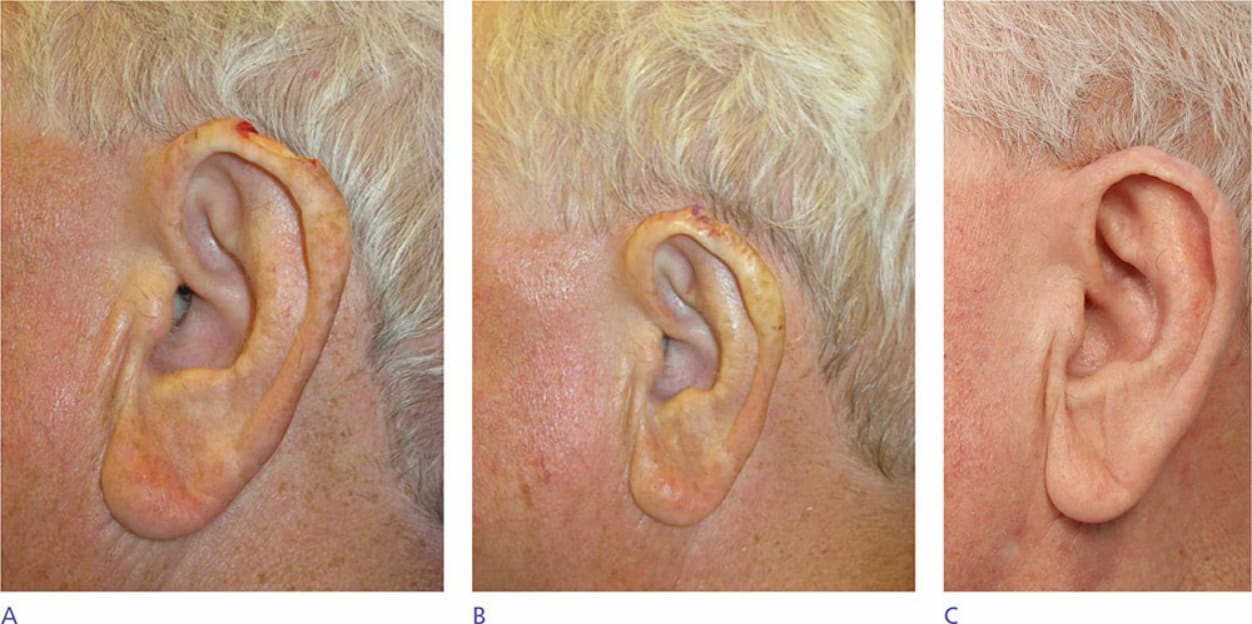
Figure 41-5. (A) Helical rim defect. (B) Linear repair. (C) Postoperative appearance.
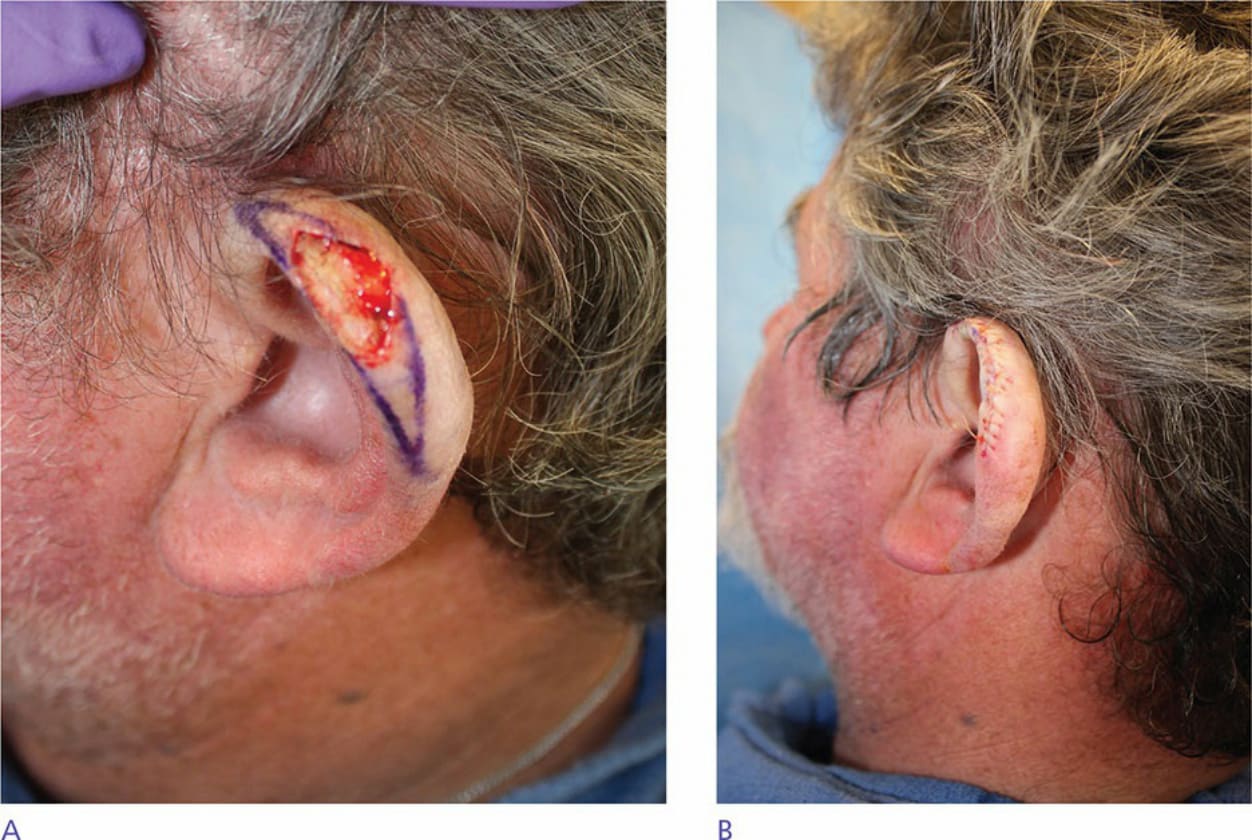
Figure 41-6. (A) Helical rim defect design revealing elongated length:width ratio. (B) Linear repair with preserved convex contour.