POSTOPERATIVE CONSIDERATIONS
POSTOPERATIVE CONSIDERATIONS
Immediately following periocular surgery, erythromycin ophthalmic ointment is applied to the eye and suture line, followed by a light pressure dressing and ice packs for 24 hours to minimize edema. Pressure dressings are applied carefully to wounds so that excessive pressure is not placed on the globe. Defects close to or involving the lid margin are often dressed with an eye pad placed over a closed lid and covered with an eye shield to protect the eye from trauma. Postoperative dressings that are tension bearing can help offset the tension associated with swelling and administration of local anesthetics. Patients are often observed for a period postoperatively before discharge to ensure hemostasis and comfort.
Close observation is essential in the postoperative period to identify potential complications early and ensure success. Patients are instructed to contact their surgeon directly in the case of bleeding or acute pain after surgery. Early recognition and management of serious bleeding is essential to identify and treat potential retrobulbar hemorrhage, which requires an emergency canthotomy to prevent irreversible blindness. Follow-up is generally recommended 24 hours after surgery for complex lid repairs. Complex wounds with full-thickness lid loss that will be transferred to the care of an oculoplastic surgeon may require a temporary tarsorrhaphy to ensure the cornea is protected until definitive repair (Fig. 38-21).
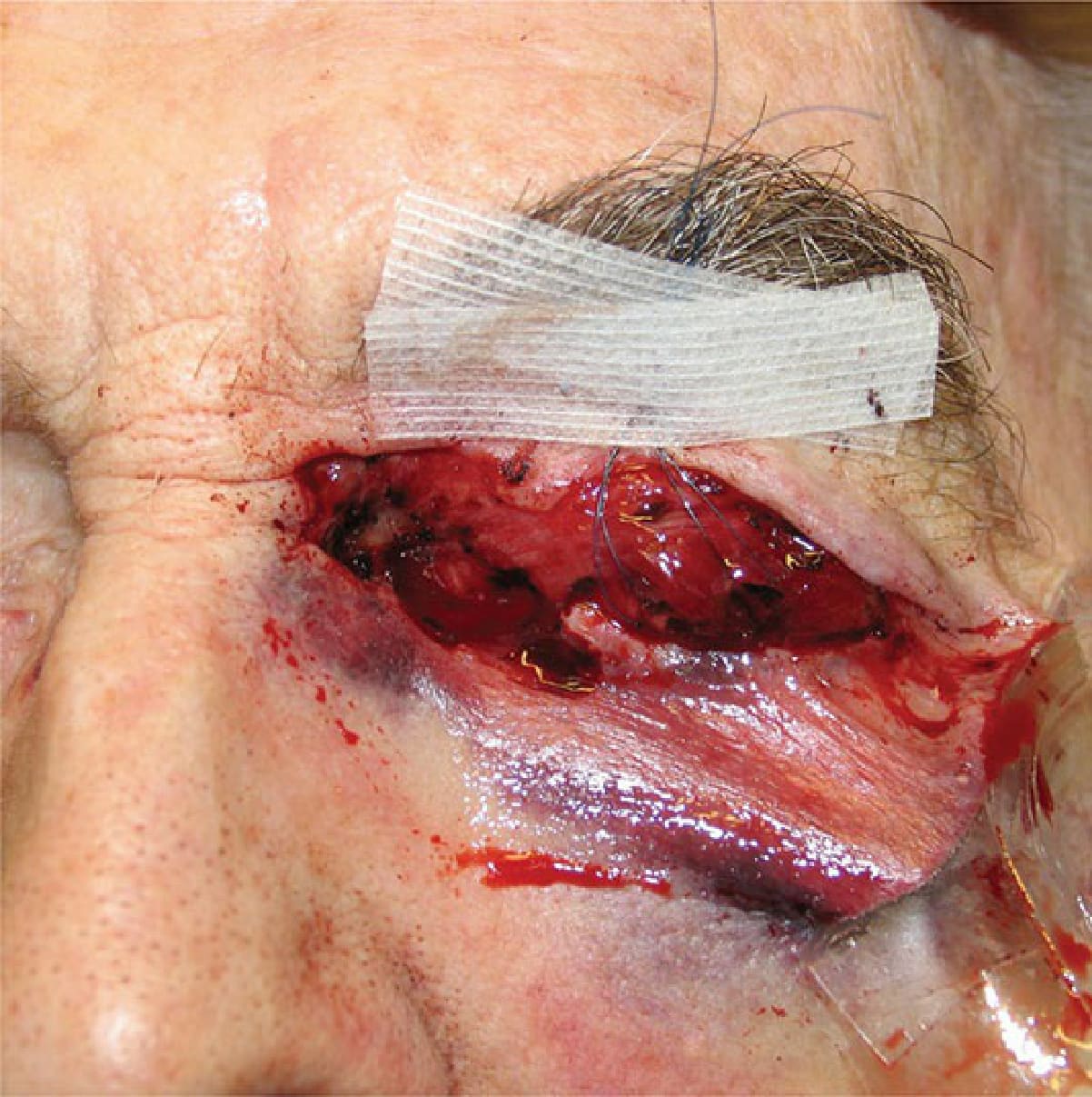
Figure 38-21. Modified Frost suture: A suture is placed through the meibomian gland orifice of the lower lid margin, following the curve of the needle, and exiting the adjacent lid margin through the meibomian gland orifice. The suture is then secured to the forehead with steri-strips.