FRACTIONATION TABLES
FRACTIONATION TABLES
The TDF table provides a choice of protocols for a course of SRT based on the total dose of radiation, number of fractions, and duration of treatment (Table 37-1). This table is based on the work of early investigators who established clinical relationships between the radiation dose and fractionation to cancer cure and adverse effects.18,19 The TDF table provides the number of treatment fractions on the x-axis and the radiation dose for each fraction on the y-axis. It is generally assumed that treatments will be administered three to five times weekly; therefore, it will take 5 to 8 weeks to administer 24 fractions.
Since the cure of skin cancers is thought to be optimized with a TDF number between 90 and 110,1 the clinician selects a TDF number of 100 from the table and chooses the appropriate dose of radiation that will effectively eliminate the tumor and the number of radiation fractions that will minimize unwanted reactions. Administering the total dose of radiation within a 2-week period is more likely to result in acute skin reactions, but may be used successfully on the head and neck.3 Increasing the number and time between SRT treatments will provide better outcomes in minimally vascular areas such as the lower limbs, as well as better cosmesis on head and neck lesions. Commonly used fractionation schedules used for treating skin cancers are shown in Table 37-2.
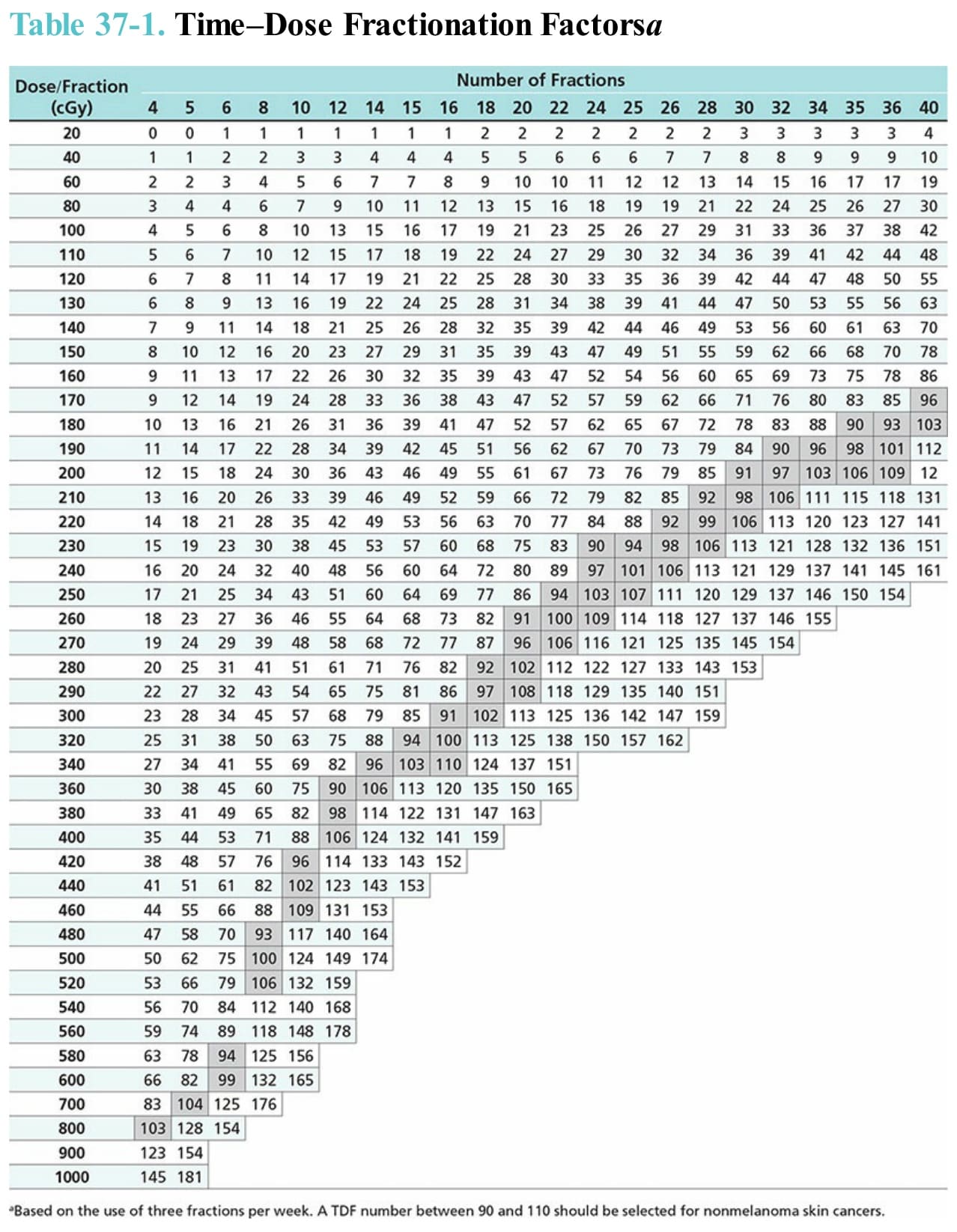
Table 37-1. Time–Dose Fractionation Factorsa

Table 37-2. Common Fractionation Protocols Used for Treating Skin Cancers