Scalpels
Scalpels
Scalpels may be used for cutting, puncturing, dissecting, manipulating specimens, and scraping. They generally consist of a handle and a blade. Both the handle and blade are available in numerous sizes and materials. Selection is based upon both surgeon preference and the surgical application.
Scalpel blades are disposable, individually wrapped, and pre-sterilized. They may be made of carbon steel or stainless steel. Carbon steel blades are sharper, though they dull more rapidly. Stainless steel blades are not as sharp but last longer. Blades may be coated in silicon or polytetrafluoroethylene to minimize tissue drag and increase longevity. These may be particularly useful in longer procedures or multi-staged Mohs surgical procedures.
The most common surgical blades in dermatologic surgery are the 15, 15c, 10, and 11 blades. These blades are designed to fit a variety of available handles. The 15 blade’s small size and gentle curvature make it optimal for the majority of skin procedures. The sharp tip is used to initiate cuts, while the broader belly provides a longer surface for enhanced contact. With the handle held at 30 degrees to the skin, longer smooth cuts may be made. The 15c blade is a smaller variant, used to treat very delicate skin; its sharper carbon blade also dulls faster. The 10 blade also shares a similar shape but is significantly larger, making it optimal for thicker skinned areas such as the back. The 11 blade is triangular with a straight edge that tapers to a sharp point. It is usually used in a stabbing motion for incision and drainage.
Each of the above blades may be fitted interchangeably on a variety of handles (Fig. 5-5). The flat number 3 handle is most frequently encountered. It is well suited to the majority of procedures and is available with an imprinted metric ruler. The cylindrical Siegel handle has a gnarled grip and is useful for smooth, curved motions, such as removing round, beveled Mohs surgery specimens.
An alternative handle and blade combination is the miniblade or Beaver system. In this system, smaller blades are inserted into a collet, which is tightened with rotation. Blades are available in a variety of shapes and curvatures. This system may be used in smaller, narrow spaces such as the ear canal or medial canthus.
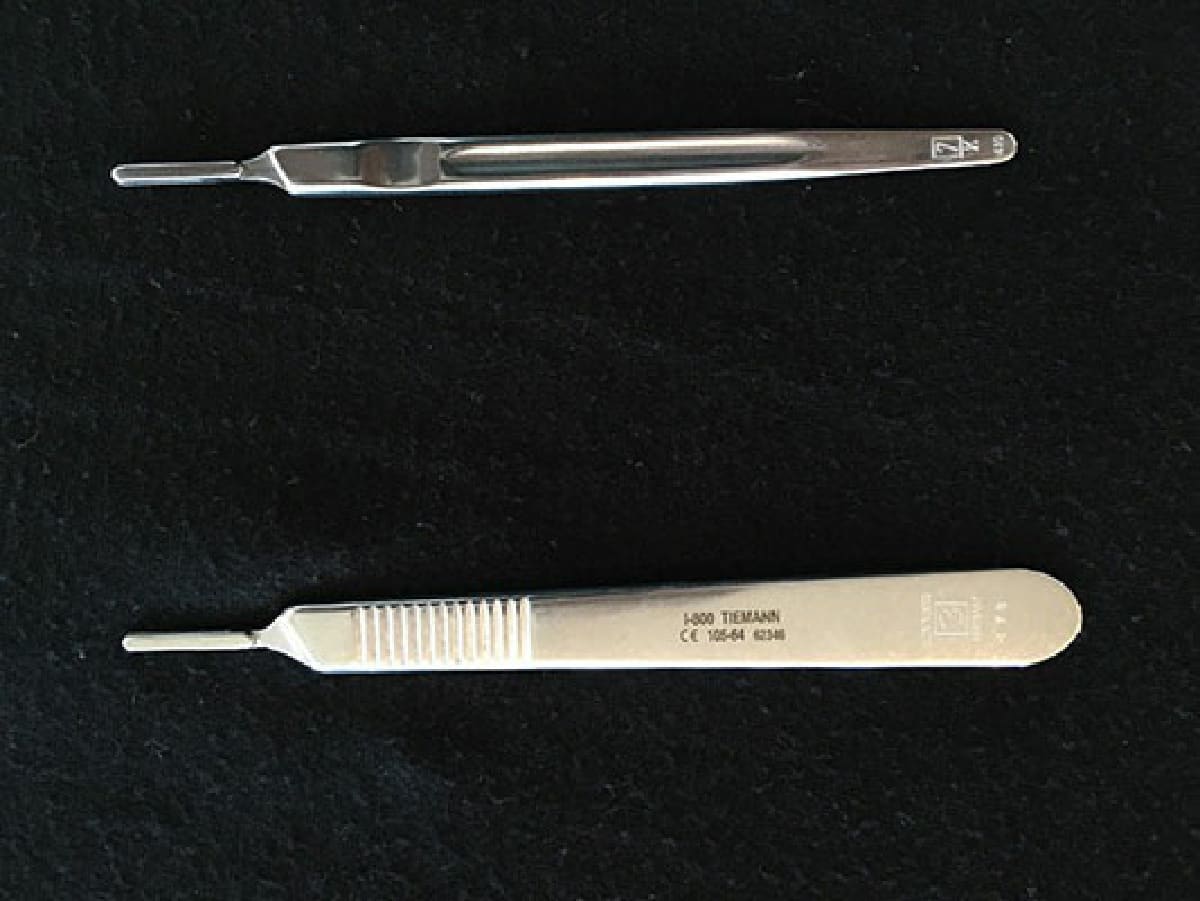
Figure 5-5. Surgical blades may be fitted interchangeably on a variety of handles.