Geometry
Geometry
The orientation of the incisions can have an impact on the appearance of transplanted
hair. The terms “sagittal” and “coronal” are used to describe the orientation of incisions, though these terms are used in relation to the intended direction of hair growth (whether de novo or in relation to existing hair growth direction) rather than in relation to anatomical directions. Thus, sagittal refers to a direction that is parallel to the hair follicle, whereas coronal means perpendicular to the direction of the hair shaft. A threehair follicular unit placed in an anatomically sagittal direction will look like a single hair when viewed from the front, whereas a three-hair follicular unit placed in an anatomically coronal incision will look like three hairs side by side when viewed from the front. Using sagittal and coronal incisions for different size grafts can also aid in differentiating which incisions are for which grafts (Fig. 62-23). Likewise, the creation of incisions, either sagittally or coronally oriented, in linear rows will give an artificial appearance to hair growth, whereas triangulation of the incisions will result in a more natural appearance (Fig. 62-24).
Hairline design merits precise attention to detail as it will come under the closest scrutiny from the patient and be most visible to observers. An irregularly irregular pattern or “snail’s trail” design is now accepted as the gold standard, with single hairs placed randomly in front of the hairline to simulate the rogue hairs seen in a natural hairline (Fi g. 62-22).
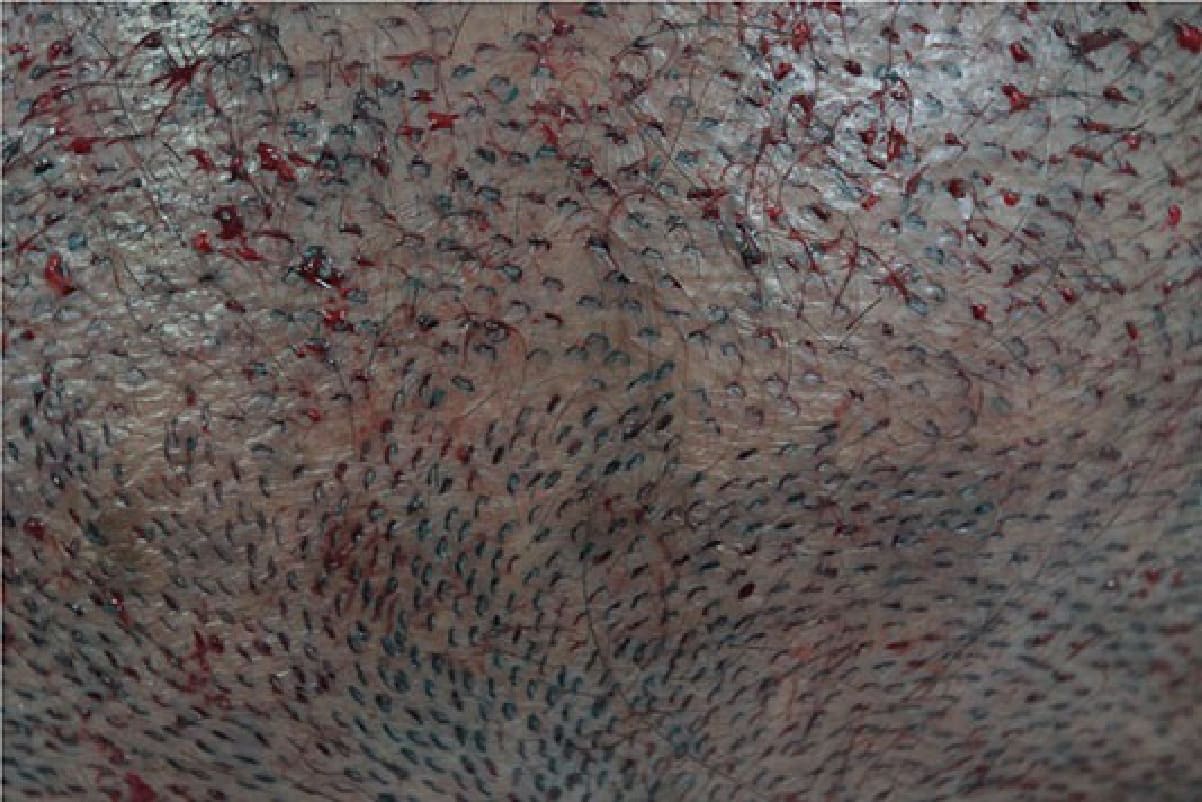
Figure 62-23. The lower incisions are sagittal (parallel), whereas the upper ones are coronal (perpendicular to the hair direction).
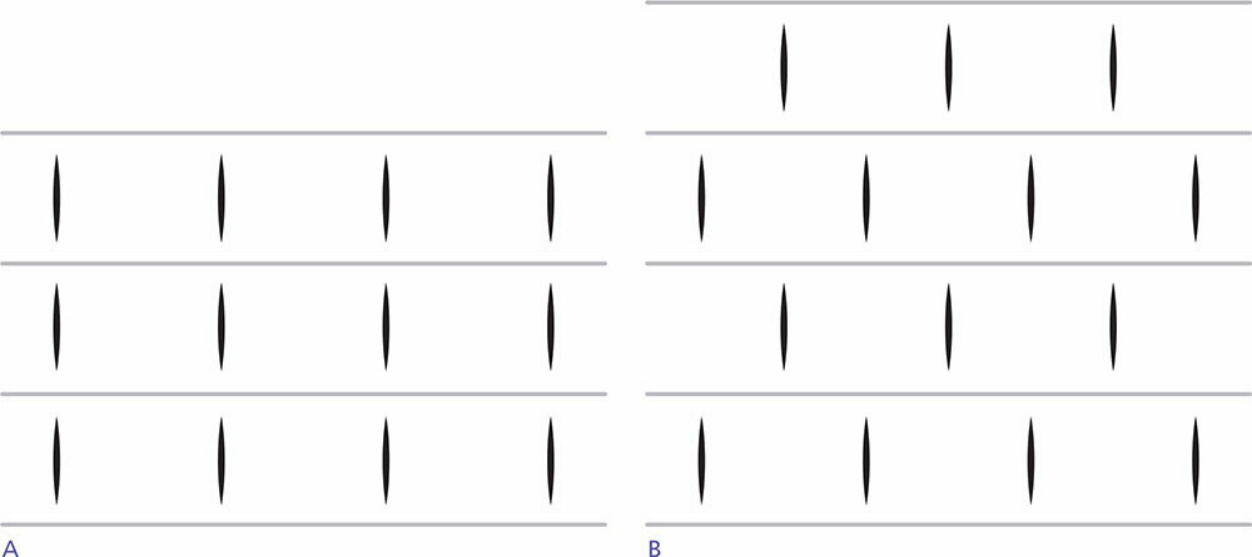
Figure 62-24. (A) Sites aligned in lines or squares give an unnatural regimented appearance. (B) An alternating or triangular pattern gives a more irregular and natural appearance.