Recipient site incisions
Recipient site incisions
Although there are very limited formal hair transplant surgery training programs available worldwide, there are several key principles involved in making incisions that should be mastered using cadaveric or synthetic training models available at workshops. These include correct and appropriate determination of incision size, depth, angle, direction, density, and geometry (Table 62-5).
When designing a hair transplant recipient zone, all of the incisions can be made first and the hairs implanted subsequently with forceps or implanters. This allows a degree of flexibility if more or less grafts are harvested than anticipated, but runs the risk of some sites being missed when implanting grafts. Alternatively, a “stick and place” technique can be used with either implanters as a “one-step” method, or incisions can be made and immediately filled with grafts using forceps or implanters. This ensures that no incisions remain unfilled but requires significant design skill so that the entire recipient area is sufficiently filled with available grafts.
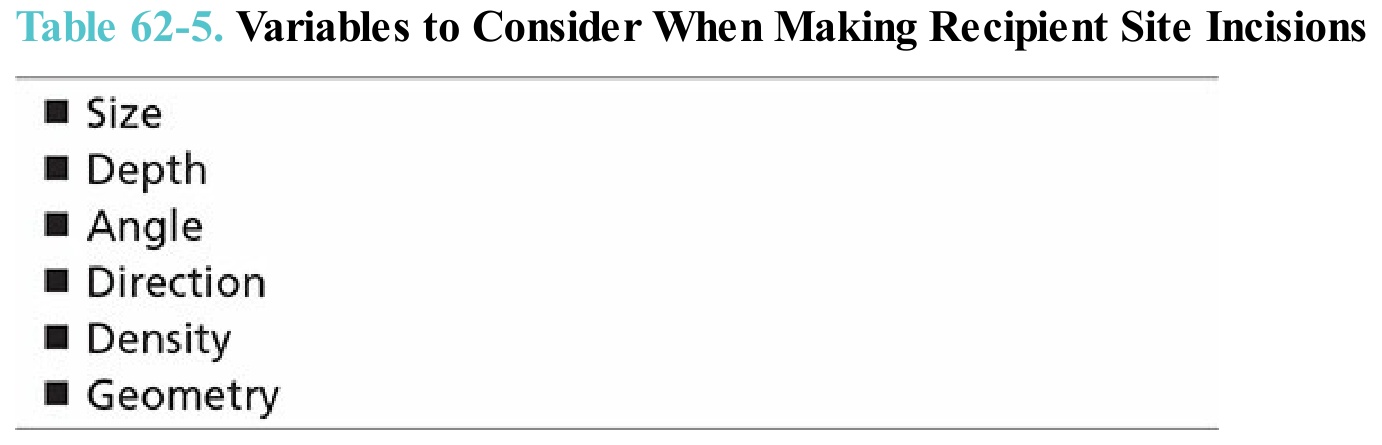
Table 62-5. Variables to Consider When Making Recipient Site Incisions