GRAFT PREPARATION
GRAFT PREPARATION
In FUE, there is very little graft preparation, and they can normally be returned to the scalp in the state they have been harvested. Usually, a technician examines the grafts microscopically for any loose tissue, and classifies them according to number of hairs, as well their state of transection.
In strip FUT, however, there is significant work to be done after harvesting. First, the strip is divided into slivers in a manner similar to slicing a loaf of bread. This is done carefully under the microscope to produce slivers one follicular unit wide (Fig. 62-16). The slivers are then handed to another technician who, again microscopically, separates them into the individual follicular unit group (Fig. 62-17).
It is imperative that grafts are placed in an appropriate storage solution as they await placement back into the scalp. They are very susceptible to trauma and desiccation, and this is probably one of the most common contributors to disappointing growth with inexperienced operators. Ideally, grafts should be reinserted into the recipient area within 4 to 5 hours of removal from the donor area, although the sooner the better. They should be kept in a chilled holding solution while awaiting implantation. The optimal properties of different holding solutions are the subject of ongoing research. There is anecdotal evidence that bioadjuvants such as adenosine triphosphate (ATP) are of additional benefit when added to basic isotonic solutions such as Ringer’s lactate. The same can be said of more advanced holding solutions such as HypoThermasol®. These are a reasonable choice if the grafts are kept outside the body for longer than 4 to 5 hours, or for FUE grafts which can have less surrounding protective tissue.
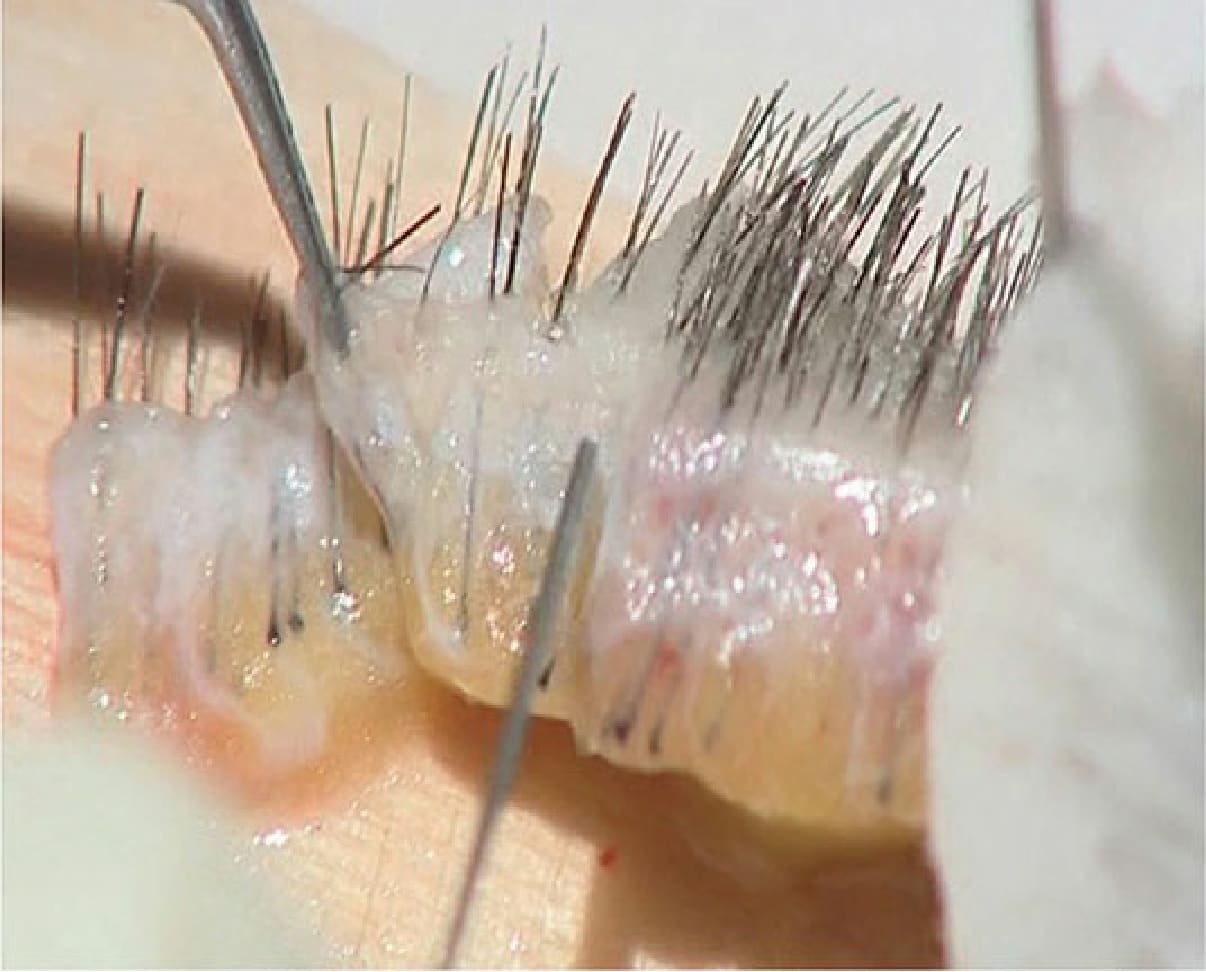
Figure 62-16. Slivering of the strip.
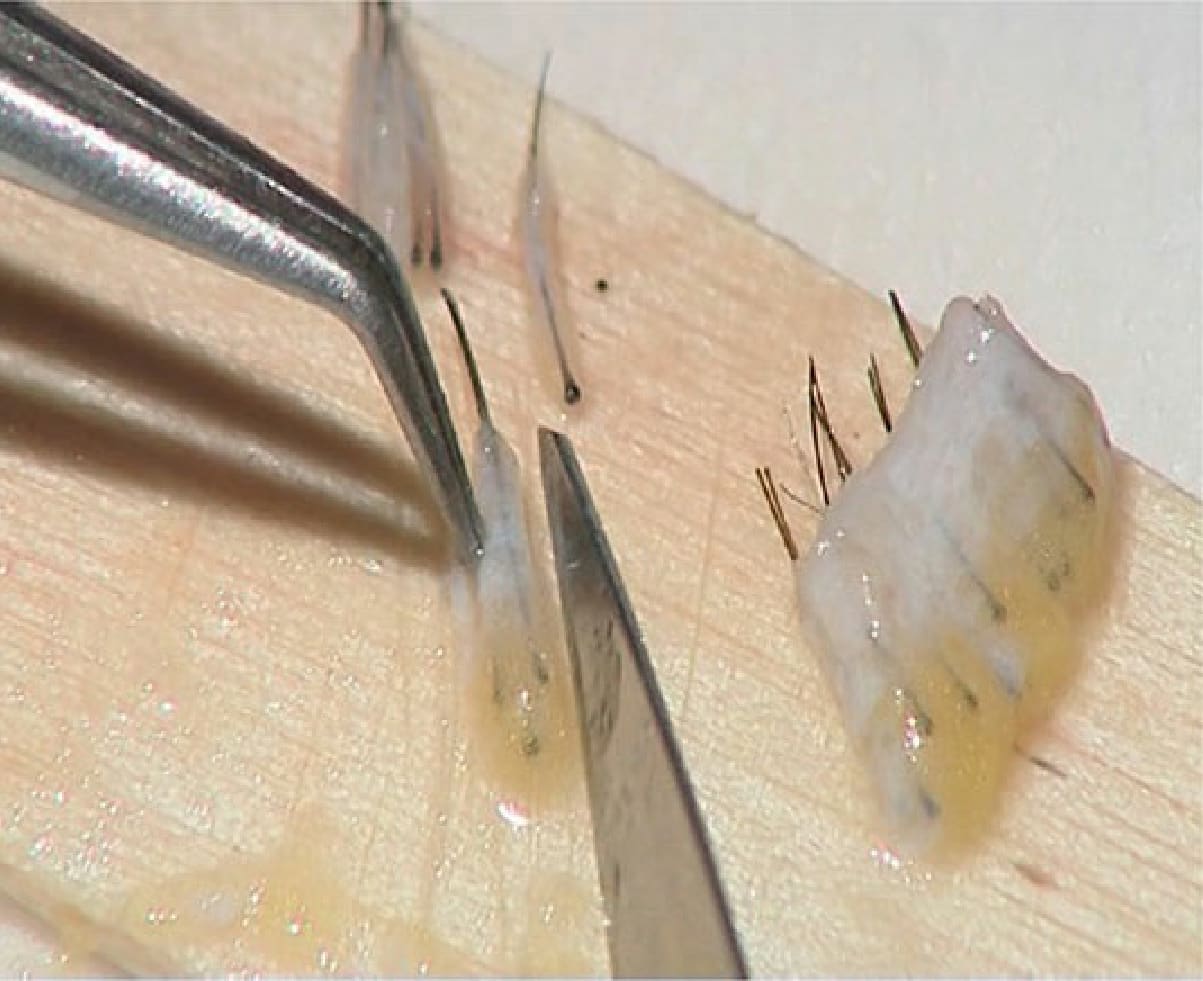
Figure 62-17. Dissecting out the follicular units from each sliver.