SAFE DONOR AREA
SAFE DONOR AREA
Grafts should only be taken from areas with terminal hairs that are unlikely to be lost in the future due to continued male pattern hair loss and where the donor scar can be easily hidden. While these locations vary between individuals, there are generally accepted and classically described guidelines. The upper border should ideally be 2 cm below where the balding crown is expected to end in advanced androgenetic alopecia. The lower border should be approximately 2 cm above the hair at the nape of the neck (Fig. 62-8A).
On either side laterally it is best to stay behind a perpendicular line passing through the external auditory meatus. Caution should also be exercised around the postauricular area where skin laxity tends to be lower, and therefore a narrower strip width is advised (Fig. 62-8B).
The maximum possible length of the strip usually ranges from 24 to 32 cm, depending on the size of the patient’s head. The width (height) that can be excised depends on
scalp laxity, and varies from 1 to 2.5 cm, with 1.3 cm as the average. Although there are formulas and devices for this, most surgeons will estimate potential removable width by squeezing the scalp between fingers or moving the sides of the scalp up and down.
The safe donor area for FUE is generally the same as for strip FUT. However, the harvesting can be extended to other areas, such as the lower neck, if the chance of future loss is remote. Attention needs to be paid to future potential of retrograde alopecia from the neck upward in genetically susceptible patients. Although scarring from FUE is more subtle, and its exposure is potentially less impactful, paying heed to the above safe donor guidelines is still recommended, though with perhaps a little more leeway (Fig. 62-4).
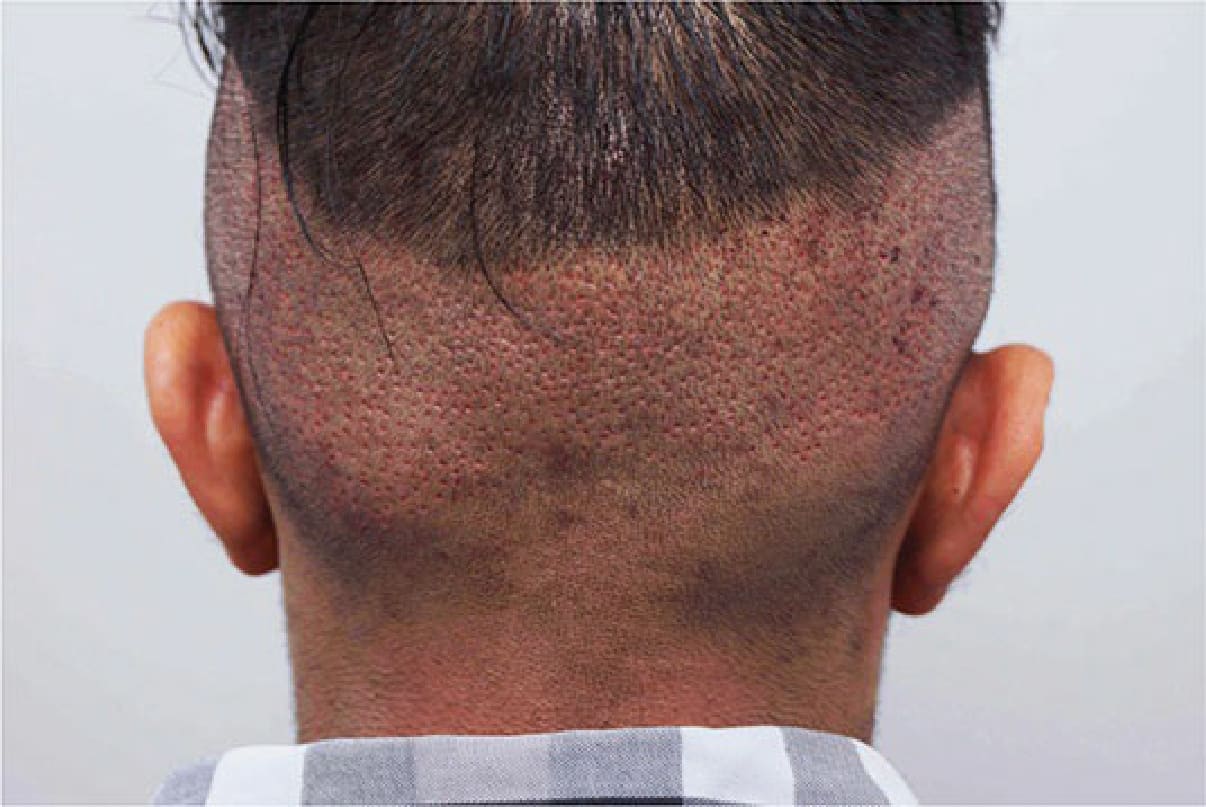
Figure 62-4. Typical postoperative appearance of FUE harvesting method.
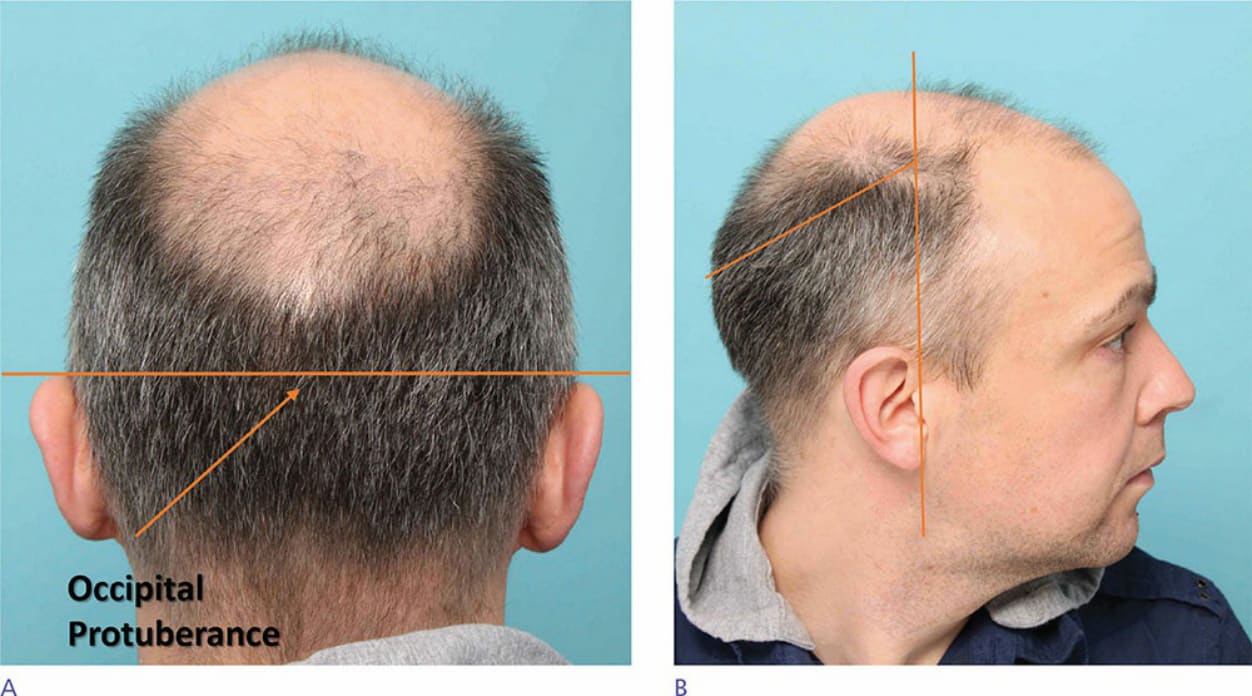
Figure 62-8. (A) “Safe Donor Area” in the occipital scalp. (B) “Safe Donor Area” in the parietal scalp.